




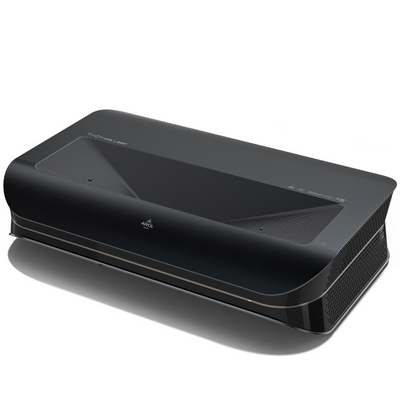
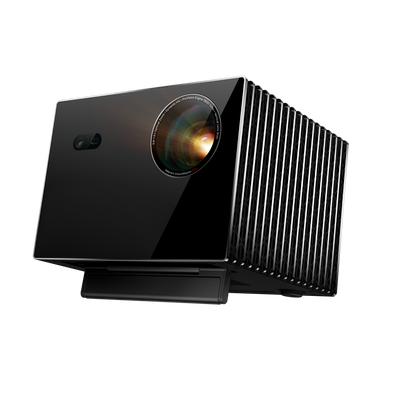
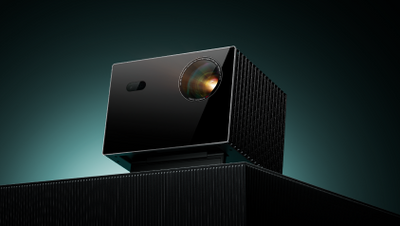


The idea is tempting: enjoying your favorite movie or the new series comfortably in bed on a huge screen surface, without a black, switched-off TV spoiling the room’s look during the day. If you’re deciding on the basics of setup and asking whether a projector or TV is the better choice, a projector for the bedroom is often the ideal, space-saving solution for cozy movie nights.
In practice, though, many home theater dreams fail because of the physical and spatial realities of a bedroom. Anyone who simply buys the first projector they come across is often disappointed by loud fan noise, cable clutter, or a washed-out image. This guide explains objectively what really matters when it comes to the technology, placement, and noise level so you can create a trouble-free setup.
The special challenges of a projector in the bedroom
A bedroom places completely different demands on the technology than a classic living room. While maximum brightness is often the main focus in the living room, other criteria dominate in the bedroom. If you first want to compare different projector types and their basic technical features, our buying guide for choosing the right projector offers a general decision aid.
Operating noise (dB): Why the fan is the deal-breaker
Anyone placing a projector directly next to or above the bed will quickly notice: a loud fan ruins every quiet movie dialogue. The search for a quiet projector for the bedroom is therefore the most common hurdle. The problem is purely physical: the more compact the projector’s housing, the smaller the fans that must be installed. They have to spin faster to remove the enormous heat from the light source, which creates a high-pitched, distracting whir. For an undisturbed experience in an otherwise quiet room, the device’s operating noise should ideally be 30 decibels (dB) or less.
Room size and projection distance
Most German bedrooms do not have the luxury of four or five meters of space between the wall and the lens. The throw ratio determines, together with the distance, how large the screen needs to be calculated. Standard projectors often need several meters of distance for a 100-inch image — space that is rarely available in rooms with wardrobes and large beds.
Contrast ratio vs. brightness in darkened rooms
Since bedrooms can usually be darkened very well with shutters or curtains, extremely high lumen output (brightness) is secondary. Native contrast is much more important. If the contrast is too low, black movie scenes look more like dark gray, and the projector’s light unnecessarily brightens the entire room. Deep blacks are crucial here for comfortable viewing in the dark.
Which projector types are suitable for the bedroom? A comparison
To solve the space problem, buyers often turn to three common approaches. Each comes with specific advantages and disadvantages.
Mini projectors: Flexible, but often loud
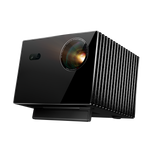
A small projector for the bedroom setup looks attractive at first glance. The devices are handy, affordable, and can be quickly placed on a nightstand. However, the compromises are significant: because of their tiny housings, they struggle with insufficient cooling, which often makes them disproportionately loud. In addition, brightness and native contrast in these models are usually only enough for absolute basic requirements.
Ceiling mounting standard projectors: The effort involved
Using a classic projector for bedroom ceiling and walls is the traditional approach. The projector is screwed to the ceiling above the bed. The disadvantages: The installation is time-consuming. You have to run power and HDMI cables across the ceiling and along the walls, which is rarely visually appealing. In addition, the noise source (the fan) in this mounting style is often located directly above the viewers’ heads.
Ultra-short-throw projectors (UST): The clean solution for the sideboard
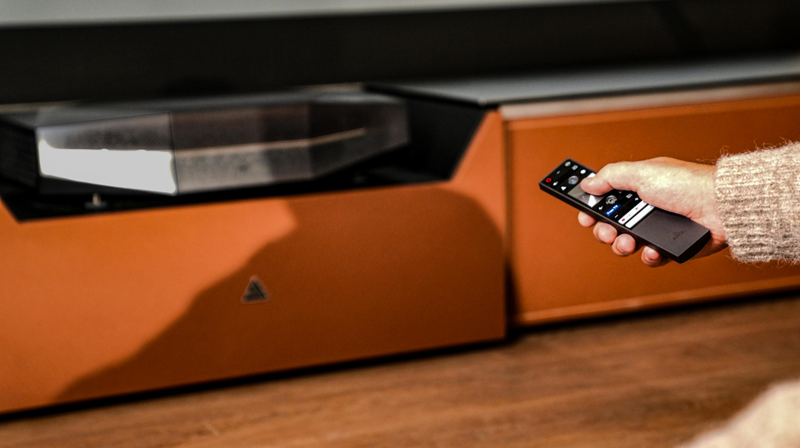
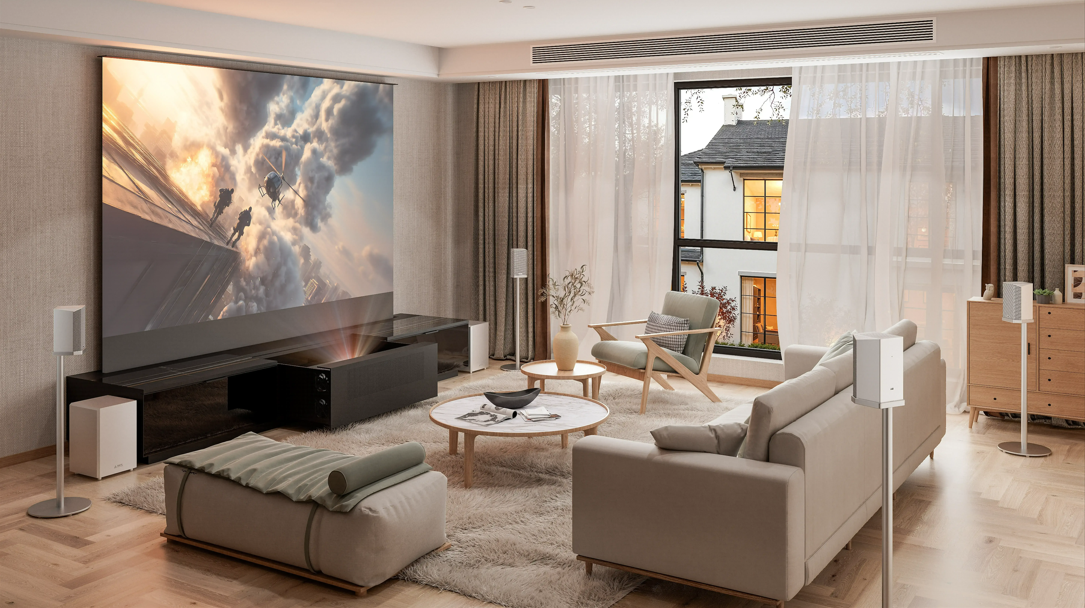
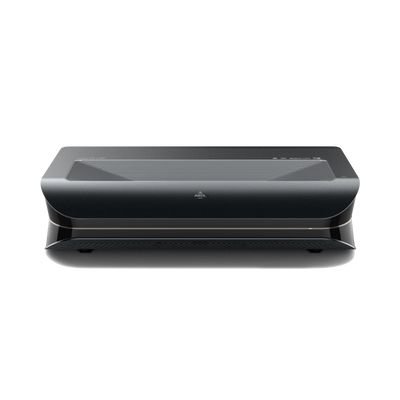
Ultra-short-throw projectors (Ultra Short Throw) project the image diagonally upward onto the wall from below. They do not require ceiling mounting or any distance across the room. The projector is simply placed on a dresser or sideboard already standing directly against the wall. Thanks to larger housings, they operate more efficiently thermally and are therefore usually much quieter than mini models.
What tech enthusiasts should look for in a bedroom setup
For users who don’t want to compromise on image quality and aesthetics, laser UST technology has become the gold standard. This shows how modern engineering solves the typical bedroom problems.
Maximizing the throw ratio

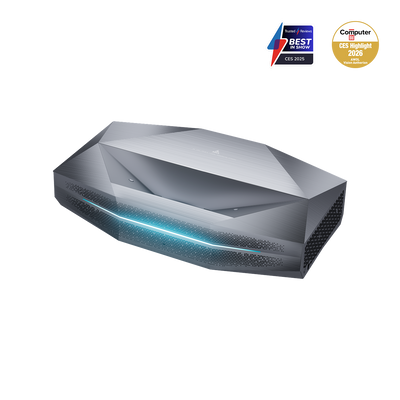
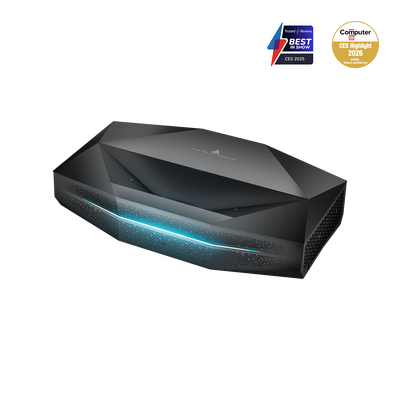
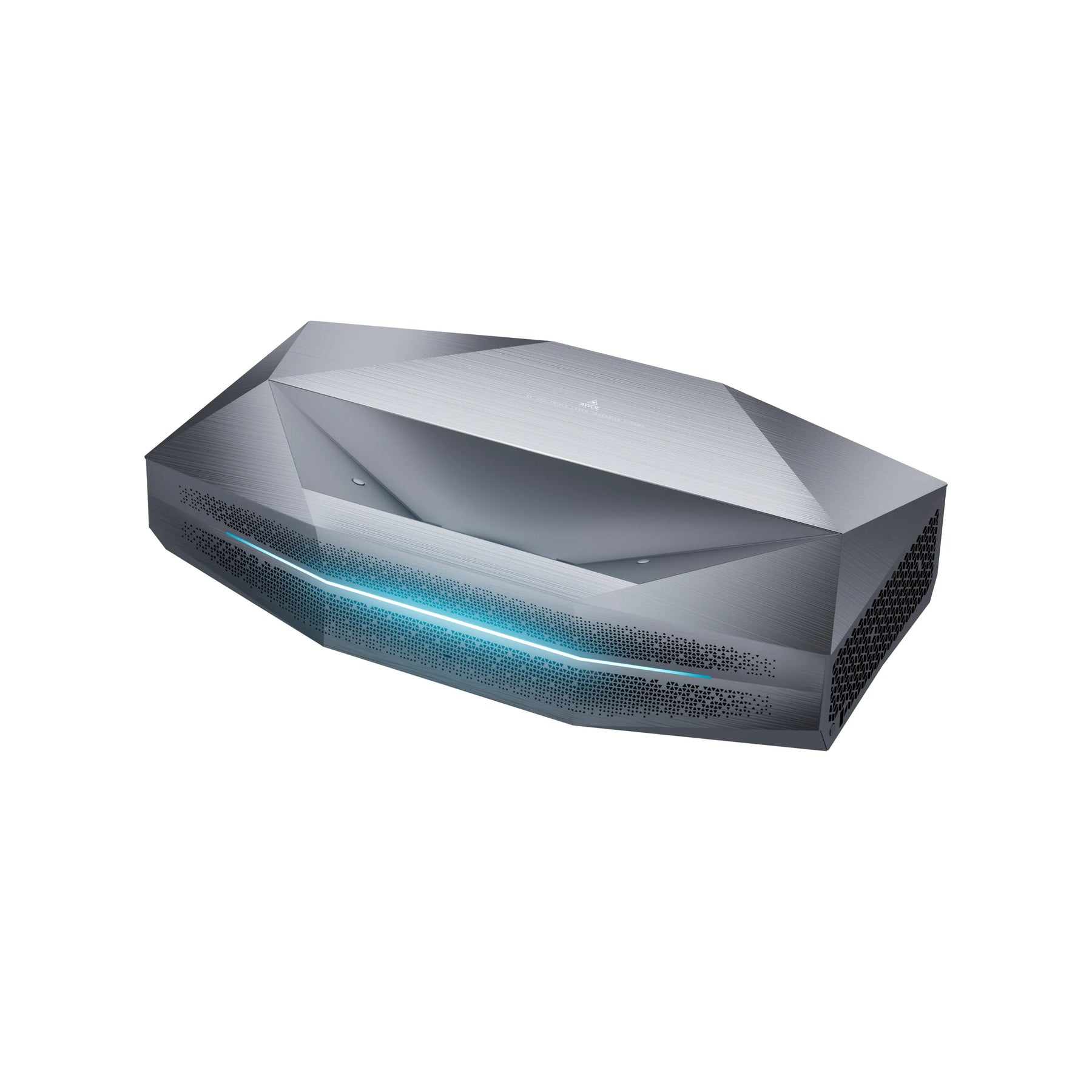
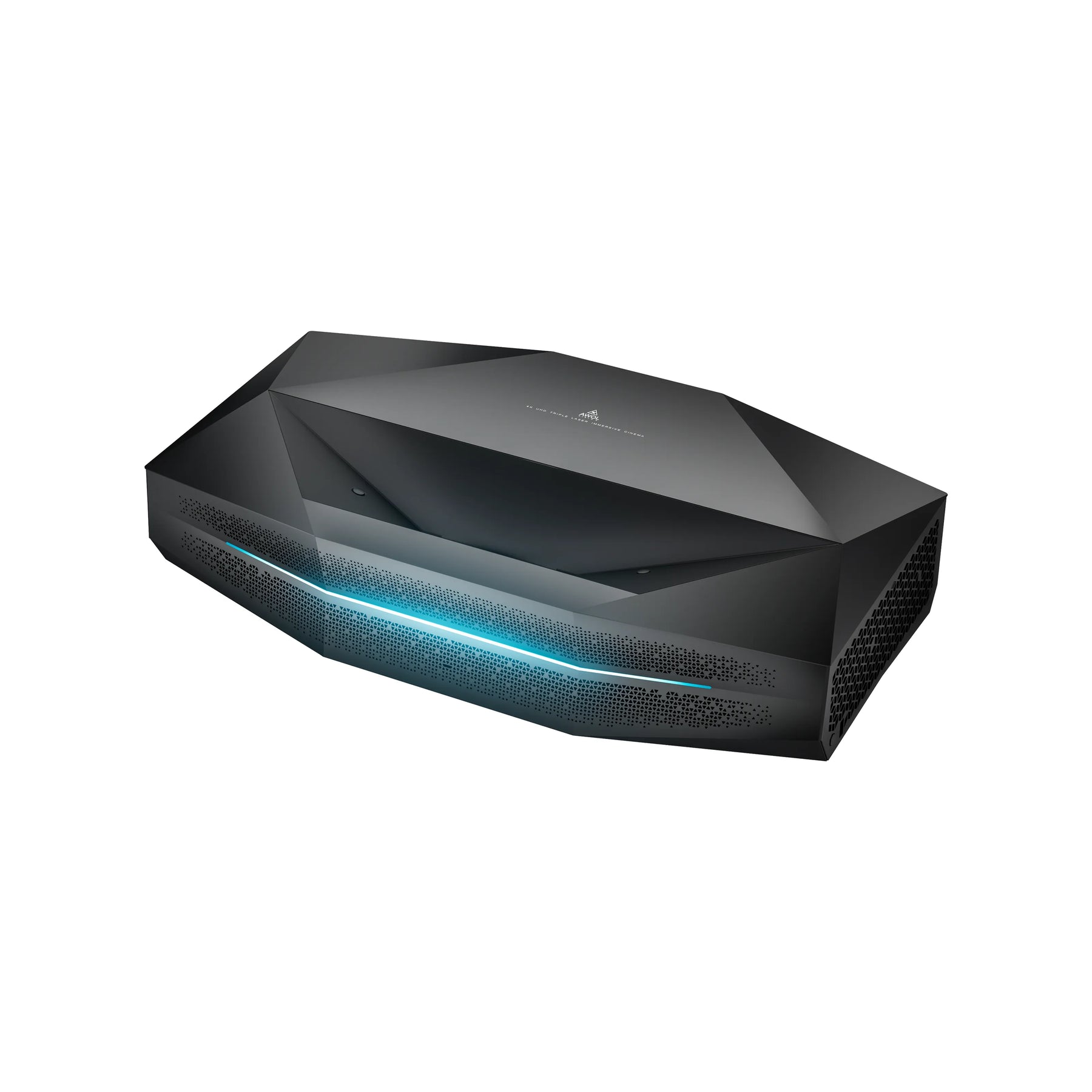
To really save space, the optics must be extremely wide-angle. Modern premium devices like the AWOL Vision Aetherion (Pro and Max), for example, offer a throw ratio of 0.2:1. In practical terms, this means the device can stand almost flush — just a few centimeters from the wall — on a standard dresser and still project a razor-sharp 4K image.
All-in-one: Integrated smart systems (OS)
A clean setup doesn’t require external cables. High-quality projectors now come with integrated operating systems (such as Google TV OS) that play Netflix, Prime Video, and the like natively. Combined with good built-in speakers, external streaming sticks, AV receivers, and the cable chaos that comes with them are completely unnecessary.
Durability through laser light sources
Instead of traditional, heat-intensive lamps, high-end devices rely on lasers. For a dedicated bedroom cinema, models like the established new Aetherion series use advanced RGB Pure Triple Laser technology. This not only provides excellent color gamut coverage but also guarantees a lifespan of over 25,000 hours. Efficient laser light sources also help minimize noise (for example, on the LTV-3500 Pro to a whisper-quiet ≦ 30dB), ensuring sleeping comfort.
Checklist: How to plan your setup in the bedroom
Before making a decision, check your room conditions using these points:
- Distance to the wall: Do you have space on a sideboard for a UST projector, or do you need to opt for ceiling mounting?
- Power supply: Where are the power outlets? (Avoid long extension cords).
- Projection surface: A smooth, white wall is enough to get started. For maximum contrast, however, it is worth investing long-term in a special ALR screen for projectors, which was developed precisely for the requirements of short-throw projectors.
- Audio: Are the built-in speakers enough, or would you like to watch with Bluetooth headphones so as not to wake your sleeping partner?
Frequently asked questions (FAQ)
Which projector is quiet enough for the bedroom?
For the bedroom, you should choose devices with an operating noise of no more than 30 dB (decibels). Ultra-short-throw projectors (UST) and larger home cinema projectors are usually quieter than very compact mini projectors because they have better cooling options.
Can I project the image directly onto wallpaper?
Yes, that is generally possible. However, textured wallpaper or uneven walls cast tiny shadows that make the image look unsettled on high-resolution 4K projectors. For a sharp image, a smooth wall or a dedicated screen is recommended.
What is the difference between a mini projector and a UST projector?
A mini projector is small, portable, and projects the image from a distance straight onto the wall. A UST projector (Ultra Short Throw) sits directly in front of the wall on a piece of furniture and projects the image steeply upward. UST devices are usually more expensive, but they offer a real home cinema feel without ceiling mounting or cables running across the room.