Find your perfect
game day setup.

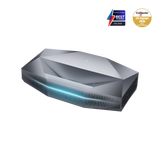
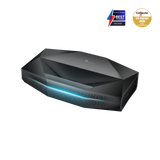
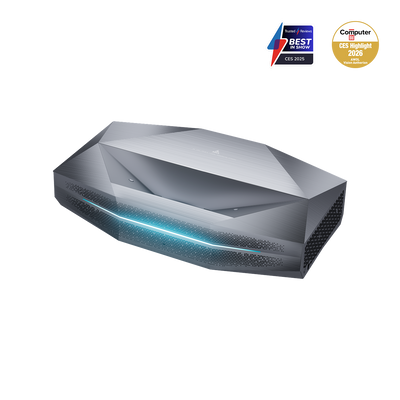
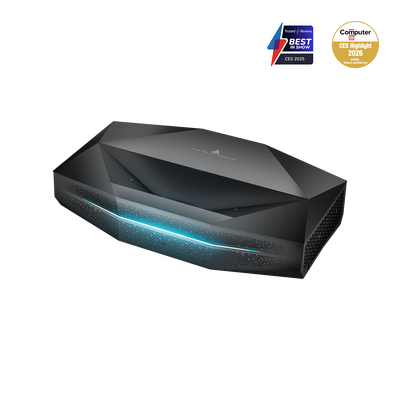
The Aetherion series
is now available for pre-order!

For a limited time only:
Up to 50% off canvases when you buy a projector. Save up to €1,000.

Bring the special home

Discover our story

At home, it is often the smallest moments that stay with us the longest. AWOL creates immersive, cinematic experiences that bring stories to life - and transform your living space into a world of grandeur, imagination, and emotion.

Discover our story

Developed for the way you live

AWOL Vision home cinema with projector for home theater and an immersive movie night on a large projection screen.

home theater

For movie nights where every detail counts.

AWOL Vision 4K projector home theater setup in a bright living room for family entertainment on a large screen.

living room

For daily entertainment – far beyond the television.

AWOL Vision home theater projector in the gaming room for action-packed games and entertainment on a large screen.

Gaming & entertainment room

For gaming with low latency and thrilling action on the big screen.

AWOL Vision outdoor home theater setup with projector and portable screen for shared movie nights.

Garden & Outdoor

For outdoor movie nights and relaxed weekend get-togethers.

An ecosystem. More ways to bring wonder home.

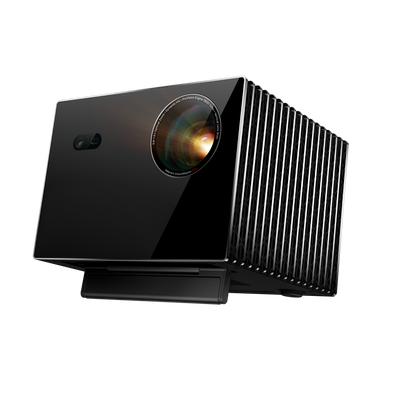
AWOL Vision Aetherion UST home theater projector for living spaces and cozy movie nights at home.
Experience together

AWOL Aetherion

For real living spaces, shared experiences, and the moments that bring people together. Discover

Discover
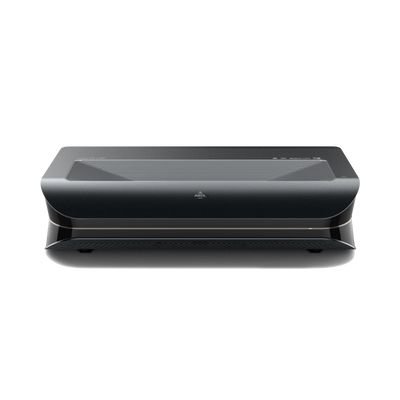
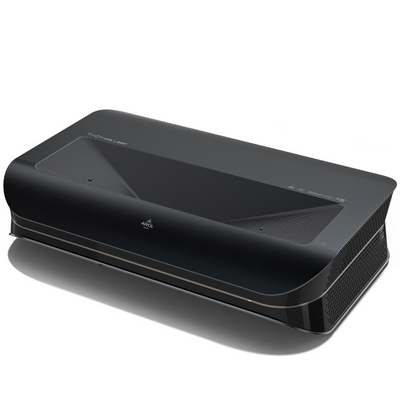
AWOL Vision Valerion 4K home theater projector for dedicated home theater and design-oriented rooms.
Immersive cinema experience

AWOL Valerion

For an even more immersive, conscious movie experience – in dedicated home theater- and design-oriented rooms.

Discover

Bring wonder home — with the right setup.

Grown with momentum. Proven in the market.

No.1

The No. 1 among UST laser projectors in the USA

Two
$10M+

Crowdfunding Milestones

Praised for its image quality by an Emmy-winning filmmaker

Why buy directly from AWOL?

Fast and
free shipping

30-day
money-back guarantee

30 days
price guarantee

24 months
Hassle-free warranty

Trusted Reviews & Voices

AWOL Vision Aetherion: A New Benchmark for 4K Triple-Laser UST Performance

AWOL Vision Aetherion: A New Benchmark for 4K Triple-Laser UST Performance

“Aetherion is our vision of how premium ultra-short-throw entertainment should evolve. It is more than a projector and more than a display upgrade. It is a new way to experience a cinematic lifestyle — created for everything from midnight premieres to championship games, immersive console sessions, and elevated everyday streaming. With Aetherion Pro and Aetherion Max, we have developed a next-generation RGB triple-laser platform that brings together advanced optics, refined image processing, and flagship-level convenience in one complete experience. Aetherion Max 4K RGB Ultra Short Throw Projector €3.699,00 €3.999,00 4K up to 200 inches 3300 ISO Lumens 6000:1 Contrast PixelLock™ Anti-RBE 2D/3D 110% Rec.2020 VRR + 1 ms Order Now Aetherion Pro 4K RGB Ultra Short Throw Projector €2.799,00 4K up to 200 inches 2600 ISO Lumens 6000:1 Contrast PixelLock™ Anti-RBE 2D/3D 110% Rec.2020 VRR + 1 ms Order Now A record-breaking debut, now in the warm-up phase Since its first debut at CES, Aetherion’s first public chapter has already built remarkable momentum. Our Kickstarter campaign ran from February 10 to March 31 and closed with 7,050 backers and US$18,649,456 in pledges. That momentum has now moved into the official warm-up phase, and our current early-access timeline points to the official launch and pre-order in May. For more information on models, pricing, and pre-order options, visit the official Aetherion launch page. Precision optics, engineered for true 4K clarity At the heart of Aetherion is an optical architecture developed for pixel-level precision at cinematic scale. Our most advanced lens system, combined with PixelLock™ technology, is designed to maintain micro-level stability as the image grows, so every pixel stays aligned and sharpness is preserved across the entire screen. The same optical philosophy supports 4K projection up to 200 inches, creating a new level of scale without compromising image integrity. This clarity is shaped by more than one innovation. Aetherion integrates rare-earth coated sapphire glass, an ultra-low-dispersion lens design, and a precision planetary coating process to improve light transmission, contrast, and color accuracy. A thermal titanium mesh further stabilizes the optical system to reduce focus drift over time, delivering lasting sharpness instead of just short-term impact. Noirscene™ System II for deeper blacks and greater depth Aetherion also introduces a major leap in dark-scene performance with our Noirscene™ System II. Built on a native contrast ratio of 6,000:1, a refined EBL™ algorithm, and a 7-stage IRIS system, it is designed to reveal deeper blacks, cleaner shadow detail, and more dimensional contrast under real-world viewing conditions. The result is an image with stronger separation, cleaner highlights, and a more immersive sense of depth. The 7-stage IRIS enables finer light control for different environments, while our patented EBL™ processing refines dark scenes in real time, helping deliver a cleaner image and greater stability. Together, these systems create a more cinematic visual language — one defined not just by brightness, but by tonal precision and control. Studio-grade color, designed for lasting viewing comfort Aetherion’s color performance is built on our RGB Pure Triple Laser foundation and extends to 110% coverage of the Rec.2020 color space, Professional CMS, and ISF certification. This combination makes the image feel richer, more accurate, and more nuanced, while also providing the flexibility to fine-tune color performance toward a more reference-oriented standard. Just as important, Aetherion is designed to make that experience more comfortable over time. Our Anti-RBE technology reduces the rainbow effect in 2D and 3D playback by up to 99.99%, while harmful-light reduction and advanced dynamic tone mapping help create an image that feels cleaner, easier on the eyes, and more natural in both bright and dark content. Built for film, sports, and gaming Aetherion is designed to move effortlessly across the full range of modern entertainment. For cinema, Aetherion supports 24 fps and 48 fps playback along with Filmmaker Mode, helping preserve the original rhythm, visual cadence, and creative intent of film content for a more faithful cinematic presentation. For sports and other live-action scenarios, support for 25 fps and 50 fps, combined with MEMC, improves motion clarity and fluidity, making fast-moving scenes appear smoother, more stable, and more naturally connected when every frame matters. Gaming is just as central to the Aetherion experience. By combining VRR, ALLM, 1 ms ultra-low latency, and Dolby Vision Gaming in a single high-performance platform, Aetherion is designed to deliver a level of responsiveness and immersion that matches its cinematic scale. VRR synchronizes the refresh rate in real time to minimize tearing and stutter, while the low-latency architecture supports faster input response and more precise control. A flagship platform inside and out Beyond image performance, Aetherion is built on a flagship-class technical platform designed for speed, stability, and premium everyday use. Both models are powered by the 4K UHD MT9655 SoC and come with 8 GB RAM and 128 GB EMMC storage, plus WiFi 7, Bluetooth 5.4, and 1000 Mbps Ethernet. Together, this hardware foundation is designed to enable faster connectivity, stronger system responsiveness, and a smoother overall smart-entertainment experience. Aetherion Pro and Aetherion Max The Aetherion lineup includes two models built on the same next-generation core platform. Aetherion Pro is specified at 2,600 ISO lumens, while Aetherion Max reaches 3,300 ISO lumens. Both models share the same RGB Pure Triple Laser light source, native 6,000:1 contrast ratio, 110% Rec.2020 color coverage, gaming-ready feature set, and flagship smart-platform foundation. Aetherion comparison at a glance Specification Aetherion Pro Aetherion Max LTV-3500 Pro Brightness 2600 ISO Lumens 3300 ISO Lumens 3000 ISO Lumens Native / Perceived Contrast 6000:1 / 60000:1 6000:1 / 60000:1 1500:1 / 3000:1 Color Space 110 % Rec.2020 110 % Rec.2020 107 % Rec.2020 Light Source RGB Pure Triple Laser RGB Pure Triple Laser RGB Pure Triple Laser RBE Reduction Yes, in both 2D and 3D modes Yes, in both 2D and 3D modes — Display Technology DLP, 0.47-inch DMD with TI New Display Controller DLPC8445 DLP, 0.47-inch DMD with TI New Display Controller DLPC8445 TI 0.47-inch DMD Projection Size 80–200 inches 80–200 inches 80–150 inches Throw Ratio 0.2:1 0.2:1 0.25:1 Input Lag 1 ms 1 ms 8 ms Ethernet Speed 1000 Mbps 1000 Mbps 100 Mbps SoC / Memory MT9655, 8 GB RAM, 128 GB EMMC MT9655, 8 GB RAM, 128 GB EMMC MT9669, 3 GB RAM, 128 GB ROM Wi-Fi / Bluetooth Wi-Fi 7, Bluetooth 5.4 Wi-Fi 7, Bluetooth 5.4 Wi-Fi 5, Bluetooth 5.2 HDMI / DP 3 × HDMI 2.1 + 1 × DP 3 × HDMI 2.1 + 1 × DP 3 × HDMI 2.0b Smart Home Integration Google Home, Apple HomeKit, Amazon Alexa Google Home, Apple HomeKit, Amazon Alexa PJLINK Wireless Streaming AirPlay 2, Chromecast, Miracast AirPlay 2, Chromecast, Miracast E-share, AirPlay Operating System / App Solution Google TV OS Google TV OS Google TV OS FAQ What is AWOL Vision Aetherion? Aetherion is our next-generation 4K ultra-short-throw lineup based on RGB Pure Triple Laser. Designed for premium large-screen entertainment, Aetherion combines pixel-level clarity up to 200 inches, Noirscene™ System II, studio-like color performance, all-day viewing comfort, and smooth, responsive gaming in one flagship platform. When will Aetherion launch? Aetherion is currently in the official warm-up phase in April. The official launch and pre-order start in May. Soon, Aetherion will be available on our official website, followed by shipping. How long is the warranty for Aetherion? Aetherion Pro and Aetherion Max come with a 1-year limited warranty plus an additional 1-year free extension. This brings the total coverage to 2 years for manufacturing or shipping-related issues. Damage caused by improper use, including drops, extreme temperatures, water exposure, incorrect operation, or third-party repairs, is excluded from the warranty. We stand fully behind our products and provide ongoing technical support, including professional replacement through return shipment, technical guidance, and other available after-sales solutions. Is Aetherion built for gaming? Yes. Aetherion was designed for both demanding gaming and premium home theater. With VRR, ALLM, 1 ms ultra-low latency, and Dolby Vision Gaming, along with HDMI 2.1 and the flagship MT9655 chipset, Aetherion delivers a faster, smoother, and more responsive gaming experience on true cinematic scale. Does Aetherion support 3D and reduce the rainbow effect? Yes. Aetherion supports both 3D and 2D playback with Anti-RBE technology that can reduce the rainbow effect by up to 99.99%. Both Aetherion Pro and Aetherion Max include RBE reduction for 2D and 3D modes, delivering a cleaner and more comfortable viewing experience. Is Aetherion Max just a Valerion VisionMaster with a different lens? No. Aetherion Max is a full-generation upgrade built on a new technical foundation. This includes an upgraded SoC, an advanced DMD controller, improved Wi-Fi and Bluetooth, a newly developed optical engine and lens system, native Google TV 14.0, no lens light leakage, optimized 3D resolution, and reduced rainbow effect. Overall, Aetherion Max was created as a more advanced and refined platform for large-screen entertainment. What smart home and streaming features does Aetherion offer? Aetherion was designed for a more connected entertainment experience. It supports integration with Google Home, Apple HomeKit, and Amazon Alexa, as well as AirPlay 2, Chromecast, Miracast, and Google TV OS for flexible streaming and convenient smart home control. About AWOL Vision Founded in 2020, AWOL Vision is a leading manufacturer of innovative audiovisual solutions focused on developing RGB laser projectors. With the goal of redefining the home theater experience, AWOL Vision delivers cutting-edge projection technologies that provide outstanding image quality, clarity, and immersion. Headquartered in Delray Beach, Florida, AWOL Vision is the parent brand of Valerion. For more information, visit https://awolvision.de/”

Read messages

What is a good contrast ratio for a projector?

What is a good contrast ratio for a projector?

“It can be extremely frustrating when you want to set up a home cinema in the living room and, when looking at the spec sheets, completely lose track of what is what. One manufacturer advertises a contrast ratio of 1,000:1, while the next promises a ridiculous 1,000,000:1. But what do these numbers really mean in practice? If you’re wondering what a good contrast ratio for projectors is and how to avoid falling for misleading marketing tricks, you’re in the right place. In this article, we break down the technology behind the numbers and show you what really matters for a razor-sharp, vivid image. What does contrast ratio even mean? Contrast ratio describes the difference in brightness between the brightest white and the darkest black a projector can display at the same time. A contrast ratio of 1,000:1 simply means: the brightest white on the screen is 1,000 times brighter than the deepest black. If you want to understand how a projector works, contrast, alongside sheer brightness, is the most important factor for image quality. Weak contrast makes dark movie scenes look not black, but more like a washed-out, milky gray. Strong contrast, on the other hand, delivers enormous image depth, brilliant colors, and a real 3D feel, even with 2D content. Which is better: 3000:1 or 1000:1 contrast ratio? This is one of the most common questions when choosing a projector. The clear answer is: 3,000:1 is visibly better than 1,000:1. Standard DLP projectors (Digital Light Processing) typically offer contrast between 1,000:1 and 2,000:1. If you upgrade from 1,000:1 to 3,000:1, you’ll notice the difference immediately. Black levels are noticeably richer, and shadows in dark movie scenes contain far more visible detail. For a solid, darkened home cinema, 3,000:1 is an excellent benchmark for conventional projectors. Is a contrast ratio of 100,000:1 good? If 3,000:1 is good, 100,000:1 must be fantastic, right? Not necessarily. This is where the marketing-trick territory begins, similar to the difference between Lumen vs. ANSI Lumens. To understand these absurdly high numbers, we need to separate two terms: 1. Native contrast This is the most important figure. Native contrast describes the pure performance of the hardware components (the chip and the lens) in a single film frame. If it says 3,000:1 here, that’s a very good, honest value. 2. Dynamic contrast Numbers like 100,000:1 or 1,000,000:1 are almost always dynamic contrast figures. In this case, the projector uses software or a mechanical aperture (iris) to drastically reduce light in dark scenes and open it up fully in bright scenes. The manufacturers then measure the brightest white in a bright scene and compare it with the darkest black in an entirely different, dark scene. The result? A gigantic number on paper that says nothing about how well the projector can display bright and dark elements at the same time in one and the same image. The new standard: true black through advanced laser technology However, the industry has moved on. If you want to completely replace your TV with an ultra-short throw projector (UST) these days, you no longer have to settle for mediocre black levels. The spearhead of modern projection technology, such as the AWOL Vision Aetherion series (Aetherion Pro and Aetherion Max), relies on RGB Pure Triple Laser technology combined with advanced optical systems. Instead of relying on misleading software tricks, the Aetherion delivers an impressive native contrast of 6,000:1 (with dynamic iris). That’s a massive improvement over the industry standard. In addition, advanced algorithms give it an EBL (Enhanced Black Level) contrast of 60,000:1. The result is cinema-grade black reproduction that, combined with dynamic tone mapping and true Dolby Vision, creates unmatched image depth. The role of the right screen Even a projector with the best contrast ratio in the world loses its impact if you project it onto bare white textured wallpaper. A white wall reflects ambient light in the room back into the image and instantly destroys the black levels. To get the most out of your projector’s contrast potential—especially in bright living rooms—the right screen is essential. An ALR screen (Ambient Light Rejecting) blocks distracting overhead light and reflects only the projector’s light directly back to you on the sofa. This preserves the deep black levels and makes the image look as contrast-rich as an OLED TV. Discover our selection of high-quality ALR screens, perfectly matched to laser TVs. Conclusion: what to look for when buying Finding the perfect projector doesn’t have to be complicated if you know which numbers really matter: Beware of million-level figures: Ignore astronomical dynamic contrast figures on cheap projectors. Always look for native contrast. The standard (1,000:1 to 3,000:1): 1,000:1 is the absolute minimum for a usable image. A native contrast ratio of 3,000:1 already delivers very respectable, deep black levels for conventional home cinemas. The premium class (6,000:1 native): If you’re looking for uncompromising image quality, high-end models like the AWOL Vision Aetherion with 6,000:1 native contrast (including iris) and 60,000:1 EBL contrast set completely new standards for the living room. No screen, no contrast: Don’t forget to complete your setup with an ALR screen to maintain contrast performance even in daylight. Are you ready for the ultimate home cinema upgrade? Discover our 4K Laser TV models and experience contrast and color depth on a completely new level. Frequently Asked Questions (FAQ) about projector contrast What is the difference between FOFO contrast and ANSI contrast? When you dive deep into spec sheets, you’ll often come across these two terms. FOFO contrast (Full On/Full Off) measures a completely white image and then a completely black image one after the other. This produces very high numbers, but it doesn’t reflect reality. ANSI contrast (checkerboard contrast) measures black and white at the same time in a checkerboard pattern. ANSI contrast is therefore a much more honest measure of image depth in a real movie scene. An ANSI contrast of 300:1 to 500:1 is already considered outstanding. Is a contrast ratio of 10,000:1 enough for daylight? On paper, 10,000:1 (dynamic) sounds excellent. In daylight or in an unshaded living room, however, this value quickly loses importance if you use a standard white screen. Ambient light physically brightens the black areas on the screen. For daylight setups, an extremely bright laser projector combined with an ALR screen is far more important than a fictitious contrast value of 10,000:1. Does a gray screen improve projector contrast? Yes, in non-optimized rooms (with white walls or residual light), a gray screen or a special ALR contrast screen can work wonders. Since gray is naturally darker than white, the black level (“Black Level”) is noticeably lowered, which massively increases perceived on-screen contrast. The brilliant colors of a triple-laser system like the AWOL Vision Aetherion still shine through powerfully. Is a contrast ratio of 1000:1 enough for HDR content? For true HDR (High Dynamic Range) or Dolby Vision, a contrast of 1,000:1 is actually too low, since HDR thrives on extreme brightness differences and the deepest black. An image with 1,000:1 often looks somewhat flat with HDR content. To really make the most of the dynamic metadata of HDR10 or Dolby Vision, a native contrast of at least 3,000:1 up to the 6,000:1 of the premium class is recommended.”

Read messages
What is UHD resolution? The guide to TV jargon

What is UHD resolution? The guide to TV jargon

“If you are deciding whether to get a projector or TV , you are bombarded with abbreviations. It can be frustrating when you just want a razor-sharp picture, but have to choose between terms like UHD, OLED, QLED, or laser technology. The most common question buyers ask is often: "Should I buy a UHD screen or an OLED screen?" The truth is: two different things are being compared here. It is like comparing a car's horsepower (resolution) with the type of fuel (display technology). This guide clears up the confusion. We explain exactly what UHD resolution is, why you must not confuse it with panel technologies, and how to find the best picture for your home. UHD resolution, simply explained UHD stands for Ultra High Definition. It refers exclusively to image resolution —more precisely, the number of pixels that make up your picture. A display with UHD resolution has exactly 3840 x 2160 pixels. That is a total of around 8.3 million pixels. Compared with the older Full HD standard (1080p), UHD delivers a picture that is four times sharper and more detailed. (Note: In the electronics industry, the terms "UHD" and "4K" are now used almost synonymously. If you want to learn the exact historical and mathematical differences between true cinema 4K and consumer UHD, read our detailed guide on What is 4K resolution?) The big misconception: UHD vs. display technologies Let's get to the bottom of the most common searches on the internet: "Which is better, UHD or OLED?" or "What resolution does a typical UHD panel have?" To answer these questions, we need to compare apples with apples: UHD is the WHAT (the resolution): UHD describes only how many pixels are on the screen (8.3 million). OLED, QLED, and laser are the HOW (the technology): These terms describe how those 8.3 million pixels are made to light up. So you do not have to choose between UHD and a specific light technology. A modern premium home cinema device is usually both: it uses advanced light sources to display an image in 4K UHD resolution. This is where ultra-short-throw projectors (UST projectors) really stand out. They use pure laser light sources to cast the 8.3 million UHD pixels onto huge screens with extreme brightness and true cinema colors, without darkening the room. Common compatibility questions (upscaling & downscaling) Many users are unsure what happens when old film material meets new UHD devices—or vice versa. Can I watch UHD on an HD TV? Yes, but you will not see UHD quality. For example, if you stream a 4K UHD movie through a streaming service to an old Full HD TV, the system performs what is known as "downscaling". The 8.3-million-pixel image is reduced to the 2 million pixels of your HD TV. You can watch the movie without any problem, but you will not benefit from the extra sharpness. What happens to regular TV programs on a UHD display? The opposite happens: upscaling. When a normal HD signal reaches your new UHD device, the device has to calculate the missing image information so that the picture fills the entire screen. Processing power plays a decisive role here. The new AWOL Vision Aetherion Pro and Aetherion Max rely on the flagship 4K UHD SoC MT9655 platform with generous memory. This powerful hardware enables highly efficient rendering and upscaling, so even conventional content is displayed with impressive clarity and sharpness on a gigantic screen. Aetherion Max 4K RGB Ultra-Short-Throw Projector €3,699.00 €3,999.00 4K up to 200 inches 3300 ISO lumens 6000:1 contrast PixelLock™ Anti-RBE 2D/3D 110% Rec.2020 VRR + 1 ms Order now Aetherion Pro 4K RGB Ultra-Short-Throw Projector €2,799.00 4K up to 200 inches 2600 ISO lumens 6000:1 contrast PixelLock™ Anti-RBE 2D/3D 110% Rec.2020 VRR + 1 ms Order now When does UHD resolution really pay off? Many users quite rightly ask themselves: Is a 4K projector or UHD TV even worth it? The most important rule in home theater is: The higher the resolution, the larger the image must be for you to see the difference. If you calculate the perfect seating distance and screen size, you quickly realize that UHD hardly stands out on small displays. UHD resolution only really comes into its own from screen sizes of 80 inches and up. To get the absolute maximum out of your 8.3 million pixels, a modern setup with the new AWOL Vision Aetherion series is the ideal way to go: Gigantic pictures in the smallest space: Thanks to a projection ratio of 0.2:1, the Aetherion Pro and Aetherion Max can project 4K UHD images from 80 to 200 inches while standing only a few centimeters from the wall. Pixels in perfect light: The pure RGB triple-laser technology delivers 110% of the REC 2020 color space at a breathtaking 2600 ISO lumens (Aetherion Pro) or 3300 ISO lumens (Aetherion Max). Supported by Dolby Vision, IMAX Enhanced, and Dynamic Tone Mapping, every single pixel is shown with perfect contrast (native contrast of 6000:1 with iris lens) and lifelike colors. The ultimate gaming performance: Console gamers also benefit enormously from UHD. With HDMI 2.1 ports, 1 ms input lag, VRR (Variable Refresh Rate), and ALLM (Auto Low Latency Mode), the new Aetherion models act as uncompromising gaming projectors for responsive 4K gaming. Conclusion: UHD is the foundation; technology makes the difference Do not let marketing terms confuse you. The UHD resolution is now the absolute baseline for razor-sharp images. If you are choosing a new home cinema device, 4K UHD is a must. Your actual buying decision, however, should focus on which technology drives those pixels and how large you want the image to be. Anyone looking for maximum size, breathtaking colors, and uncompromising hardware performance will find in the new generation of high-quality 4K laser TVs like the AWOL Vision Aetherion the ultimate window into another world.”

Read messages