

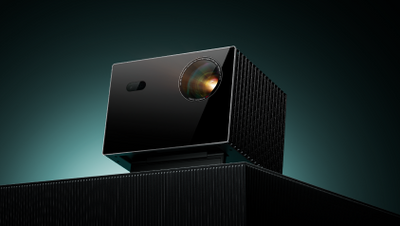


Buying a projector today is more complex than ever. The range goes from mini projectors for under €200 to premium laser TVs for several thousand euros. To keep your projector buying guide from ending up lost in a data-sheet jungle, this guide brings order to the chaos: you will learn which five criteria really matter — and why the choice of light source and projection type is often more important than pure resolution. Further down, we also show you which projector type fits your personal use case — whether living room, bedroom, garden, sports event, or gaming corner.
The key buying criteria at a glance
|
Criterion |
Entry-level |
Home cinema standard |
Demanding setup (e.g. laser TV) |
|
Brightness |
from 1,500 ISO lumens |
2,500–3,500 ISO lumens |
3,000+ ISO lumens |
|
Resolution |
Full HD (1080p) |
4K UHD |
4K UHD (HDR/Dolby Vision) |
|
Light source |
Lamp |
LED / laser |
RGB triple laser |
|
Projection type |
Standard (2–4 m) |
Short throw |
Ultra short throw (UST) |
|
Screen |
Matt white |
ALR screen |
CLR screen (for UST) |
1. Brightness: How many lumens do you really need?

Brightness is the most underestimated factor in any projector buying guide. Manufacturer specs in “ANSI lumens” or simply “lumens” are not standardized and are often inflated. The only reliable standard is ISO lumens — when buying, make sure to look specifically for this specification.
- Fully darkened room: From 1,500 ISO lumens is enough for good image quality.
- Partially darkened living room (curtains closed): At least 2,000–2,500 ISO lumens.
- Bright living room in daylight: Here, even 3,000 lumens help little if the wrong screen is chosen. If you want to use your projector in the living room during daylight, you absolutely need a special ALR or CLR screen that filters ambient light.
Practical rule: Always buy a little more brightness than you think you need. A projector that is too bright can be dimmed with Eco mode; an image that is too dark cannot be fixed.
2. Resolution: 4K, Full HD, or something more?

When it comes to projector resolution, it is not just the raw pixel count that matters, but also the chip technology used. If you are building a future-proof home cinema, there is no getting around UHD resolution with 3,840 × 2,160 pixels today. But with 4K, there are technical differences you should weigh up against your budget.
Native 4K vs. 4K UHD (pixel shifting)
- Native 4K: The chip physically has 8.3 million pixels. These chips are extremely expensive to produce and often very large, which is why they are usually found in absolute high-end cinema projectors (well beyond €10,000).
- Pixel shifting (4K UHD): This is the clever and most user-friendly solution for modern home cinema. High-quality DLP chips shift the pixels so quickly that the full 8.3 million pixels reach the screen.
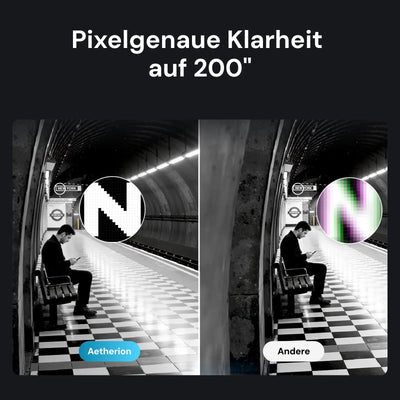
For the user, this means: At a normal viewing distance on the sofa, the human eye cannot tell the difference between native 4K and good pixel shifting. Even with gigantic image diagonals of up to 150 inches, you get flawless, razor-sharp cinema quality — and at an unbeatable price-performance ratio.
3. Light source: laser, LED, or classic lamp?

The choice of light source determines maintenance costs, image quality, and lifespan.
- Classic lamp (UHP): Low entry price, but the lamp must be replaced after 3,000–5,000 hours (follow-up costs: €100–300). In addition, the colours fade over time. Not recommended for daily use.
- LED: Offers a lifespan of 20,000–30,000 hours and compact designs. However, brightness is often limited and rarely exceeds 2,000 ISO lumens.
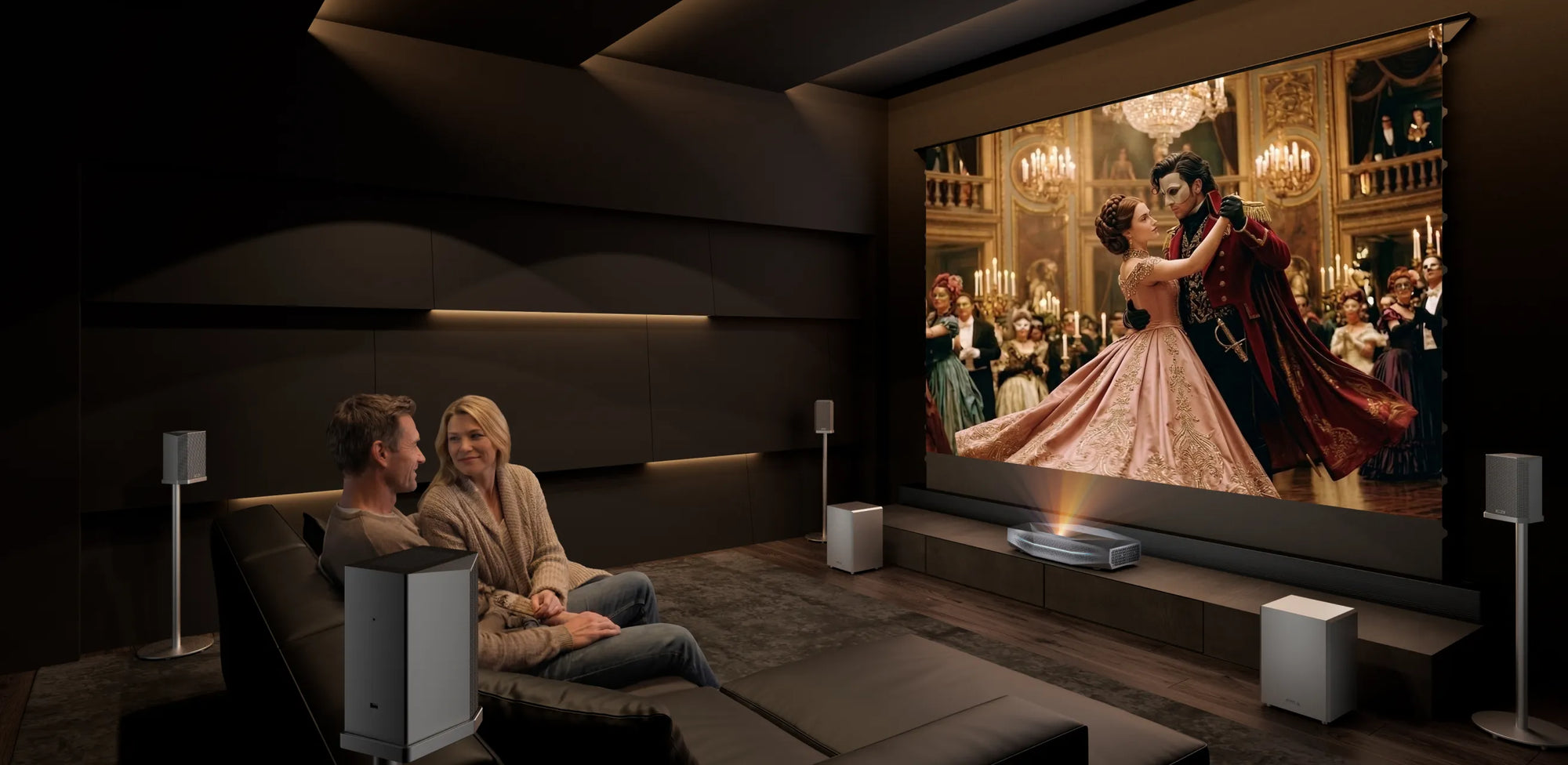
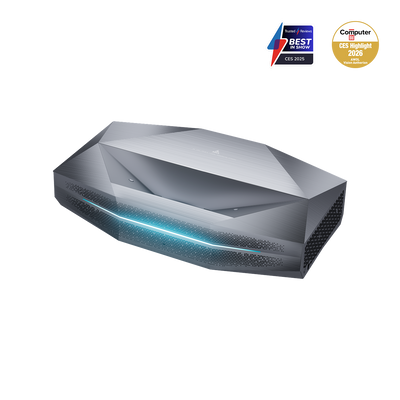
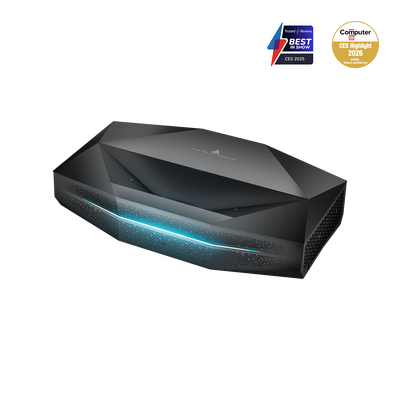
- Laser: Up to 30,000 hours maintenance-free at constant brightness. In particular, the RGB triple laser technology is now the gold standard for home cinemas. A prime example of this performance is the new AWOL Vision Aetherion Max. It uses three pure lasers (red, green, blue) to project an immense 3,300 ISO lumens onto the screen and covers a sensational 110% of the REC 2020 colour space. That means for you: an instantly bright picture with no warm-up time, and colours as lifelike as in premium cinema.

Conclusion: If you are looking for a projector for regular use, you should consistently invest in laser technology. The higher upfront cost quickly pays for itself through the elimination of lamp changes and the outstanding image quality.
4. Projection type: standard projector or ultra short throw?

The projection type determines where you can place your projector — and how far it must be from the wall.
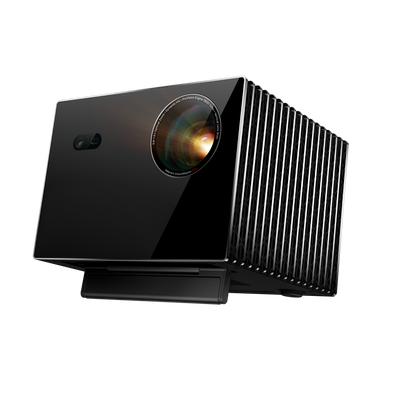
- Standard projector (standard throw): Needs 2.5–4 meters of distance for 100 inches. It must be mounted on the ceiling or placed at the back of the room, which often leads to cable clutter.
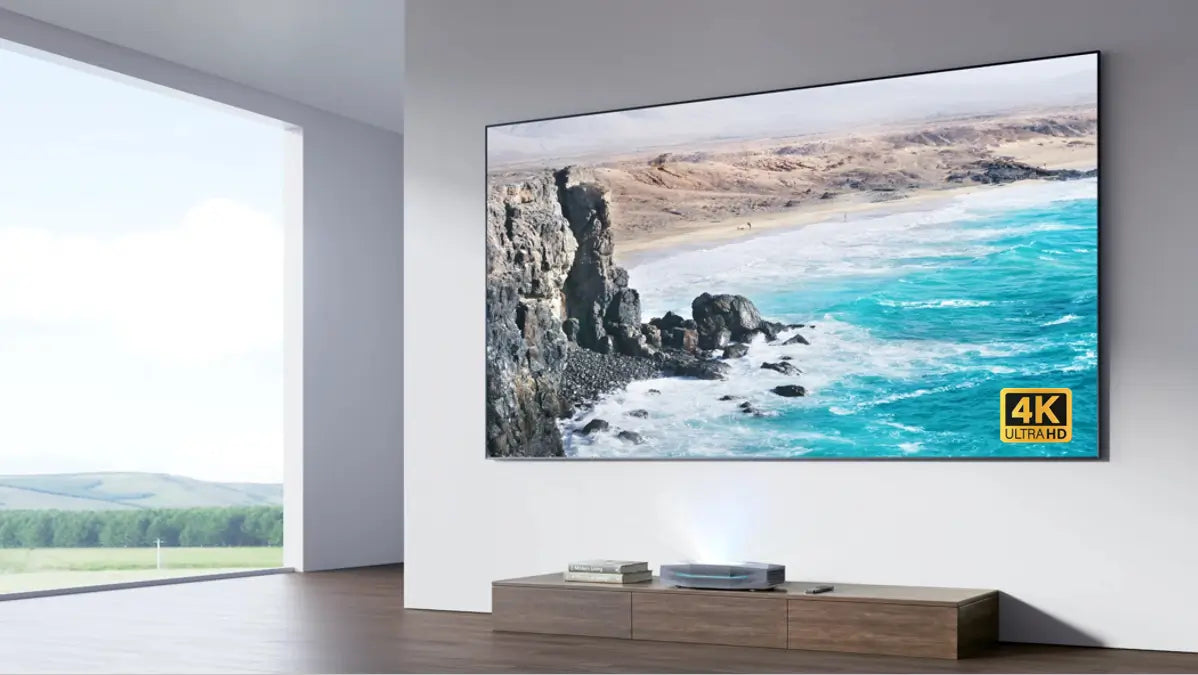
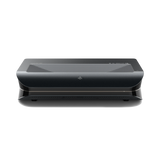
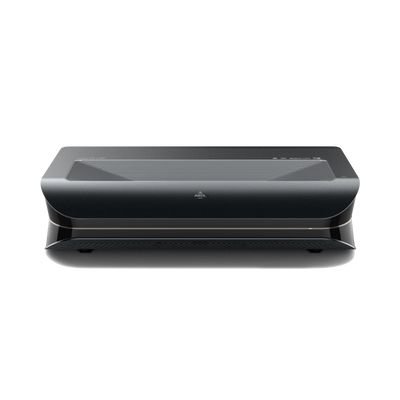
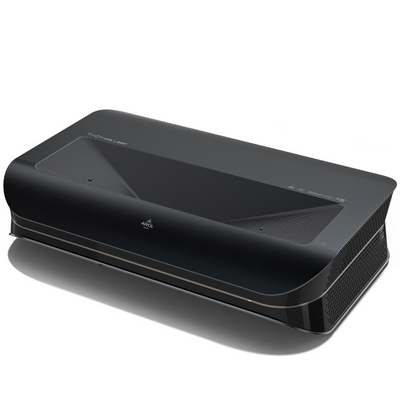
- Ultra short throw projector (UST): This design is the most elegant solution for anyone who does not want ceiling mounting. UST projectors stand only a few centimetres in front of the wall and project gigantic images — with no cable clutter across the room. Which projector type (long-throw, mini projector, or laser TV) best suits your home can be found in our basic guide projectors for the home. Details on placement are provided in our ultra short throw projector guide.
5. Screen and smart features
The right screen
The screen is not an optional extra — it is the second half of the picture.
- Matt white screen: Universal, ideal for darkened rooms.
- ALR screen (Ambient Light Rejecting): Filters ambient light for standard projectors.
- CLR screen (Ceiling Light Rejecting): Specially developed for UST projectors. It filters ceiling light and daylight and is essential for a perfect laser TV experience with the lights on.
Further information on choosing the right screen can be found in our projector screen buying guide.
Smart features & connectivity
Alongside the image and screen, the extra features also determine how practical a projector really is for everyday use: integrated streaming apps, autofocus, automatic keystone correction, and a simple remote control save time every time you use it. Which features matter most ultimately depends heavily on where you use it — in the bedroom, ease of use with a timer function matters; in the garden, rugged portability matters; and for gaming, low input lag matters more than pure cinema quality. In the next section, we show you which projector type suits your personal use case.
The right projector for your use case
Living room as a TV replacement: If you want to completely replace your TV, you should opt for a laser UST model with a high ISO-lumen rating and an ALR screen. Details on ideal placement and image size can be found in our guide Projectors for the living room. If you want to save yourself the hassle of searching for separate furniture, the Aetherion Max bundle including the new Vanish TV cabinet offers a complete living-room setup from a single source: the bundle combines the Aetherion Max with its 3,300 ISO lumens RGB triple laser, a motorised ALR screen, and a perfectly matched TV cabinet in a single piece of furniture. The projector and screen disappear invisibly into the cabinet when not in use and extend only when needed — keeping the living room tidy without sacrificing a giant picture.

Bedroom & quiet room: In the bedroom, limited space matters most — the right placement is needed here, not maximum brightness. Since there is usually simply not enough room for long throw distances, short-throw or ultra short throw projectors are the better choice here than classic long-throw models. Our detailed projector buying guide for bedrooms shows the ideal placement and dimming for small rooms.
Garden, patio & sports events: More and more users are specifically looking for a projector for outdoor use, such as public viewing or warm summer evenings in the garden. What matters here is enough brightness for residual light in the evening, as well as a mobile, weather-resistant screen. Our match-day system for sports events provides concrete setup tips for your outdoor cinema.
Gaming & play: If you play on console or PC, low input lag matters most, not pure cinema quality. Modern laser UST projectors with HDMI 2.1, 4K at 120 Hz, and VRR can easily keep up with classic gaming monitors — only on a 100 to 150 inch image diagonal. Models like our Aetherion Max are also suitable for such use cases and bring the image quality needed for ambitious gaming sessions to the big screen. What matters when choosing is shown in our gaming projector guide.
Frequently asked questions about projector buying advice (FAQ)
What are the most important buying criteria for a good projector?
The five most important criteria are brightness (ISO lumens), resolution (4K UHD vs. Full HD), light source (laser vs. LED vs. lamp), projection type (standard vs. ultra short throw), and screen plus operating noise. Anyone who matches all five points to their personal use case makes a future-proof purchasing decision.
How many lumens do I need for my room?
For darkened rooms, 1,500–2,000 ISO lumens are enough. For semi-bright living rooms, 2,500–3,500 ISO lumens are recommended. Daylight use absolutely requires an additional ALR or CLR screen.
What is the difference between 4K and Full HD in a projector?
Full HD offers 2 million pixels, while 4K UHD offers an impressive 8.3 million pixels. The difference becomes particularly visible from a screen size of around 100 inches at a normal viewing distance — 4K delivers razor-sharp details without a screen-door effect.
Lamp, LED, or laser — which light source is right?
For regular use, laser is clearly recommended, especially RGB triple laser: maintenance-free, colour-accurate, and durable for up to 30,000 hours. LED is suitable for compact devices used occasionally, while classic lamp projectors are now only interesting for beginners on a small budget because of the expensive lamp replacements.
How far does a projector need to be from the wall?
That depends on the projection type: standard projectors need about 2.5–4 meters of distance for a 100-inch image and are usually mounted on the ceiling. Ultra short throw projectors (UST), on the other hand, stand only a few centimetres in front of the wall or screen and are therefore ideal for living spaces without ceiling mounting.
Conclusion: how to find the right projector
The best buying advice is personal: analyse your room (size, light, placement) and your use case before you decide. For most modern living rooms, a laser UST projector with RGB triple laser technology, 4K UHD resolution, and more than 2,500 ISO lumens is now the most convincing overall package. It combines a gigantic, TV-like picture with complete compatibility for living spaces and far outperforms the experience of classic large-screen TVs.