





If you are faced with the decision of whether to buy a projector or TV , you are practically bombarded with abbreviations. It can be frustrating when you just want a razor-sharp picture, but have to choose between terms like UHD, OLED, QLED, or laser technology.
The most common question from buyers is often: "Should I buy a UHD screen or an OLED screen?" The truth is: two different things are being compared here. It is like comparing a car's horsepower (resolution) with the type of fuel (display technology).
This guide clears up the confusion. We explain exactly what UHD resolution is, why you must not confuse it with panel technologies, and how to find the best picture for your home.
UHD Resolution Explained Simply
UHD stands for Ultra High Definition. It refers solely to the image resolution — more specifically, the number of pixels that make up your picture.
A display with UHD resolution has exactly 3840 x 2160 pixels. That is a total of around 8.3 million pixels. Compared with the older Full HD standard (1080p), UHD delivers an image that is four times sharper and more detailed.
(Note: In the electronics industry, the terms "UHD" and "4K" are now used almost synonymously. If you want to learn the exact historical and mathematical differences between true cinema 4K and consumer UHD, read our detailed guide on What is 4K resolution?)
The Big Mistake: UHD vs. Display Technologies
Let's get to answering the most common search queries on the internet: "Which is better, UHD or OLED?" or "What resolution does a typical UHD panel have?"
To answer these questions, we need to compare apples and oranges:
- UHD is the WHAT (the resolution): UHD describes only how many pixels are present on the screen (8.3 million).
- OLED, QLED, and laser are the HOW (the technology): These terms describe how those 8.3 million pixels are made to light up.
So you do not have to choose between UHD and a particular lighting technology. A modern premium home theater device is usually both: it uses advanced light sources to display an image in 4K UHD resolution.
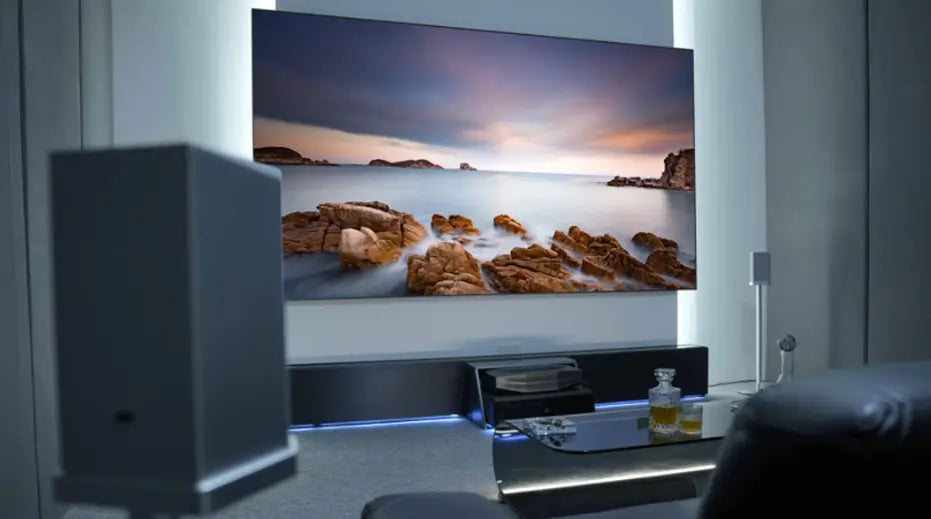
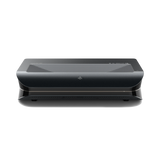
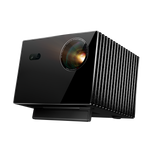
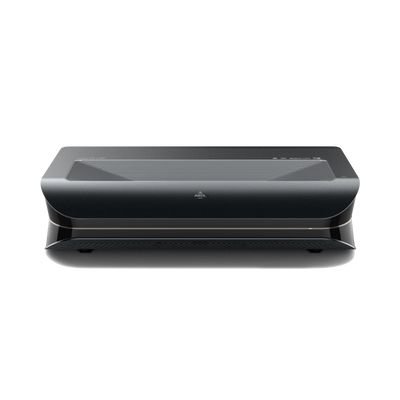
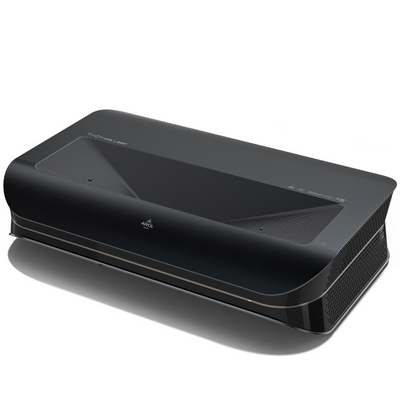
This is where ultra short throw projectors (UST projectors) especially stand out. They use pure laser light sources to throw the 8.3 million UHD pixels onto massive screens with extreme brightness and true cinema colors, without darkening the room.
Common Compatibility Questions (Upscaling & Downscaling)

Many users are unsure what happens when old film material meets new UHD devices — or vice versa.
Can I watch UHD on an HD TV?
Yes, but you will not see UHD quality. If, for example, you stream a 4K UHD movie via a streaming service to an old Full HD TV, the system performs what is known as "downscaling". The 8.3-million-pixel image is reduced to the 2 million pixels of your HD TV. You can watch the movie without any problems, but you will not benefit from the extra sharpness.
What happens with normal TV programs on a UHD display?
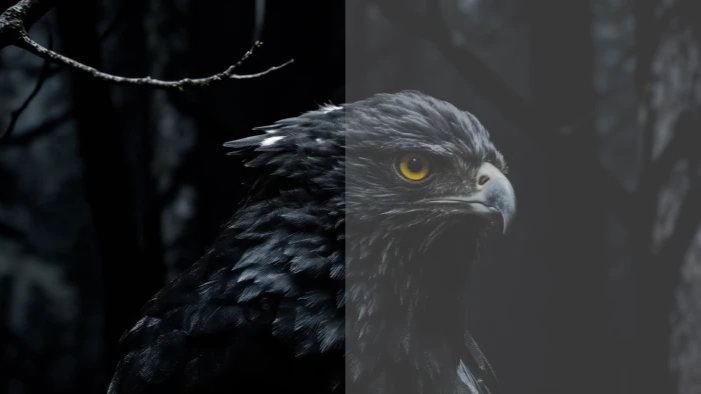
The opposite happens: Upscaling. When a normal HD signal reaches your new UHD device, the device has to calculate the missing image information so that the picture fills the entire screen.
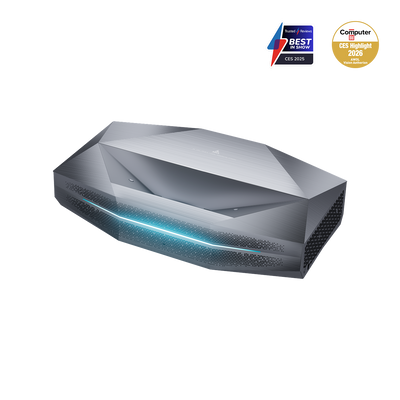
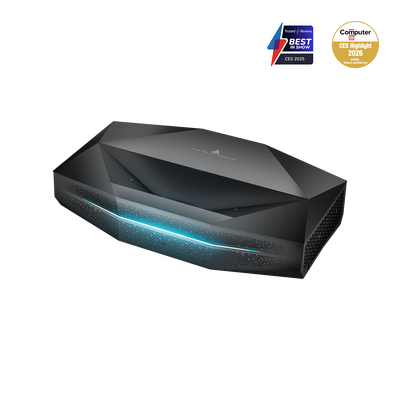
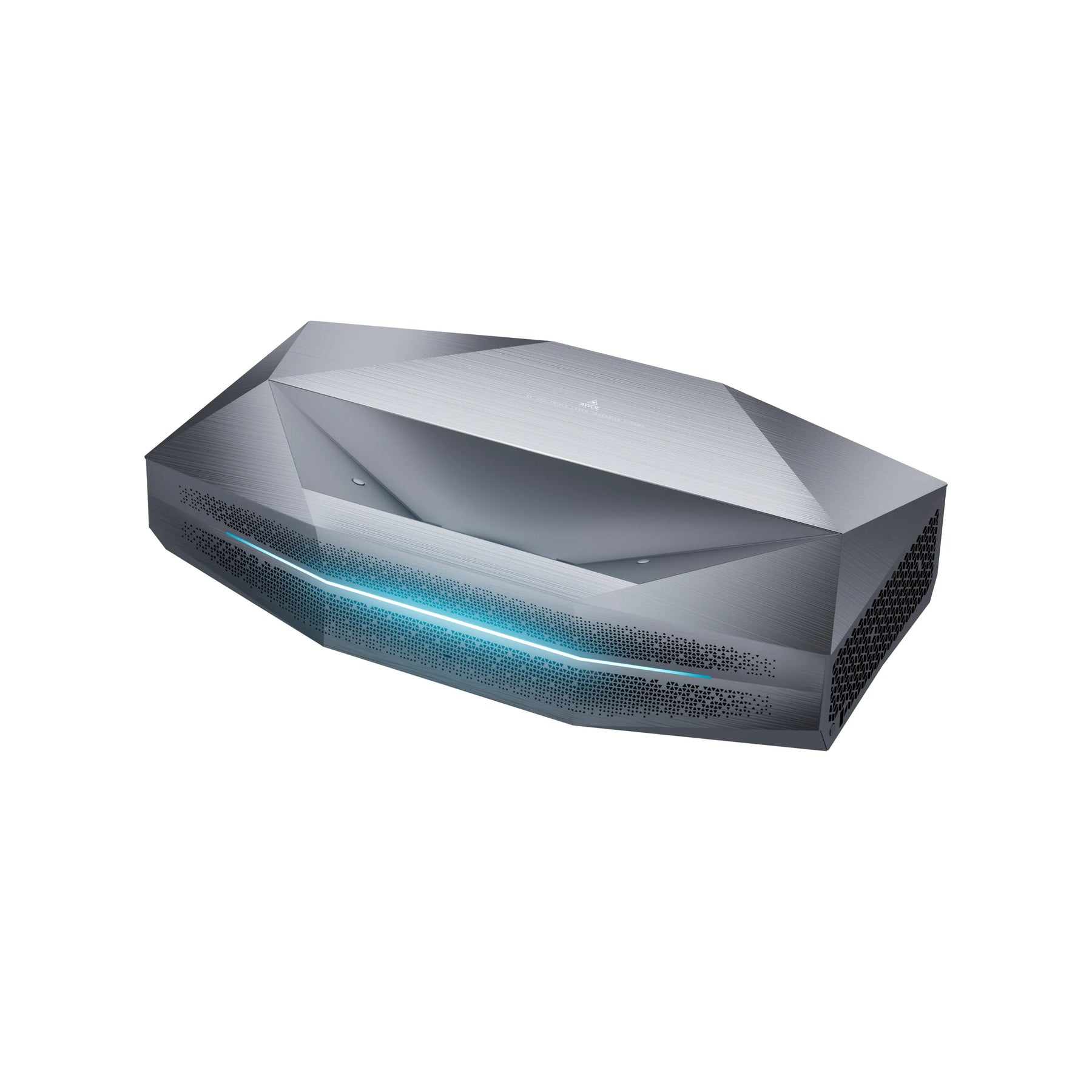
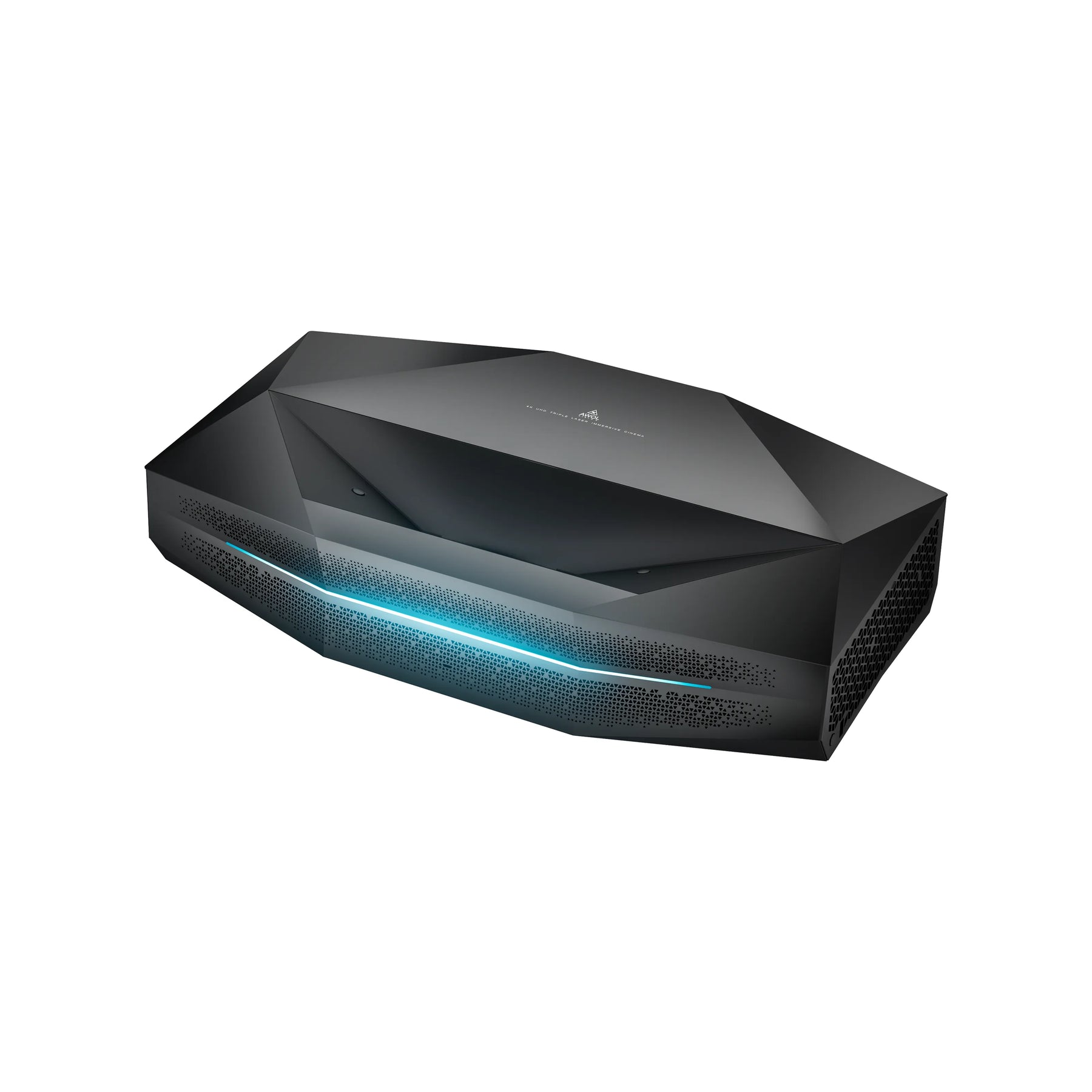
Processing power plays a crucial role here. The new AWOL Vision Aetherion Pro and Aetherion Max rely on the flagship 4K UHD SoC MT9655 platform with generous memory. This powerful hardware enables highly efficient rendering and upscaling, so even conventional content is displayed with impressive clarity and sharpness on a gigantic screen.
When is UHD resolution really worth it?
Many users rightly ask themselves: Is a 4K projector or UHD TV even worth it? The most important rule in home theater is: The higher the resolution, the larger the image must be for you to see the difference. If you calculate the perfect viewing distance and screen size, you will quickly find that UHD barely stands out on small displays.
UHD resolution only unfolds its full effect from screen sizes of 80 inches and up. To get the absolute maximum out of your 8.3 million pixels, a modern setup with the new AWOL Vision Aetherion series is the ideal way:
- Gigantic images in the smallest space: Thanks to a projection ratio of 0.2:1, the Aetherion Pro and Aetherion Max can project 4K UHD images from 80 to 200 inches while standing just a few centimeters from the wall.
- Pixels in perfect light: The pure RGB triple-laser technology delivers 110% of the REC 2020 color space at a stunning 2600 ISO lumens (Aetherion Pro) or 3300 ISO lumens (Aetherion Max). Supported by Dolby Vision, IMAX Enhanced, and Dynamic Tone Mapping, every single pixel is displayed with perfect contrast (native contrast of 6000:1 with iris lens) and lifelike colors.
- The ultimate gaming performance: Console gamers also benefit enormously from UHD. With HDMI 2.1 ports, 1 ms input lag, VRR (Variable Refresh Rate), and ALLM (Auto Low Latency Mode), the new Aetherion models act as uncompromising gaming projectors for responsive 4K gaming.
Conclusion: UHD is the foundation, technology makes the difference
Do not let marketing terms confuse you. UHD resolution is now the absolute baseline for razor-sharp images. If you are choosing a new home theater device, 4K UHD is a must.
However, your actual purchasing decision should focus on which technology powers those pixels and how large the image should be. Anyone looking for maximum size, stunning colors, and uncompromising hardware performance will find the ultimate window into another world in the new generation of high-quality 4K laser TVs like the AWOL Vision Aetherion.