





What Is the Difference Between ANSI Lumens and Lumens? ANSI lumens measure the actual brightness of the projected image on the screen using a standardized 9-point method. Simple "lumens" figures, on the other hand, measure only the raw light source inside the device - without lens and color losses. In practice, the difference is often a factor of 5 to 10.
You are looking for a projector and are faced with this confusing situation: Model A costs €300 and advertises "6,000 lumens". Model B is a premium device for €1,800 with "2,500 ANSI lumens". How can the cheaper device be brighter on paper? The answer lies in where the brightness is measured - and which standards apply.
At a Glance: Lumens vs. ANSI Lumens vs. ISO Lumens
Before we dive deep into the technical details, here is a quick and clear comparison of the three most important brightness metrics you will encounter when buying a projector:
|
Property |
Light-source lumens (marketing) |
ANSI lumens |
ISO lumens (ISO 21118) |
|
What is measured? |
The pure light source (lamp, LED, or laser diode) inside the housing. |
The actually projected light on the screen. |
The projected light on the screen under the strictest production requirements. |
|
Measurement method |
Not standardized. Often theoretical maximum values of the components. |
Standardized 9-point measurement on the projection surface. |
9-point measurement plus strict requirements for maximum unit-to-unit variation. |
|
Reliability |
Very low. Serves primarily as a misleading marketing trick. |
High. The industry standard established for years. |
Very high. The new, strictest standard for high-end and premium devices. |
The Brightness Confusion: Why "Lumens" Are Not Always "Lumens"
The unit lumen (lm) basically measures luminous flux - in other words, how much light a light source emits. The problem with projectors, however, is the question of where exactly that light is measured.
What Are Light-source Lumens (Marketing Lumens)?
If a spec sheet only says "lumens" or "LED lumens", it is almost always referring to light-source lumens. In this case, brightness is measured directly at the bare lamp, LED, or laser diode inside the housing.
This value is practically useless to you as the end consumer. If you understand how a projector works, you know that the light has to pass through lenses, color filters, and mirrors (DLP chips) on its way to the screen. In this process, often 50 to 70 percent of the original brightness is lost. A device with "6,000 light-source lumens" often delivers only a fraction of that output on the screen in a real living room.
ANSI Lumens Explained: The Long-standing Industry Standard
To end this chaos, the American National Standards Institute (ANSI) developed a standardized measurement method. When you read the value ANSI lumens , you are dealing with a reliable and comparable metric.
How Are ANSI Lumens Measured?
Unlike pure marketing lumens, ANSI lumens are measured where it matters to you: on the projection surface.
To do this, the projected pure white image is divided into nine equally sized rectangles. Brightness is measured in the center of each rectangle. The average of these nine measurement points gives the final ANSI-lumen value. This method ensures that a drop in brightness toward the edges of the screen (vignetting) is also included in the rating.
ISO Lumens vs. ANSI Lumens: The New, Stricter Standard for Premium Devices
While ANSI lumens were long considered the gold standard, modern premium manufacturers are increasingly moving to specifying brightness in ISO lumens (according to the international standard ISO 21118).
Why Top Manufacturers Use ISO Lumens
The ISO standard is even stricter than the ANSI procedure in its requirements. It not only specifies the exact measurement points, but also dictates conditions for mass production. A projector certified according to ISO 21118 may vary by a maximum of 20 percent from the stated brightness in mass production - a major safeguard against severe quality fluctuations.
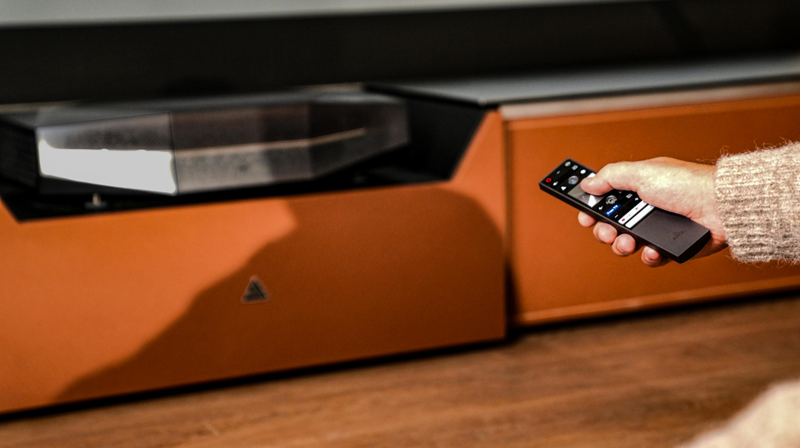
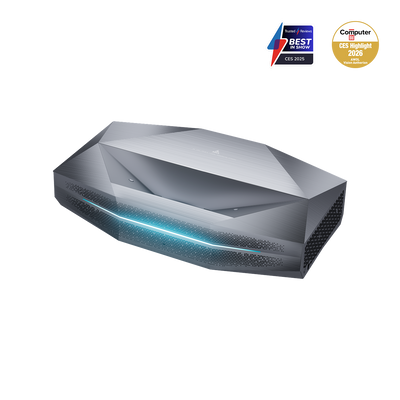
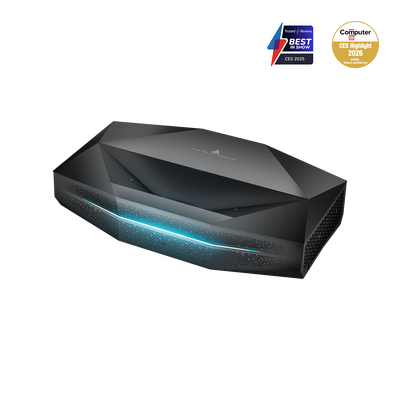
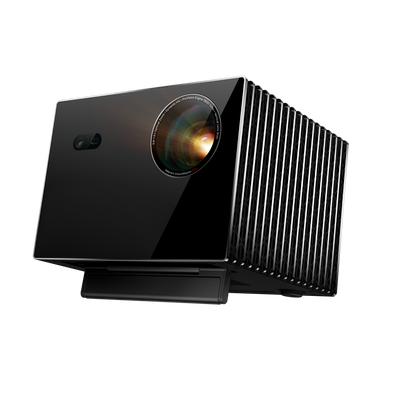
Premium brands use this metric deliberately to create maximum transparency. A modern example is the AWOL Vision Aetherion series. Instead of advertising theoretical peak values, the models (Aetherion Pro and Max) are listed with certified 2,600 and 3,300 ISO lumens respectively. For the user, this means the guarantee that the promised brightness - powered by a triple-laser light source - actually reaches the home living room reliably.
The Conversion Factor: ANSI to ISO
Because the measurement methods are complex, the values cannot be converted 100 percent linearly. However, a reliable rule of thumb in the industry is: 1 ANSI lumen corresponds to about 0.8 ISO lumens. So, with the same number on the spec sheet, an ISO-lumen value is the result of a stricter measurement.
How Many Lumens Should a Projector Have?

Once you ignore misleading "marketing lumens" and focus only on ANSI or ISO values, the question becomes: How many lumens should a projector have, to optimally illuminate your room?
Dark home theater (dedicated room)
If you are specifically looking for a projector for home to use in a windowless room or a basement that can be completely darkened, you need less brightness than you might think. Here, 1,500 to 2,000 ANSI/ISO lumens are completely sufficient. In such environments, excellent native contrast is far more important than raw brightness for achieving deep blacks.
Bright living rooms and daylight
If, however, you are looking for a projector for the living room and want to use the device as a modern TV replacement in daylight, the requirements rise dramatically. Otherwise, ambient light will wash out the projected image.
- Minimum requirement: Look for devices with at least 2,500 ANSI/ISO lumens.
- The most important tip: Combine a bright ultra-short-throw projector with a suitable projector screen using ALR technology (Ambient Light Rejecting). These special screens block stray light from the sides and from above and reflect only the projector's light back to the viewer.
Conclusion: The Right Brightness for Your Home Theater
In summary, choosing the right projector does not have to be guesswork if you know which numbers on the spec sheet really matter. If you are upgrading your home theater or living room, keep these key points in mind:
- Ignore pure "lumens": Do not be fooled by extremely high, unstandardized light-source lumens. These values are often just for marketing and do not reflect the real viewing experience.
- Look for ANSI or ISO lumens: Compare projectors only based on these standardized industry metrics, which measure the actual brightness on the screen. ISO lumens are the most modern and strict benchmark for premium devices.
- Match brightness to the room: For a darkened home theater, 1,500 to 2,000 ANSI/ISO lumens are often enough. If the projector is meant to replace the TV in a daylight-filled living room, aim for models with at least 2,500 to 3,000 ISO lumens.
- The setup matters: The highest lumen rating is of little use in a bright living room if it is aimed at a plain white wall. Always combine a bright ultra-short-throw projector with a special ALR screen to get the best possible picture.
Frequently Asked Questions (FAQ)
What Is the Difference Between ANSI Lumens and Lumens?
ANSI lumens measure the actual image brightness on the screen using a standardized 9-point method. Simple "lumens" figures measure the light source inside the device - without losses from optics and color filters. In practice, the difference can be as much as a factor of 16.
How Are ANSI Lumens Measured?
A full white image is projected onto a test screen. The surface is divided into 9 equally sized rectangles, and brightness is measured at the center of each one. The average of all 9 measurement points gives the ANSI-lumen value - including edge falloff (vignetting).
How Much Are 2,000 ANSI Lumens in "Normal" Lumens?
Since pure "lumens" figures are not standardized, there is no exact conversion. Experience shows that low-cost vendors often misleadingly advertise devices with 2,000 ANSI lumens as "6,000 to 8,000 lumens".
Are 400 ANSI Lumens Good for a Projector?
Acceptable for occasional use in a completely dark bedroom. For a true home theater experience or daytime use, definitely too little - the image looks dull and washed out.
What Are ISO Lumens and How Do They Differ from ANSI Lumens?
ISO lumens (ISO 21118) use the same 9-point measurement method as ANSI, but also require strict mass-production tolerances (max. 20% deviation). 1 ANSI lumen corresponds to approximately 0.80-0.88 ISO lumens. ISO is considered the most modern and reliable standard.