



It can be extremely frustrating when you want to set up a home cinema in the living room and, when looking at the spec sheets, completely lose track of what is what. One manufacturer advertises a contrast ratio of 1,000:1, while the next promises a ridiculous 1,000,000:1. But what do these numbers really mean in practice?
If you’re wondering what a good contrast ratio for projectors is and how to avoid falling for misleading marketing tricks, you’re in the right place. In this article, we break down the technology behind the numbers and show you what really matters for a razor-sharp, vivid image.
What does contrast ratio even mean?
Contrast ratio describes the difference in brightness between the brightest white and the darkest black a projector can display at the same time.
A contrast ratio of 1,000:1 simply means: the brightest white on the screen is 1,000 times brighter than the deepest black. If you want to understand how a projector works, contrast, alongside sheer brightness, is the most important factor for image quality.
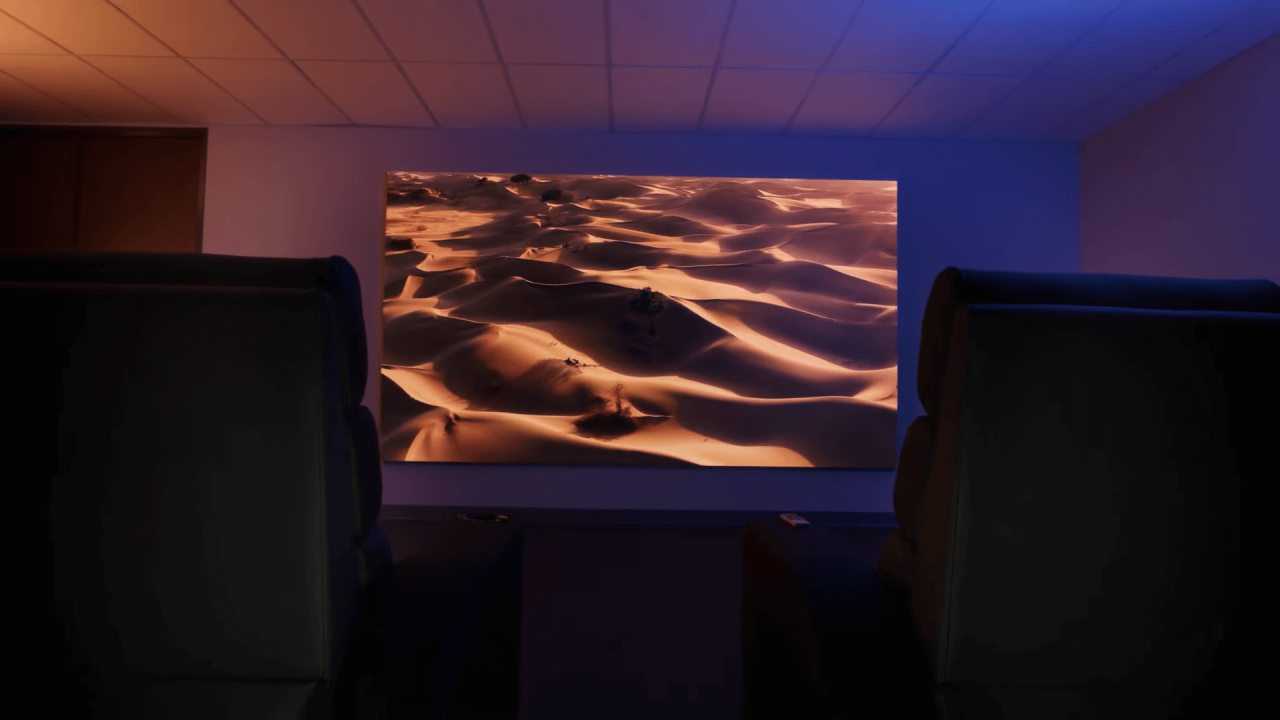
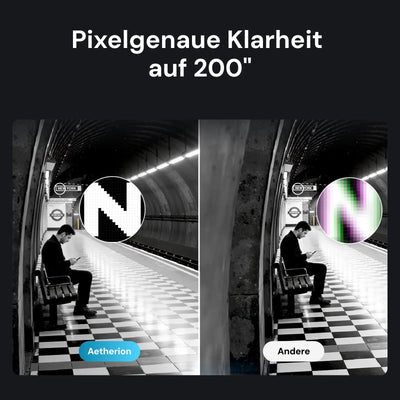
Weak contrast makes dark movie scenes look not black, but more like a washed-out, milky gray. Strong contrast, on the other hand, delivers enormous image depth, brilliant colors, and a real 3D feel, even with 2D content.
Which is better: 3000:1 or 1000:1 contrast ratio?
This is one of the most common questions when choosing a projector. The clear answer is: 3,000:1 is visibly better than 1,000:1.
Standard DLP projectors (Digital Light Processing) typically offer contrast between 1,000:1 and 2,000:1. If you upgrade from 1,000:1 to 3,000:1, you’ll notice the difference immediately. Black levels are noticeably richer, and shadows in dark movie scenes contain far more visible detail. For a solid, darkened home cinema, 3,000:1 is an excellent benchmark for conventional projectors.
Is a contrast ratio of 100,000:1 good?
If 3,000:1 is good, 100,000:1 must be fantastic, right? Not necessarily. This is where the marketing-trick territory begins, similar to the difference between Lumen vs. ANSI Lumens. To understand these absurdly high numbers, we need to separate two terms:
1. Native contrast
This is the most important figure. Native contrast describes the pure performance of the hardware components (the chip and the lens) in a single film frame. If it says 3,000:1 here, that’s a very good, honest value.
2. Dynamic contrast
Numbers like 100,000:1 or 1,000,000:1 are almost always dynamic contrast figures. In this case, the projector uses software or a mechanical aperture (iris) to drastically reduce light in dark scenes and open it up fully in bright scenes. The manufacturers then measure the brightest white in a bright scene and compare it with the darkest black in an entirely different, dark scene.
The result? A gigantic number on paper that says nothing about how well the projector can display bright and dark elements at the same time in one and the same image.
The new standard: true black through advanced laser technology

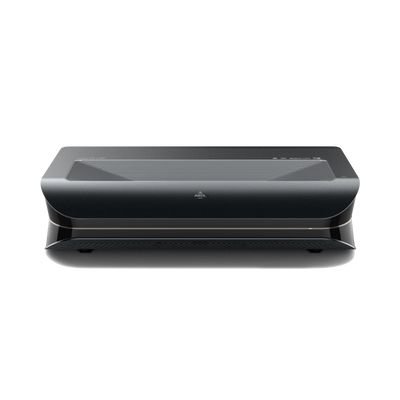
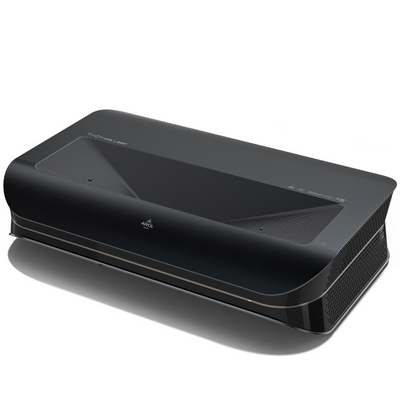
However, the industry has moved on. If you want to completely replace your TV with an ultra-short throw projector (UST) these days, you no longer have to settle for mediocre black levels.
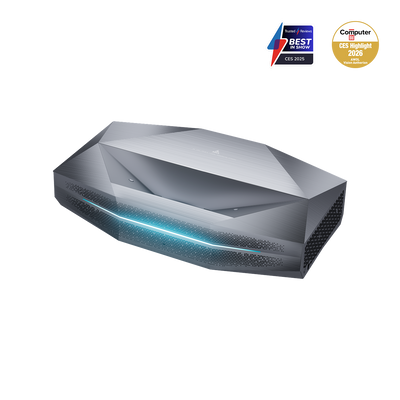
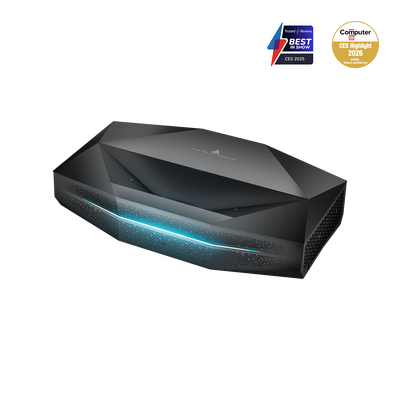
The spearhead of modern projection technology, such as the AWOL Vision Aetherion series (Aetherion Pro and Aetherion Max), relies on RGB Pure Triple Laser technology combined with advanced optical systems.
Instead of relying on misleading software tricks, the Aetherion delivers an impressive native contrast of 6,000:1 (with dynamic iris). That’s a massive improvement over the industry standard. In addition, advanced algorithms give it an EBL (Enhanced Black Level) contrast of 60,000:1. The result is cinema-grade black reproduction that, combined with dynamic tone mapping and true Dolby Vision, creates unmatched image depth.
The role of the right screen

Even a projector with the best contrast ratio in the world loses its impact if you project it onto bare white textured wallpaper. A white wall reflects ambient light in the room back into the image and instantly destroys the black levels.
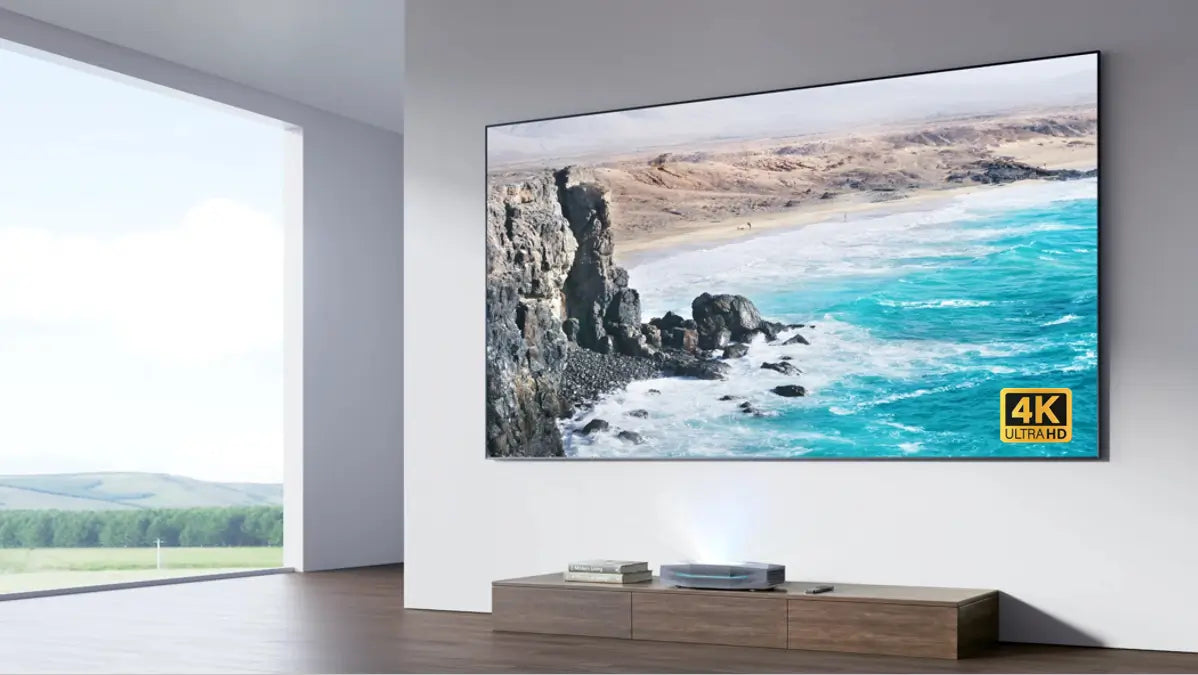
To get the most out of your projector’s contrast potential—especially in bright living rooms—the right screen is essential. An ALR screen (Ambient Light Rejecting) blocks distracting overhead light and reflects only the projector’s light directly back to you on the sofa. This preserves the deep black levels and makes the image look as contrast-rich as an OLED TV.
Discover our selection of high-quality ALR screens, perfectly matched to laser TVs.
Conclusion: what to look for when buying
Finding the perfect projector doesn’t have to be complicated if you know which numbers really matter:
- Beware of million-level figures: Ignore astronomical dynamic contrast figures on cheap projectors. Always look for native contrast.
- The standard (1,000:1 to 3,000:1): 1,000:1 is the absolute minimum for a usable image. A native contrast ratio of 3,000:1 already delivers very respectable, deep black levels for conventional home cinemas.
- The premium class (6,000:1 native): If you’re looking for uncompromising image quality, high-end models like the AWOL Vision Aetherion with 6,000:1 native contrast (including iris) and 60,000:1 EBL contrast set completely new standards for the living room.
- No screen, no contrast: Don’t forget to complete your setup with an ALR screen to maintain contrast performance even in daylight.
Are you ready for the ultimate home cinema upgrade? Discover our 4K Laser TV models and experience contrast and color depth on a completely new level.
Frequently Asked Questions (FAQ) about projector contrast
What is the difference between FOFO contrast and ANSI contrast?
When you dive deep into spec sheets, you’ll often come across these two terms. FOFO contrast (Full On/Full Off) measures a completely white image and then a completely black image one after the other. This produces very high numbers, but it doesn’t reflect reality. ANSI contrast (checkerboard contrast) measures black and white at the same time in a checkerboard pattern. ANSI contrast is therefore a much more honest measure of image depth in a real movie scene. An ANSI contrast of 300:1 to 500:1 is already considered outstanding.
Is a contrast ratio of 10,000:1 enough for daylight?
On paper, 10,000:1 (dynamic) sounds excellent. In daylight or in an unshaded living room, however, this value quickly loses importance if you use a standard white screen. Ambient light physically brightens the black areas on the screen. For daylight setups, an extremely bright laser projector combined with an ALR screen is far more important than a fictitious contrast value of 10,000:1.
Does a gray screen improve projector contrast?
Yes, in non-optimized rooms (with white walls or residual light), a gray screen or a special ALR contrast screen can work wonders. Since gray is naturally darker than white, the black level (“Black Level”) is noticeably lowered, which massively increases perceived on-screen contrast. The brilliant colors of a triple-laser system like the AWOL Vision Aetherion still shine through powerfully.
Is a contrast ratio of 1000:1 enough for HDR content?
For true HDR (High Dynamic Range) or Dolby Vision, a contrast of 1,000:1 is actually too low, since HDR thrives on extreme brightness differences and the deepest black. An image with 1,000:1 often looks somewhat flat with HDR content. To really make the most of the dynamic metadata of HDR10 or Dolby Vision, a native contrast of at least 3,000:1 up to the 6,000:1 of the premium class is recommended.