


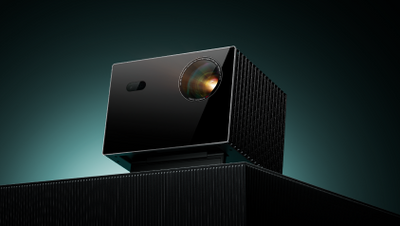


The choice between a projector and a television is one of the most fundamental in modern home entertainment. But this is about far more than just choosing a screen size. It is a decision between two philosophies: on one side stands the television — a master of versatility that impresses with brilliant, bright picture quality and effortless convenience in almost any setting. On the other side stands the projector — the specialist for special occasions, creating an incomparably large, immersive image and bringing the authentic feeling of a cinema visit into your own four walls.
New technologies such as Laser TVs have blurred the lines between these two worlds and made the decision more complex, but also more exciting. The goal of this article is to give you a clear and honest decision guide. We analyze all the decisive factors — from picture quality to costs and viewing comfort — so you can find the perfect solution for your needs, your room, and your budget.
The direct comparison: all decisive criteria put to the test
To make the right choice, we need to assess the strengths and weaknesses of both technologies objectively. Each criterion plays a crucial role in your future viewing experience.
Criterion 1: Picture size & immersion

This is where projectors dominate. While televisions hit a financial and practical limit at 85 inches, projectors are just getting started. Screen diagonals of 120, 150, or even more inches can be achieved cost-effectively. This huge difference in size leads to a qualitative change: the picture fills your peripheral vision and creates a strong sense of immersion. You no longer watch a screen; you step into the movie. A television, even a large one, always remains a window to the world, while a projector brings the world into the room.
Criterion 2: Brightness, contrast, and black level
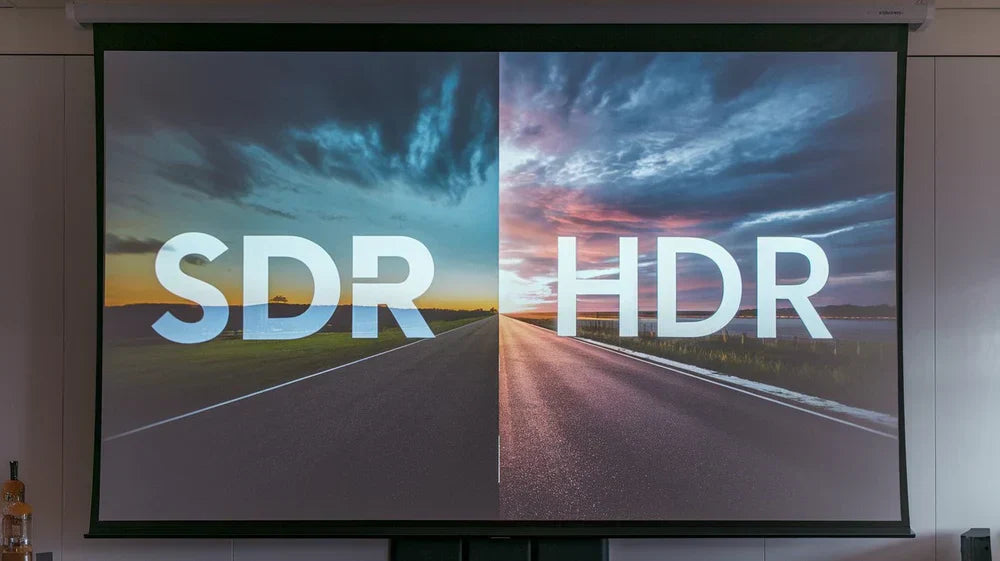
In this category, the television is the clear winner. As self-lit displays (OLED) or with extremely powerful backlighting (QLED, Mini-LED), televisions produce significantly higher brightness. That makes them unbeatable in rooms with ambient light, where a projector’s image can quickly look washed out and pale. OLED televisions in particular offer a perfect black level and infinite contrast thanks to their ability to switch pixels off completely. A projector cannot project black; its "black" is merely the absence of light. In an optimized, dark room, the result is impressive, but it still does not match the perfection of an OLED TV. This also affects HDR performance, which looks much more dynamic and striking on a bright television.
Criterion 3: Installation & space requirements

Installing a television is simple: set it up, plug it in, done. Wall mounting is also quick. Installing a projector, however, is a small project that requires careful planning. You need to calculate the correct distance for the desired image size, mount the projector on the ceiling or a rear wall, install and align a screen, and discreetly route long cables for power and signal. While a TV is a "plug-and-play" solution, a projector setup requires commitment and preparation.
Criterion 4: The total cost at a glance
You always have to look at the total cost of the system. The price-per-inch equation is crucial here:
-
Up to 85 inches: televisions offer the better value for money.
-
Over 100 inches: the situation reverses dramatically. A 100-inch television can cost several times more than a high-quality projector that easily reaches 120 inches.
However, the projector itself is only one component. You also need to add a screen, sound system, and mount to the total cost. In addition, projectors with traditional UHP lamps are more expensive to maintain (lamp replacement every 2,000–5,000 hours). Models with a long-lasting LED or laser light source (20,000+ hours) are the much more economical choice here.
Criterion 5: Sound to match the picture
Most televisions have usable built-in speakers. The speakers in traditional projectors, on the other hand, are usually just a fallback. For a true cinema experience, both systems require an external sound system — from a good soundbar to a full surround system — as an essential investment. Modern Laser TVs are an exception here, as they often come with high-quality soundbars built in that can outperform the sound of many televisions.
Criterion 6: Viewing comfort — which is easier on the eyes?
This is an often overlooked but crucial strength of the projector. A television emits light directly into your eyes. A projector casts light onto a screen, from which it is reflected. This indirect light is softer, more natural, and has been shown to cause less eye strain, especially during long movie nights. In addition, exposure to high-energy blue light, which is linked to digital fatigue, is significantly lower with a projector.
The technological revolution: Can a Laser TV replace a television?
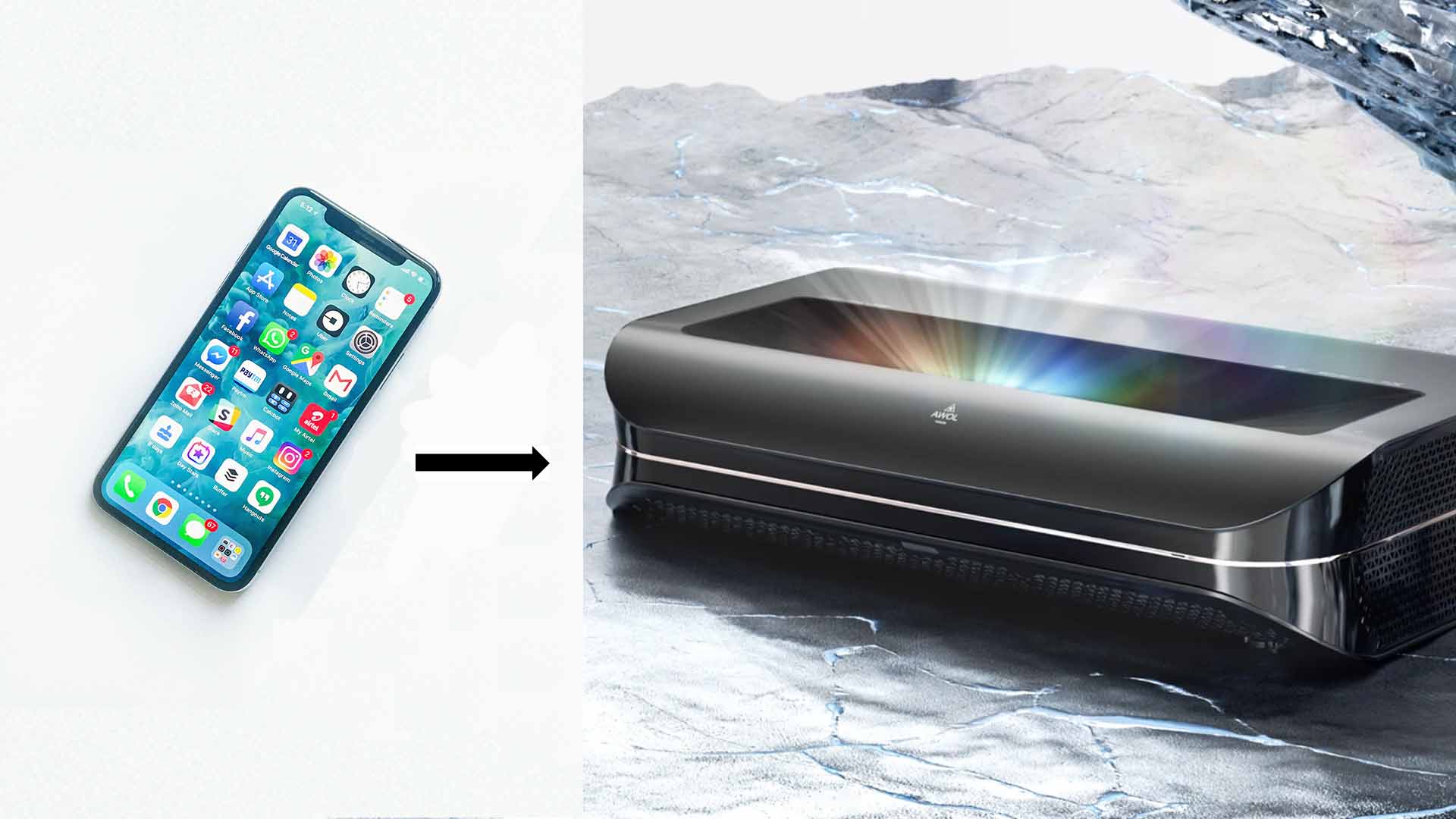
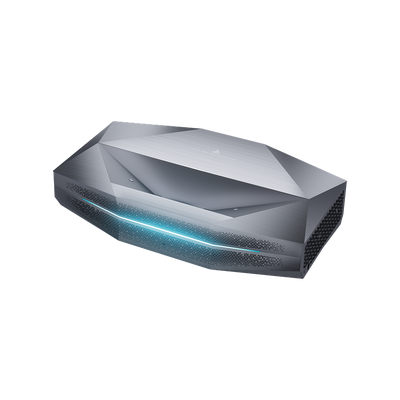
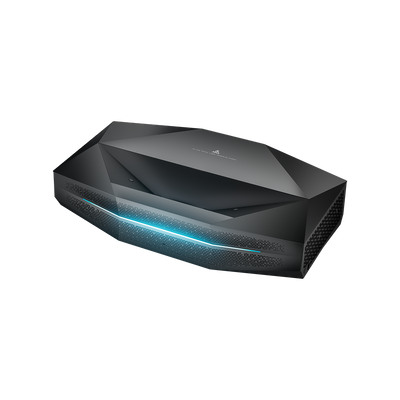
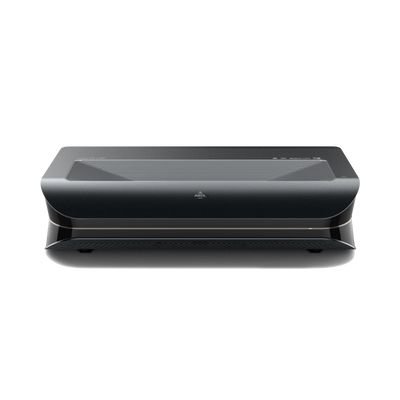
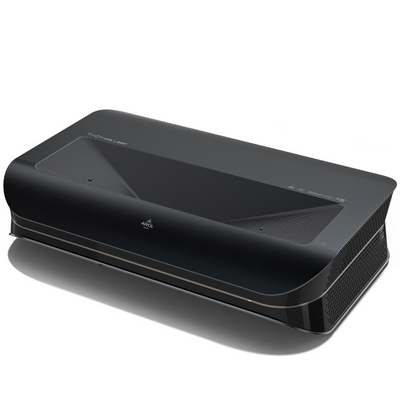
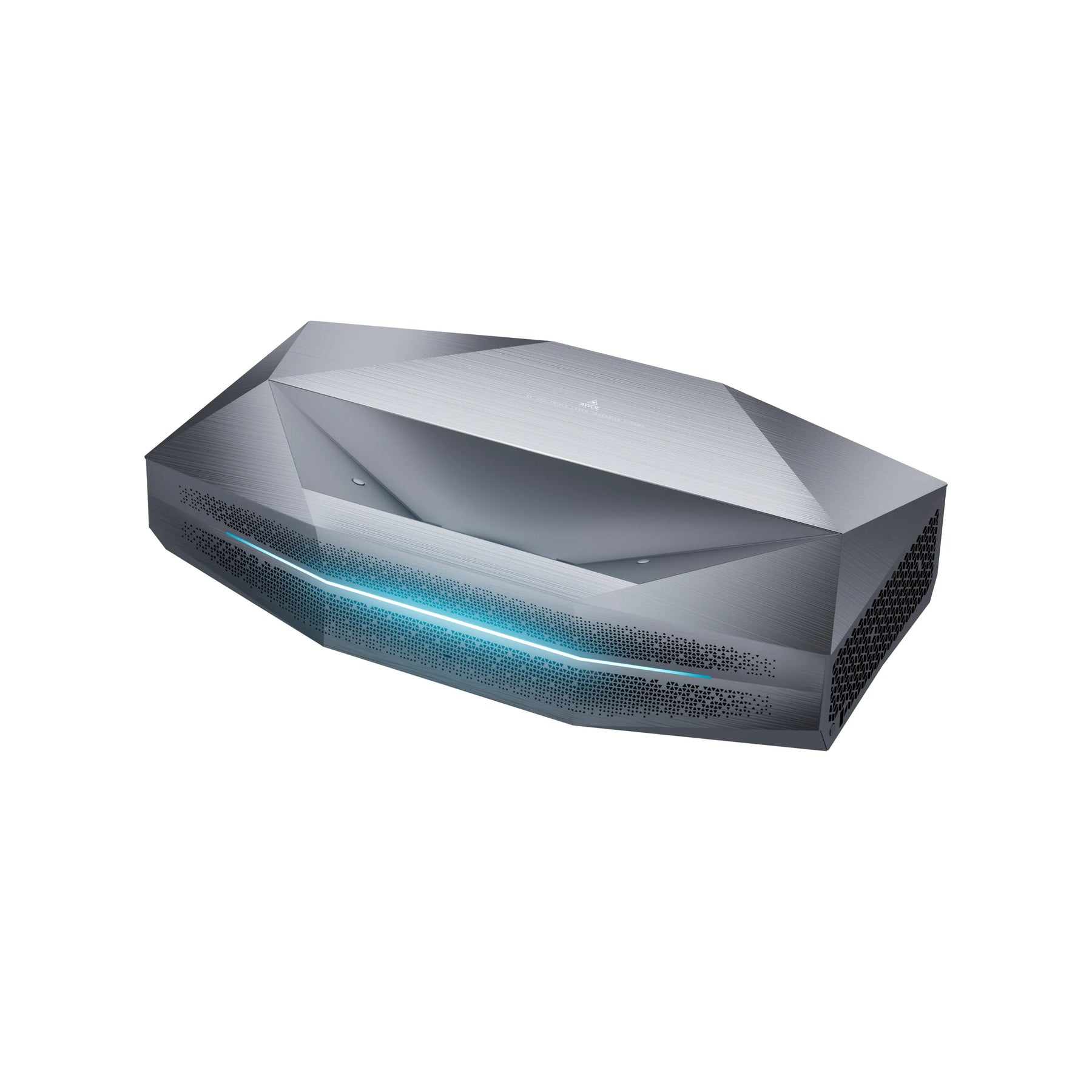
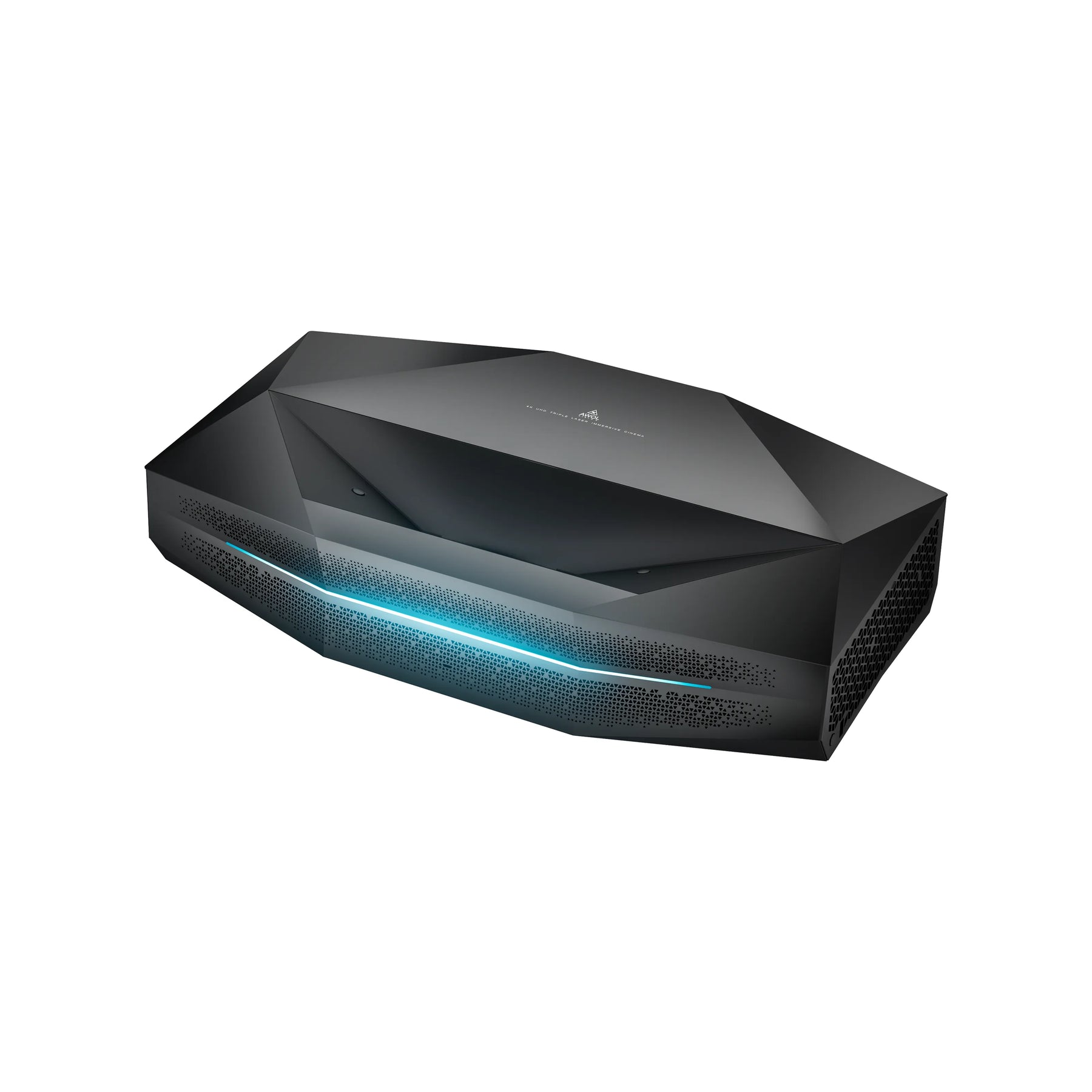
The biggest innovation of recent years has completely redefined the classic projector-versus-TV question: the ultra-short-throw projector, also known as a Laser TV.
What exactly is a Laser TV (ultra-short-throw projector)?
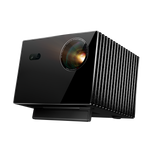
A Laser TV is a projector that no longer needs to be installed on the ceiling or at the other end of the room. Instead, it is placed on a sideboard directly in front of the wall and projects a huge image (typically 100–120 inches) upward from there. This eliminates the complex installation and makes it a true plug-and-play alternative for the living room.
The promises: a big picture without a dark home cinema room
The true strength of Laser TVs is revealed when combined with a special ALR screen (Ambient Light Rejecting). This high-tech surface directs the projector’s steeply angled light from below toward the viewer while absorbing distracting ambient light from the sides or ceiling. The result is an amazingly bright, high-contrast image, even in a living room that is not completely darkened. For the first time, this makes the projector a practical everyday TV replacement.
The compromises: where Laser TVs still reach their limits
Despite this impressive technology, there are limits. With direct sunlight on the screen, even a Laser TV system will lose out to a bright television. In addition, a premium setup made up of a Laser TV and ALR screen is a premium solution, and in terms of price it sits above many conventional televisions.
Decision guide: which type are you?
To make your final decision easier, we have outlined three typical user profiles. Find out which one suits you best.
The television is your best choice if…
-
… you mainly watch TV during the day or in a bright living room.
-
… you want a simple all-in-one solution with no installation effort.
-
… you need a versatile device for news, series, and the occasional movie.
-
… you are a competitive online gamer who depends on the absolute lowest latency and highest refresh rate.
The classic projector is ideal for you if…
-
… you have a dedicated room that can be darkened for your home cinema.
-
… for you, the authentic cinema feel with maximum image size comes first.
-
… you are a cinephile willing to invest time and budget into a perfectly tuned overall system.
-
… viewing comfort is a high priority for you during long movie nights.
A Laser TV is the right consideration if…
-
… you want to achieve a huge image of over 100 inches in your normal living room.
-
… the look of a television as a "black hole" on the wall bothers you and you prefer a minimalist solution.
-
… your budget allows for a premium investment to combine the advantages of both worlds — size and living-room suitability.
Conclusion: there is no winner, only your personal perfect solution
As our analysis shows, there is no universal answer to the question "projector or TV?". It is a compromise between the objective picture brilliance of the television and the subjective, immersive force of the projector.
You will find your perfect solution by honestly evaluating your own priorities. Finally, ask yourself these questions:
-
What is my main purpose? the celebrated movie night or everyday TV?
-
What is my room like? a dark home cinema room or a light-filled living room?
-
What are my budget and desired size? am I looking for the best performance under 85 inches or the most cost-effective solution for over 100 inches?
-
How important are aesthetics and viewing comfort to me? does a black screen on the wall bother me, and how sensitive are my eyes during long sessions?
Your answers will inevitably lead you to the right technology for your home.