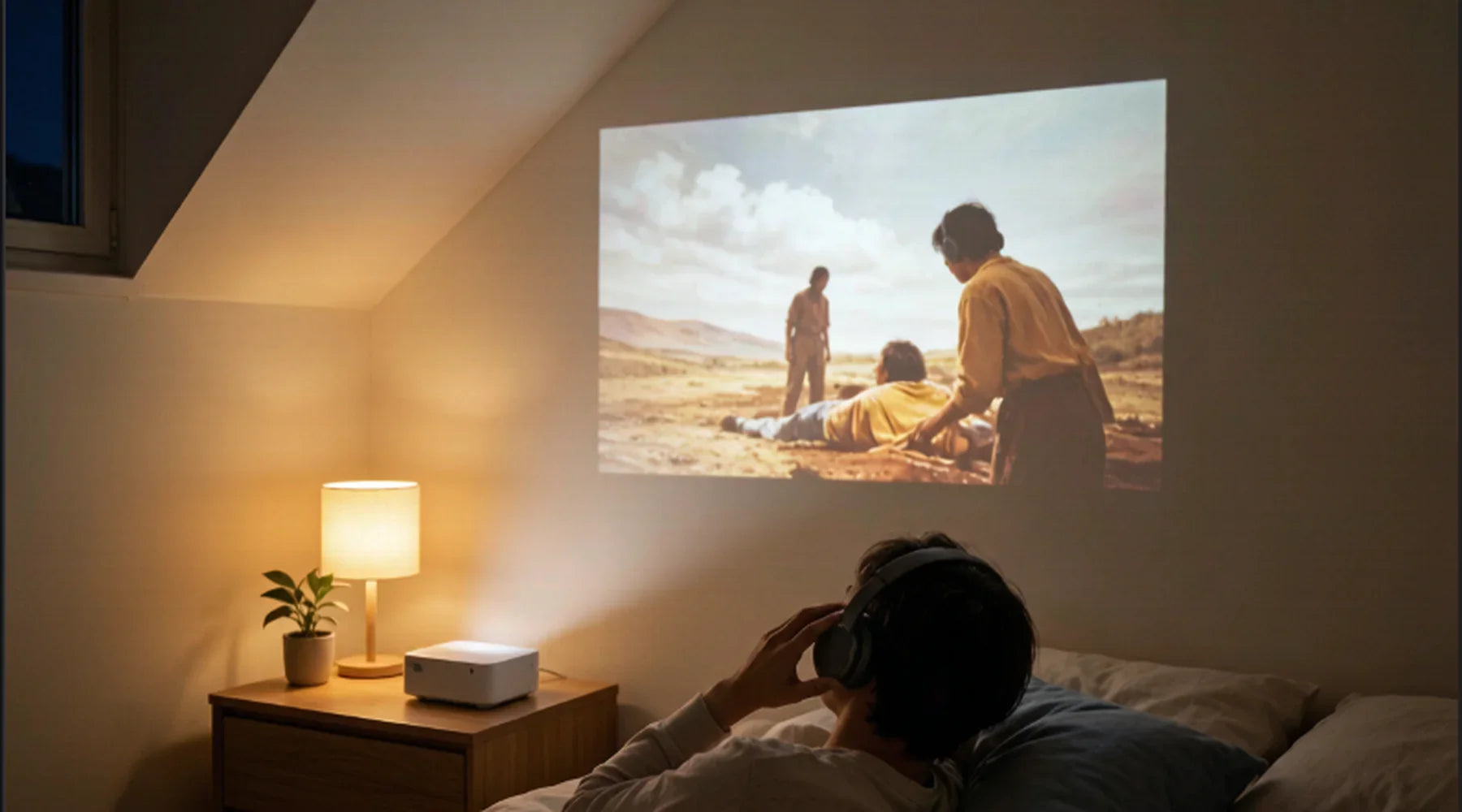
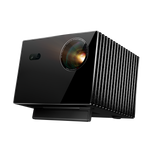


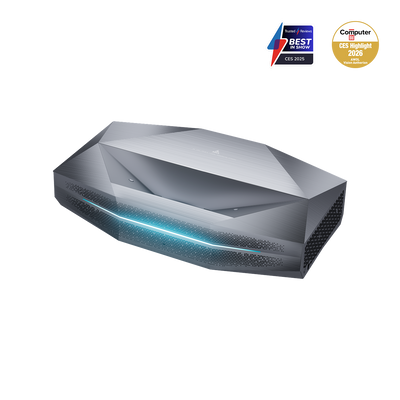

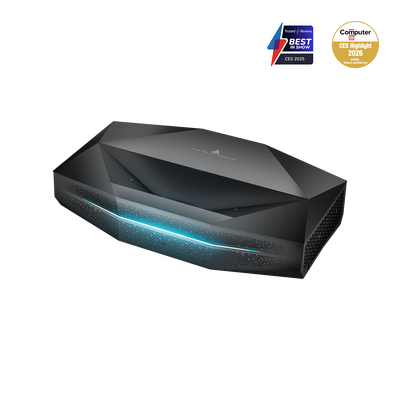

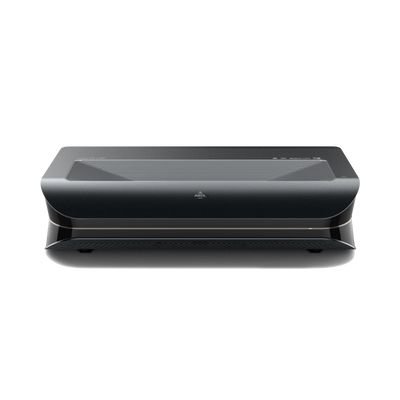


A movie night under the open sky, Football with friends or gaming on the patio: An outdoor projector turns it into a shared big-screen experience. It works best at dusk or after sunset. Even a bright home theater projector cannot simply overpower direct sunlight. For a great backyard cinema, the time of day, image size, screen, setup, and weather protection all need to work together.
Can you use a regular projector outdoors?
Many home theater projectors can be used temporarily in the garden or on a covered patio. However, that does not automatically make them weatherproof. Unless the device has a stated IP rating, it must not be exposed to rain, splashes, dew, or high humidity. Place it on a dry, stable surface and bring it back indoors after the show.
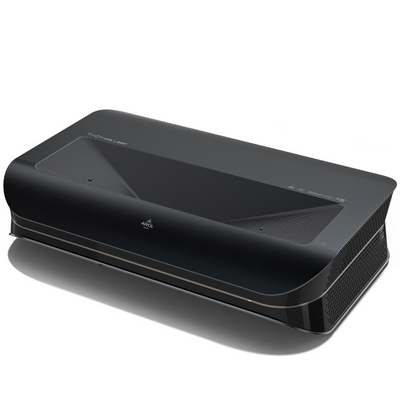
The design also affects the setup. A traditional long-throw projector needs several meters of clearance, meaning people may walk through the beam. An ultra-short-throw projector sits right in front of the screen and keeps the viewing area clear. It does, however, need an especially flat screen and precise alignment.

Outdoor projectors in daylight: What's realistic?
A backyard cinema won't produce a convincing image in direct sunlight. A projection doesn't create its own black: When sunlight hits the dark areas of the image, they look gray and contrast drops. Even more lumens can only do so much to solve this physical limitation.
So plan movies and games for dusk whenever possible. If you need to start earlier, choose a fully shaded spot and protect the screen and projection path in particular with a roof, gazebo, or dark side panels. Garden lights should not shine onto the screen either. Test your setup in advance at the planned time, as cloud cover, the season, trees, and the direction the garden faces all affect the actual conditions.
How many ISO lumens does an outdoor projector need?
There is no universal minimum. The required brightness depends on ambient light, screen size, screen type, and desired contrast. The larger the image, the more the same amount of light is spread out. Under identical conditions, a 150-inch image will therefore look darker than a 100-inch projection.
The following guide is intended as a general reference for consumer projectors; it is no substitute for testing at your specific location:
| Brightness | Realistic outdoor use |
|---|---|
| Around 500 ISO lumens | Small image in complete darkness |
| 2,000–3,000 ISO lumens | Movie night after sunset with little ambient light |
| 3,000–5,000 ISO lumens | More headroom at dusk or with a larger image |
| Over 5,000 ISO lumens | Bright ambient light, a large screen, or a more professional setup |
| Direct sunlight | Even high brightness cannot replace shade |
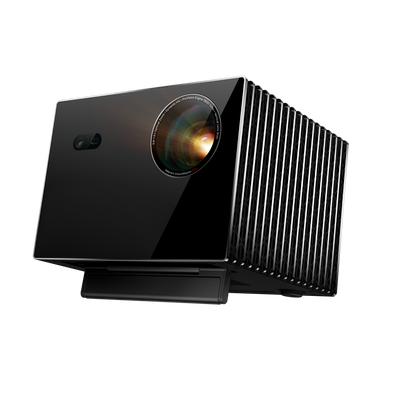
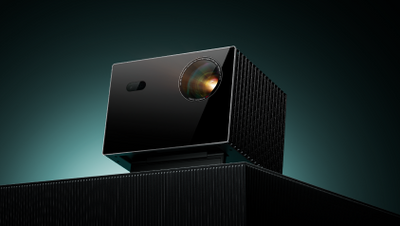
The new AWOL Vision LuxVision sets new standards for large-format outdoor entertainment with an impressive 6,000 ISO lumens. Its exceptional brightness delivers brilliant colors, clear details, and a powerful 4K image even at dusk and in ambient light. Whether it's movie night, watching football, or gaming on the patio, LuxVision delivers the brightness needed for a true premium backyard cinema on the big screen.

Full HD or 4K: Which resolution is worth it outdoors?
A Full HD projector with 1,920 × 1,080 pixels may be sufficient for smaller screens and greater viewing distances. Differences become easier to notice at around 100 inches and above: A 4K outdoor projector displays fine textures, subtitles, and scoreboards more clearly, which is especially helpful for movies, football, and gaming on a large screen. However, check the native resolution. "4K compatible" may simply mean that a device accepts a 4K signal and then displays it at a lower resolution.
What image size works well for an outdoor cinema?
For many private gardens, 100 to 120 inches is a good starting point: The image is much larger than a TV, but the screen is still manageable and needs less light than extreme formats. Viewing distance matters too. If the audience sits very close, even 4K on an oversized screen can feel tiring; sit too far away and fine details get lost.
Start with a smaller diagonal when there's ambient light, and enlarge the image only as the surroundings get darker. Before buying, also check the throw ratio, available space, and screen width. Specifications such as 200 or 300 inches describe a technical maximum, not necessarily the best size for every garden.
Portable, inflatable, or fixed screen: Which works best outdoors?
A smooth, taut projection surface is almost always better than a wall or bedsheet. A portable frame screen provides a flat surface and can be secured reliably. A floor-rising screen is quick to set up, but can catch the wind like a sail. An inflatable screen works well for larger garden parties and is easy to transport; however, it needs space, secure anchoring, and, depending on the design, a blower that runs continuously.
A flat surface is especially important for a UST projector. Because the light hits from below at a steep angle, even small ripples show up as distortion or shadows. A fluttering fabric or inflatable screen is therefore suitable only if its projection surface stays truly taut. Secure portable setups according to the manufacturer's instructions, and move the show indoors if strong gusts pick up.
A UST ALR screen directs the projector's light toward the audience and rejects some ambient light. Its directional surface must be aligned correctly. But even a high-quality projection screen can't replace shade or the right time of day when used outdoors.
How to set up a backyard cinema: Step by step
Choose a level, dry, sheltered location. Viewers should not be looking toward a streetlamp or directly into the bright evening sky. Secure the screen and position the projector physically centered and level. Digital keystone correction is suitable for minor adjustments; proper placement preserves more image sharpness.
Route power and signal cables away from walkways. Use only suitable, undamaged extension cords outdoors, and protect connections from moisture. A battery or power station needs to provide enough continuous power for the projector, streaming device, and audio equipment. Also check whether a portable projector reaches full brightness when running on battery—some models reduce brightness to extend battery life.
Test Wi-Fi, logins, apps, updates, and HDMI sources before the movie starts or kickoff. A fast connection indoors can become unstable at the far end of the garden. If the service allows it, download content in advance or make sure you have a reliable network.
Built-in speakers are enough for small groups in quiet surroundings. In windy conditions or at greater viewing distances, an external system improves speech clarity. Bluetooth is convenient, but can cause the picture and sound to drift out of sync; a wired connection is usually better synchronized. Place speakers closer to the audience rather than turning up the volume for the whole neighborhood.
Conclusion: Control the light first, then choose your projector
A good outdoor projector alone doesn't guarantee a successful backyard cinema. The key is the combination of controlled ambient light, the right image size, a stable screen, safe power, and clear sound. Test the location in advance, tailor the setup for dusk, and protect the equipment from moisture to create the best conditions for movie nights, football broadcasts, and gaming on the big screen.
FAQ
Are 500 lumens enough for an outdoor projector?
Around 500 ANSI lumens may be enough in complete darkness with a smaller image. For large screens, dusk, or distracting garden lights, there usually isn't enough brightness headroom.
Are outdoor projectors waterproof?
Not automatically. "Outdoor" often describes only an intended portable use. Only a stated IP rating confirms protection against water or dust. Without one, the projector must be kept dry and under cover.
Can you project onto a house wall outdoors?
Yes, if the wall is smooth, light-colored, clean, and preferably neutral white. Rough plaster, joints, discoloration, and glossy paint affect sharpness, contrast, and color reproduction. A taut screen provides more predictable results.
Is 300 inches realistic in a garden?
For private patios, 100 to 120 inches is usually easier to manage. A 300-inch projection requires considerably more light, space, wind stability, and professional event equipment. The Aetherion Max is officially specified for image sizes up to 200 inches.