

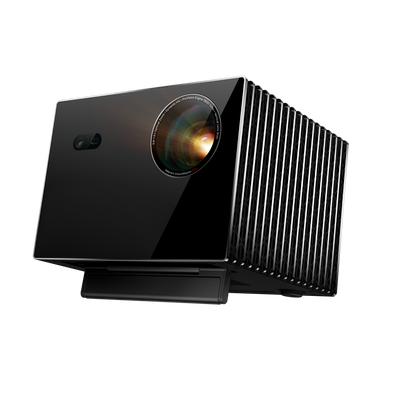


There is hardly anything more frustrating for a home theater enthusiast: a gripping, quiet dialogue scene is unfolding on the screen—and right above your head, the projector fan is buzzing like a little hairdryer.
The search for a truly quiet projector is often shaped by misleading spec sheets and confusing decibel ratings. Before deciding on a model, you need to understand the exact technical background. This guide explains in simple terms when a projector can actually be considered "quiet", what you need to watch for in the manufacturer's specifications, and how placement in the room can drastically change your listening experience.
Why are projectors so loud anyway?
If you look at it in detail, how a projector works, the simple law of physics is: Where there is a lot of light, a lot of heat is generated too. Whether it’s a traditional lamp, LED, or the most advanced laser, the light sources require an enormous amount of energy to project a brilliantly bright image onto a 120-inch screen.
To prevent overheating of the sensitive internal components (such as color chips or lenses), fans must continuously expel hot air from the housing. Particularly tricky: compact mini projectors are often significantly louder than large home theater models. Since only small fans fit into small housings, they have to spin at a much higher speed to move the same amount of air. The result is a high-pitched, irritating whirring.
At what decibel level (dB) is a projector considered quiet?
The volume of projectors is measured in decibels (dB). Because the dB scale is logarithmic, an increase of just 10 dB already means a perceived doubling of loudness to the human ear.
The magic threshold: Below 30 dB
For an uninterrupted home cinema experience, you should use the following guideline values:
- Over 35 dB: Clearly audible and often perceived as distracting during quiet movie scenes (comparable to a quiet refrigerator).
- 30 to 35 dB: Acceptable for a typical Living room setup with ambient noise, but still noticeable in quiet passages.
- Under 30 dB: Considered in home theater as quiet.
- Below 25 dB: As the absolute premium segment, it is virtually "whisper-quiet".
Beware of the "Eco Mode" trick
A common mistake when buying is blindly trusting the datasheet. Many manufacturers prominently advertise their projectors with figures like "only 24 dB". However, the small print often reveals that this value only applies in the so-called Eco mode is achieved.
In Eco mode, the projector's brightness is often reduced by 30% to 50%, which takes some load off the fan. However, as soon as you watch a modern blockbuster in full HDR (High Dynamic Range) play at maximum brightness, the projector switches to normal mode and the volume quickly jumps back to over 30 dB. So always pay attention to the noise level specification for maximum performance.
What to look for when buying a quiet projector
If you are looking for a whisper-quiet system that makes no compromises on image quality, lighting technology and setup are the key factors in our Projector Buying Guide.
Laser vs. Lamp: Which cools better?
Classic UHP lamps generate immense heat and require aggressive cooling. Modern RGB laser technology, by contrast, operates far more efficiently. A pure RGB laser system converts energy into light much more effectively while producing less waste heat. This means you can enjoy an extremely bright, color-intense image without the fans having to run at full speed.
The position: Ceiling Mount vs. Ultra-Short Throw (UST)
The most effective way to eliminate fan noise is physical distance. A traditional ceiling-mounted projector is typically installed directly above or behind the couch—meaning at most one or two meters from your ears.
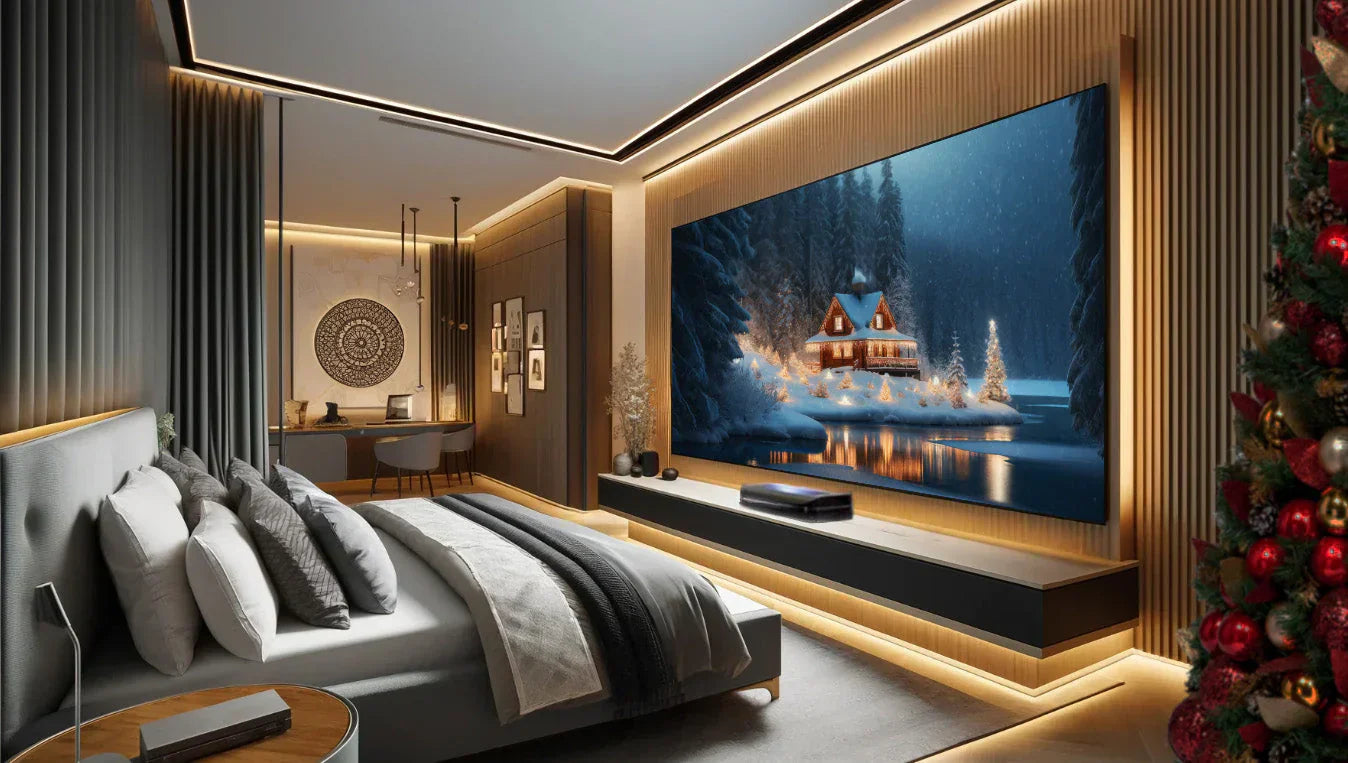
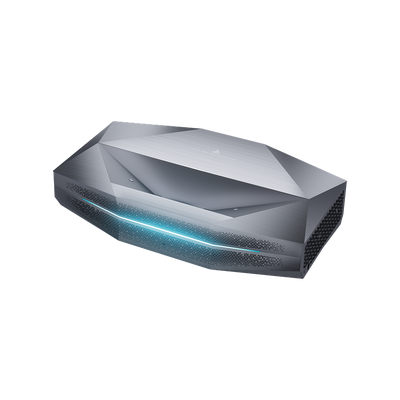
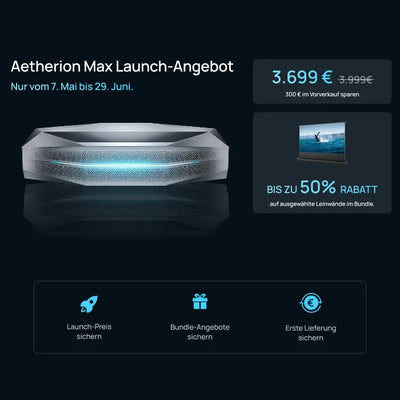
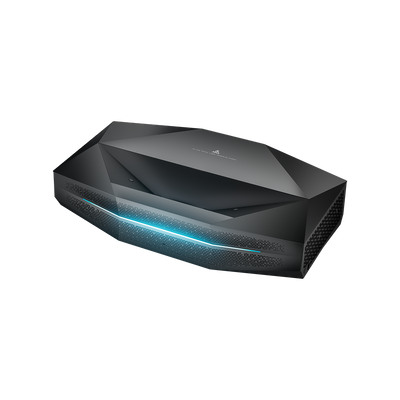
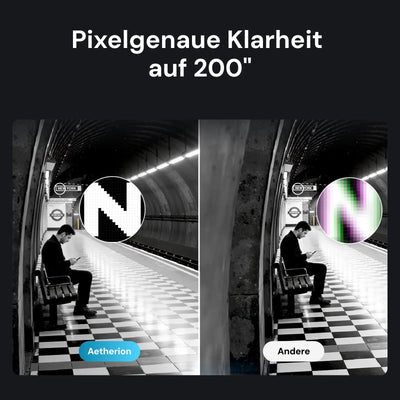
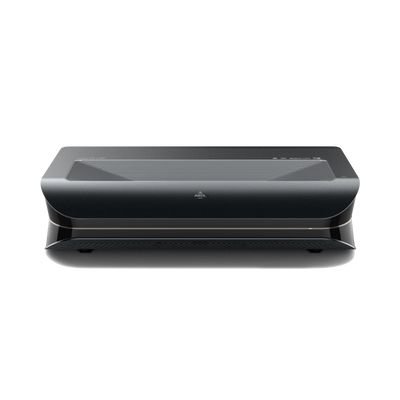
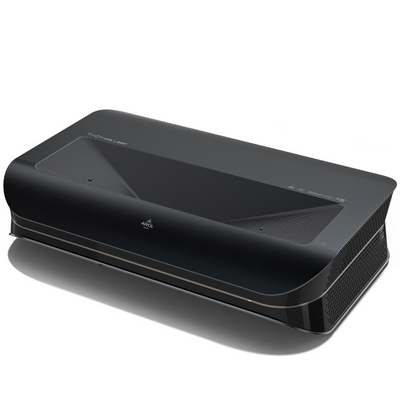
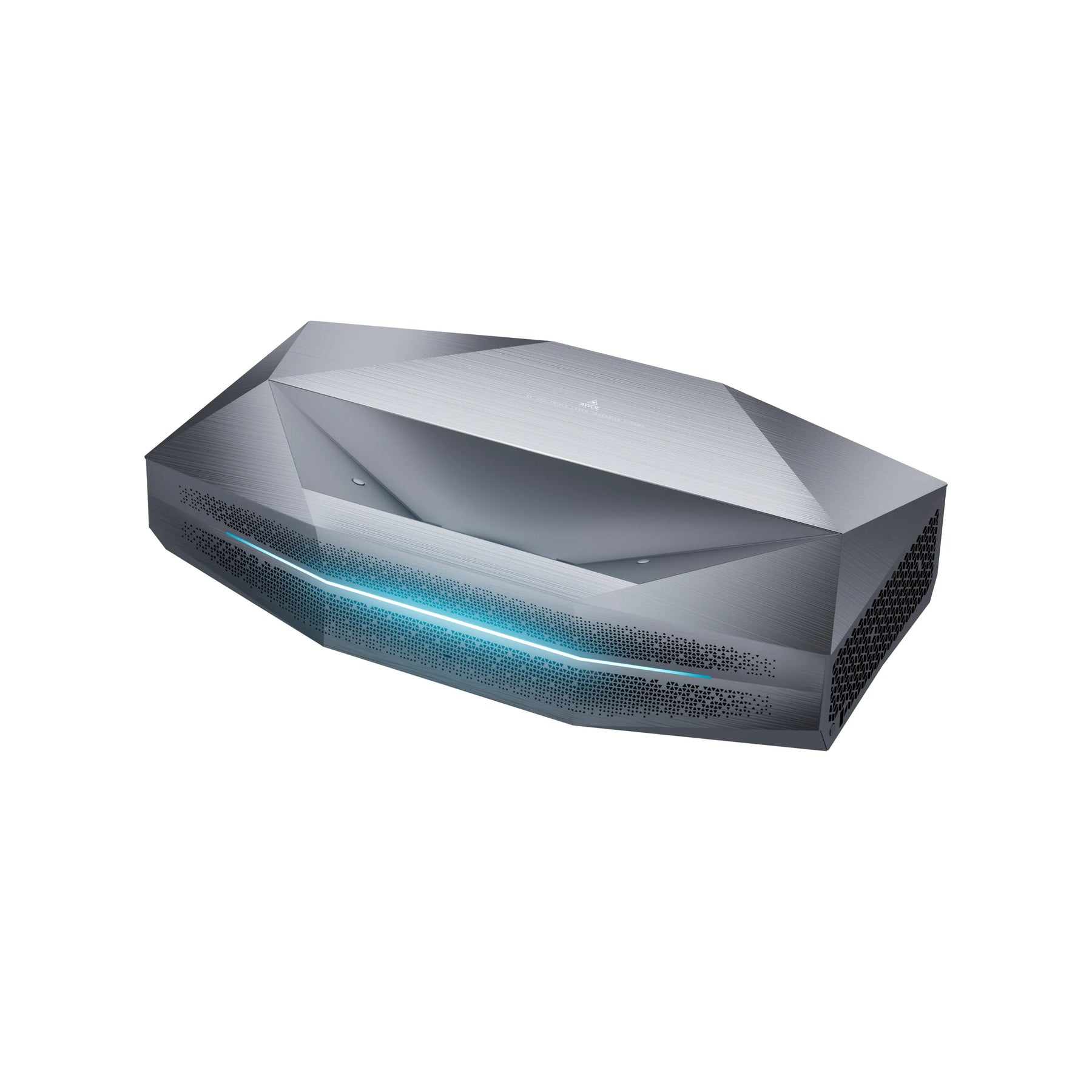
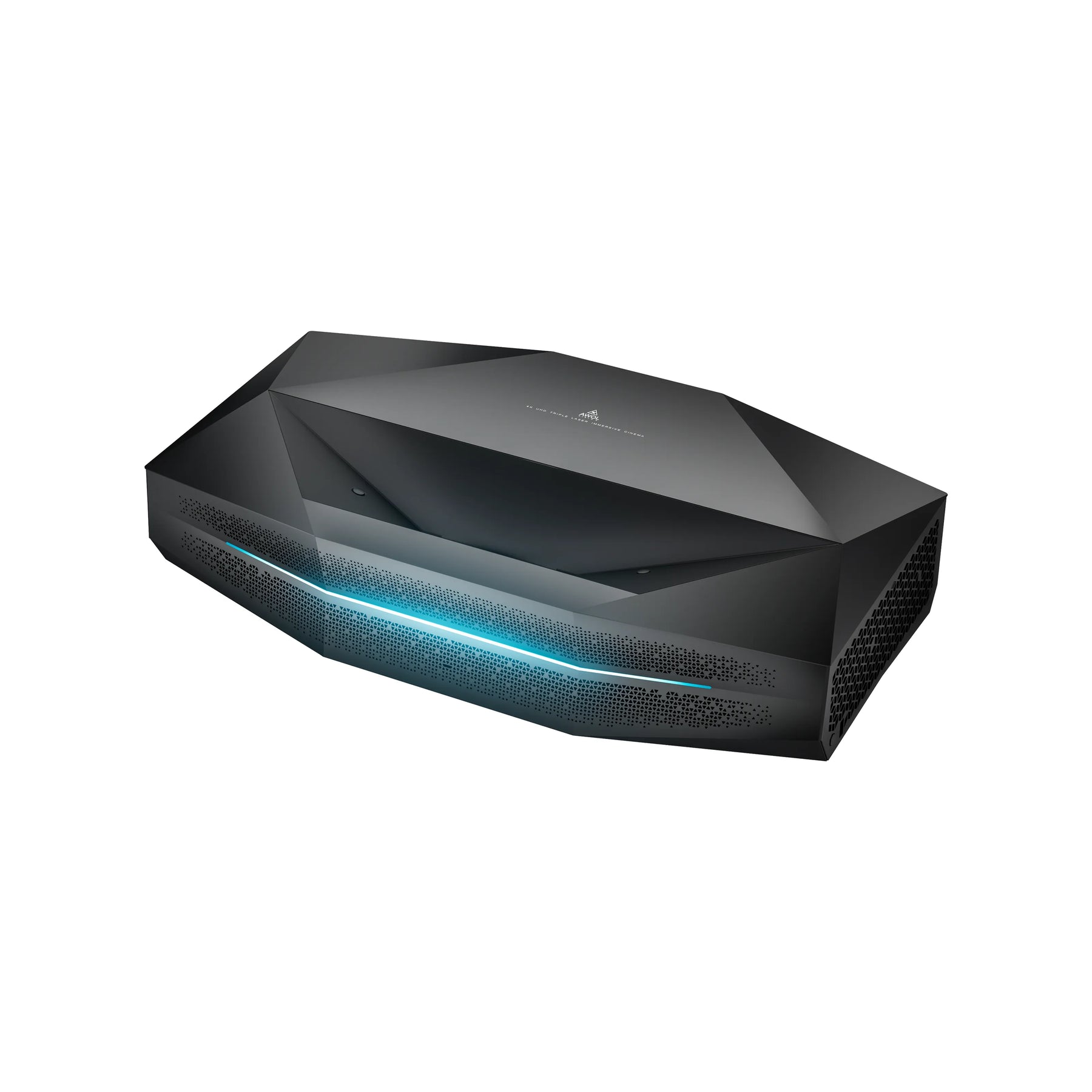
Here a Ultra-short-throw projector (UST) its greatest acoustic advantage. Modern devices like the new AWOL Vision Aetherion Series (e.g. the Aetherion Max) use an extreme projection ratio of 0.2:1. This means the device is positioned right up against the wall, directly below the screen. Even when the Aetherion Max is running at full power with its extremely bright 3300 ISO lumens and pure RGB triple laser, the source of the noise is three to four metres away from your seating position. Combined with your front centre speaker, the already quiet operating noise becomes practically inaudible for viewers on the sofa.
Frequently Asked Questions (FAQ)
How can I make my projector quieter?
Ensure that the projector has enough space for ventilation (at least 20 to 30 cm on the sides). Clean the dust filters regularly, as a clogged filter forces the fan to spin faster. If your room is completely darkened, you can also activate Eco mode to trade image brightness for quieter operation.
Are 4K projectors louder than Full HD projectors?
Tendentially yes. The processing of the native 4K resolutionDynamic HDR metadata (such as Dolby Vision) and high refresh rates (e.g. 1 ms input lag for gaming) require more powerful processors and chipsets (such as Texas Instruments' new DLPC8445). This enormous computing power generates more heat, which requires a more efficient - and sometimes louder - cooling system than a simple Full HD device.
Are there completely silent projectors without a fan?
For a true home theater with screen sizes from 100 to 150 inches: no. Completely fanless (passively cooled) projectors only exist in the so-called "pico projector" category. However, these miniature devices are extremely dim (often under 200 lumens) and are not suitable for use in a living room home theater in daylight or for HDR content.