



The current console generation around PlayStation 5 and Xbox Series X delivers impressive visuals. But many gamers still play on a regular TV. The desire to experience titles like Elden Ring, Call of Duty or EA Sports FC on a 120-inch screen is strong in the community. At the same time, a persistent misconception remains: projectors are simply too slow for serious gaming.
Anyone investing a lot of money in their setup does not want to lose out in a multiplayer match because of sluggish controls. The good news: if you are deciding between TV and projector today, you need to fundamentally revise your view of projectors. Modern gaming projectors have left the technical weaknesses of the past behind and are now barely behind gaming monitors when it comes to response time.
In this guide, we explain which technical specifications you should definitely look for when buying one to bring real big-screen feeling into your living room – and why 4K at 120 Hz and 1 ms input lag have long since arrived on the screen.
Are projectors really suitable for competitive gaming?
Yes. A modern gaming projector offers a smooth gaming experience that goes far beyond just the image size.
While a 65-inch TV at a distance of two meters often feels like just a window into the game, a screen of 100 to 150 inches fills the peripheral field of vision almost completely – the immersion is a whole different level. To keep the experience from being marred by stuttering or input lag, however, the projector’s core specs must match the performance of today’s consoles and PCs.
What matters: the 3 most important specs for gaming projectors
Anyone looking for a projector for next-gen gaming should set aside the classic home cinema metrics for now. In games, three factors matter most.
1. Input lag: the decisive factor

Input lag describes the time in milliseconds (ms) that passes between pressing a button on the controller and the visible reaction on the screen. For gamers, this is the most important technical value of all.
- Over 50 ms: No problem for movies, but unacceptable for gaming. Controls feel sluggish and indirect.
- 20 ms to 40 ms: The average range. Sufficient for casual gaming, story games, and the Nintendo Switch.
- Under 16 ms: The benchmark for demanding gamers. From here on, fast shooters and competitive online gaming are possible without a noticeable disadvantage.
- High-end (up to 1 ms): Thanks to special image-processing chips and dedicated gaming modes, current flagship models achieve input lag of up to 1 ms – typically in 1080p/240 Hz mode. A delay is practically no longer perceptible here.
2. 4K resolution & 120 Hz: the next-gen standard
Current consoles are designed to render games in native 4K resolution at up to 120 frames per second. While 60 Hz is still enough for calmer games, 120 Hz noticeably reduces motion blur during fast movements and camera pans. Anyone who wants to get the full gameplay advantage must make sure the projector can process 4K and 120 Hz at the same time.
3. HDMI 2.1, VRR & ALLM: essential for current consoles
To transfer the data load of 4K at 120 Hz from the console to the projector, HDMI 2.1 is absolutely necessary. Older HDMI 2.0 ports limit the signal. HDMI 2.1 also brings two important gaming features:
- ALLM (Auto Low Latency Mode): The projector automatically detects the console signal and disables processor-intensive image enhancers such as motion interpolation – input lag drops to a minimum.
- VRR (Variable Refresh Rate): The projector’s refresh rate dynamically adjusts to the console’s frame rate. This prevents screen tearing, meaning the horizontal tearing of the image at uneven frame rates.
Brightness: is 3,000 lumens enough for the living room?
A common stumbling block when buying a projector is the brightness specification. Be careful with misleading marketing figures: on sales platforms, cheap devices repeatedly appear advertising values like “20,000 lumens”. These are almost always LED light-source figures that have nothing to do with the actual image brightness on the screen.
What matters is the difference between lumens and ANSI lumens or ISO lumens. A high-quality laser projector with real 2,500 to 3,500 ISO lumens is extremely bright. In combination with a contrast-enhancing screen, such a device can be used in the living room for gaming even during the day with moderate ambient light – without having to darken the room completely.
Why ultra-short-throw projectors (laser TVs) are ideal for gamers
With classic ceiling-mounted projectors, there is a well-known problem: if you lean forward while playing or walk across the room, you cast a shadow right in the middle of the image.
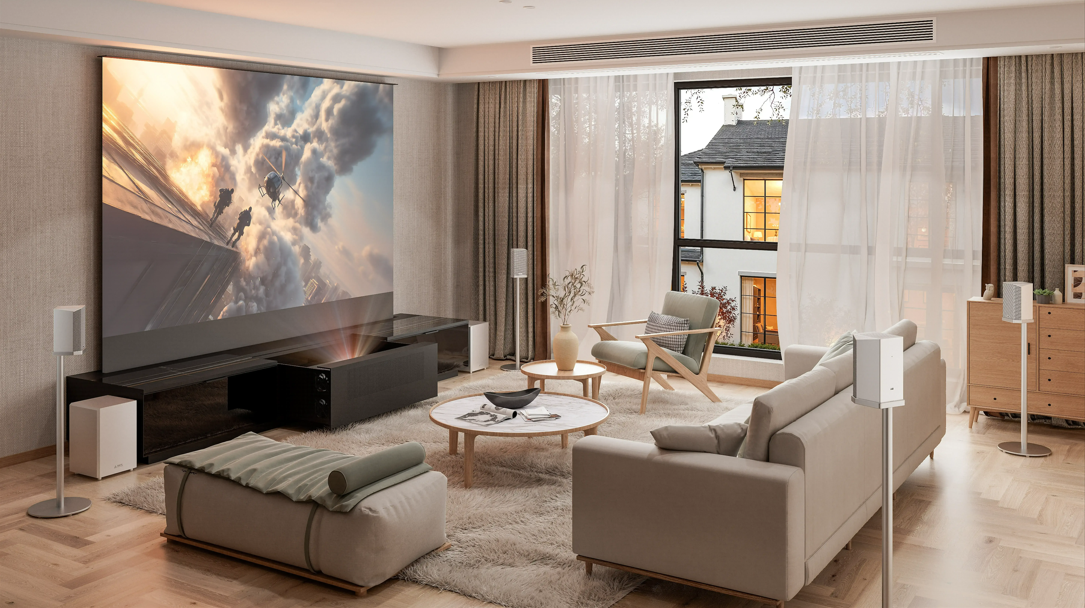
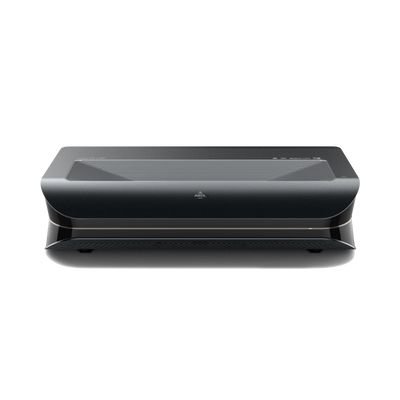
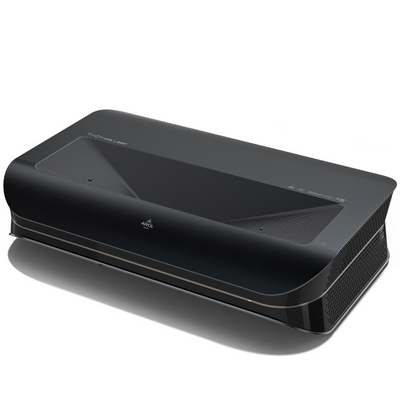
Ultra-short-throw projectors (UST), often also called laser TVs, completely avoid this problem. They are placed on a lowboard just a few centimetres in front of the projection surface. Modern devices rely on RGB triple-laser technology: separate lasers for red, green, and blue provide exceptional color gamut coverage and high contrast values. Supported by formats such as Dolby Vision , this allows dark scenes in horror games to be shown as faithfully in detail as dazzlingly bright sci-fi settings.
Bring the premium standard home
For a long time, home theater fans and gamers had to compromise: if you wanted image size, you chose a projector – if you prioritized response speed and contrast, you stayed with a TV.
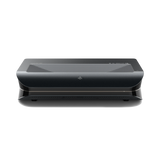
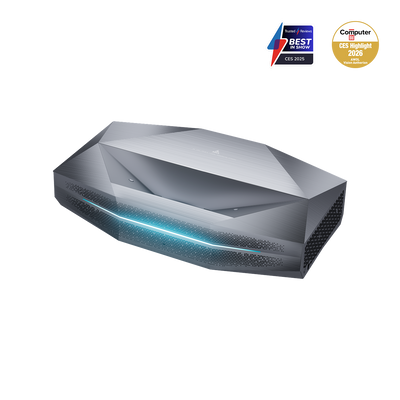
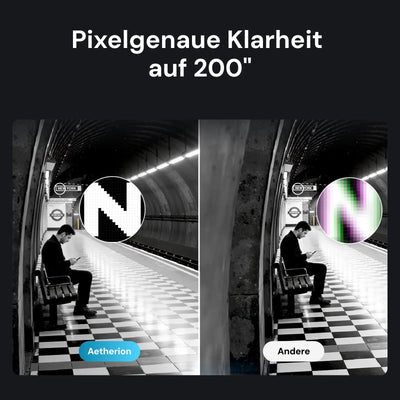
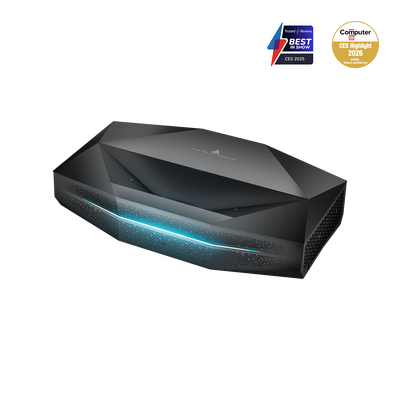
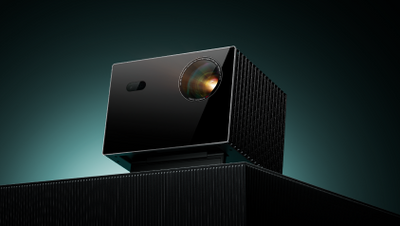
That both are now combined in one device is shown, for example, by the AWOL Vision Aetherion Max. The device demonstrates what current laser projection can do: three full HDMI 2.1 ports enable native output of 4K at 120 Hz. Input lag of up to 1 ms, VRR, ALLM, and Dolby Vision make the projector suitable even for competitive gaming. The RGB triple-laser light source reaches 3,300 ISO lumens – enough to deliver a convincing image on a projection surface of up to 200 inches, not only in a darkened home cinema but also in a normal living room.
Checklist: how to get the most out of your gaming setup
- Check game mode: If the projector does not support ALLM, Game Mode must be activated manually. Otherwise, internal image processors will cause noticeably higher input lag.
- Check cable certification: For PS5 and Xbox Series X, use only certified Ultra-High-Speed HDMI cables (48 Gbps). An outdated cable is the most common cause of image dropouts at 4K/120 Hz.
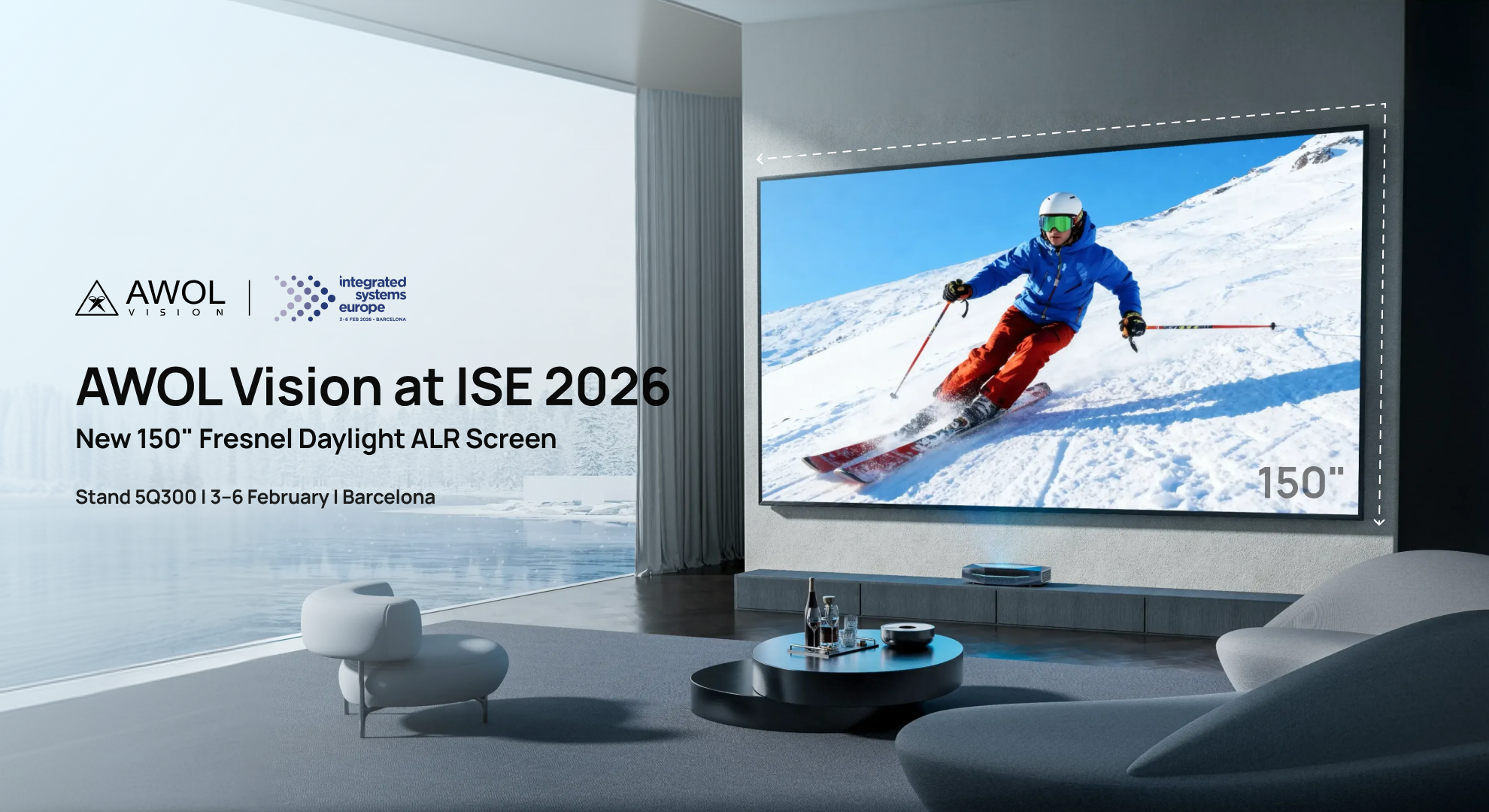
- Choose the right screen: An UST laser TV only unleashes its potential with a suitable CLR or ALR screen that absorbs ambient light and increases contrast. Our screen buying guide helps you choose the right material.
Frequently asked questions (FAQ)
Can you game on a projector?
Yes. Modern gaming projectors – especially laser TVs – offer dedicated gaming modes, very low latency, and high refresh rates that enable smooth, competitive gaming without perceptible delay.
When is a 4K projector worth it?
You can find a detailed assessment in our article Is a 4K projector worth it. As a rule of thumb: at a screen diagonal of 100 inches or more in combination with PS5 or Xbox Series X, 4K is a must. The sharpness advantage over 1080p is impossible to miss at this size – especially for game text and HUD elements.
Which projector is suitable for the PlayStation 5?
To get the full potential out of the PS5 (and Xbox Series X), you need a projector with full HDMI 2.1 ports. The device must support 4K at 120 Hz, VRR, and ALLM. Input lag should be under 16 ms.
Is 4K at 120 Hz good for gaming?
Yes, this is currently the technical gold standard for console gaming. 120 Hz means 120 individual frames per second – this noticeably reduces motion blur and makes fast camera movements much smoother.
Are 20,000 lumens a lot for a projector?
Figures like these from the low-price segment are almost always misleading – they are usually LED lumen ratings for the light source. Only rely on ANSI or ISO lumen figures. For a bright living room in daylight, real 2,500 to 3,500 ISO lumens are already top-tier.