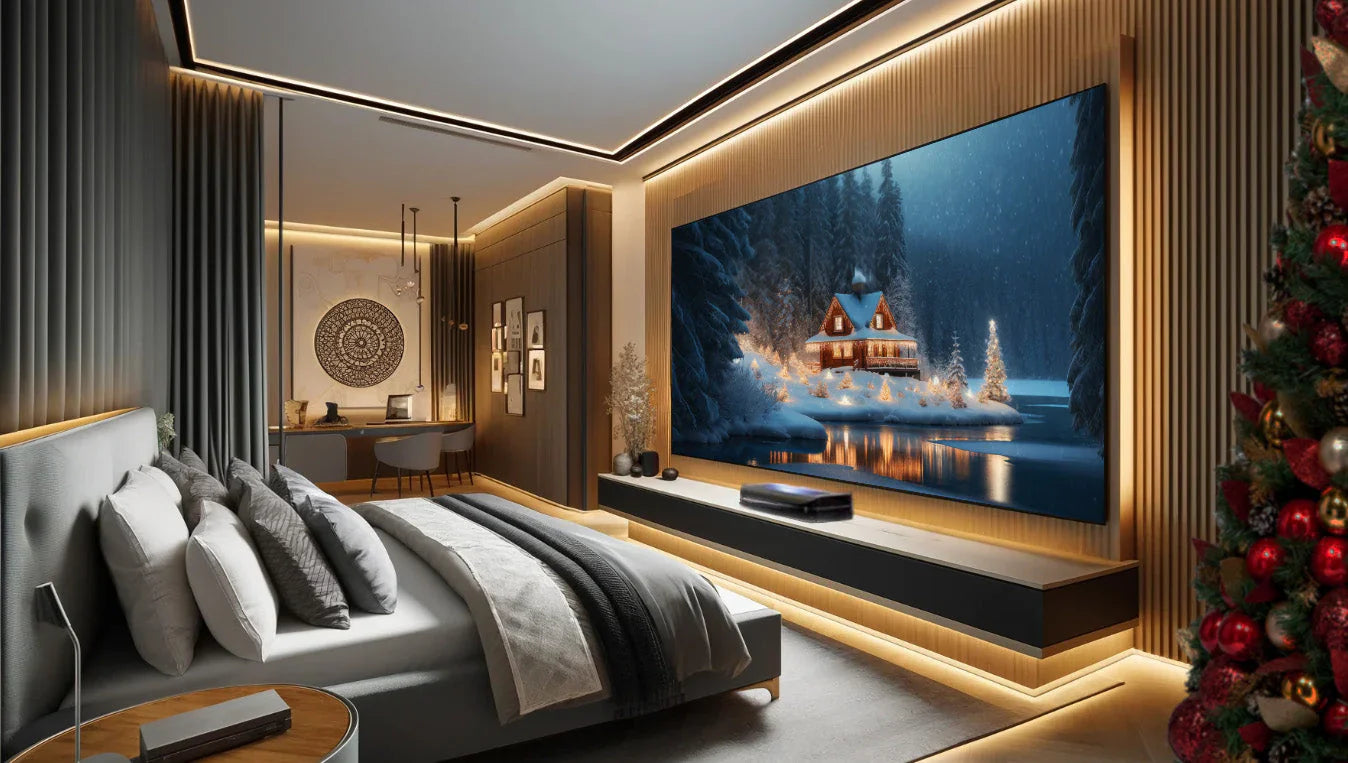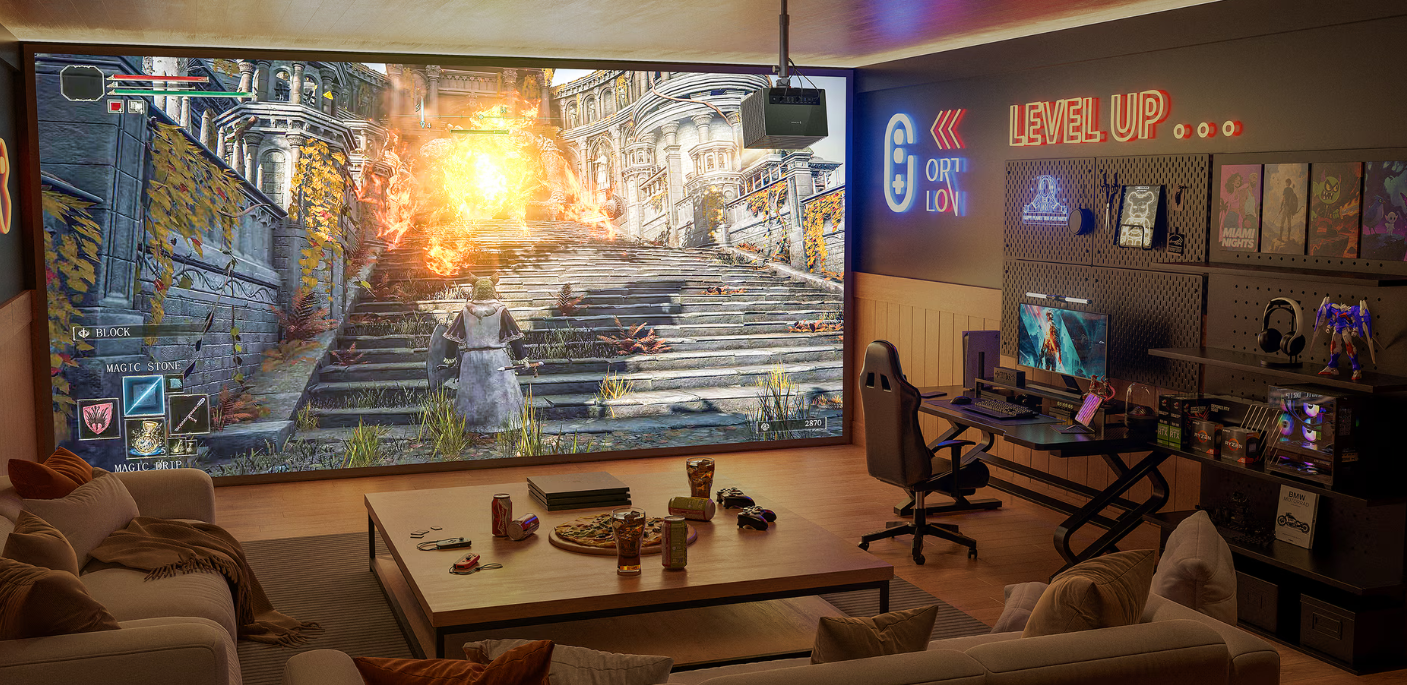






Anyone looking for a projector today is bombarded with numbers. From budget models allegedly offering “9,000 lumens” to high-end devices with “2,500 lumens” – the specifications often seem contradictory. The most common question buyers ask is therefore: How many lumens do I really need for my living room?
The answer depends on two factors: your room lighting and the measurement standard. In this article, you’ll learn why the modern ISO lumen standard is your most important benchmark and which values are required for home cinema, living rooms, or daylight use.
The first step: understanding the unit of measurement (ISO vs. ANSI)
Before we give concrete numbers, we need to clear up a common misconception. Brightness is often measured differently. To make a reliable buying decision, you should primarily ориент yourself by the ISO standard.
Why ISO lumens (ISO 21118) are the safer currency
For a long time, “ANSI lumens” was the standard. It is widely used, but often inaccurate. Manufacturers could use specially optimized prototypes for this to push the values up.
The international standard ISO 21118 is much stricter. It guarantees that the device you actually unpack delivers the promised performance – not just a lab model.
-
The rule of thumb: Because ISO measurements are stricter, the numbers are often lower than ANSI.
-
Conversion: An ISO value often corresponds to an ANSI value minus about 10–20 %.
(Example: A projector with honest 3,000 ISO lumens is often actually brighter than a device advertised with 3,500 ANSI lumens.)
Specific recommendation: How many ISO lumens for which room?
Here are the guideline values you need for a brilliant image – based on honest ISO specifications.
1. The classic home cinema (completely darkened)

In a room without windows or with light-blocking curtains (“batcave”), brightness is not the most important criterion.
-
Recommendation: 1,500 – 2,000 ISO lumens
-
Why not more? In complete darkness, too much light can strain the eyes and negatively affect black levels (contrast). Here, quality comes before quantity.
2. The living room (evening with some ambient light)

This is the most common scenario: you watch movies while a floor lamp is on in the background or residual light comes through the blinds. A pure home cinema device is often not enough here.
-
Recommendation: 2,000 – 2,800 ISO lumens
-
The goal: The projector needs enough “punch” to stand up to artificial ambient light.
-
Tip: If you’re unsure how to set up your living room optimally, read our tips on projector in the living room.
3. Bright rooms & daylight replacement (Laser TV)

You want to watch sports during the day or use the projector as a full-fledged TV replacement without darkening the room completely?
-
Recommendation: At least 3,000+ ISO lumens
-
The challenge: Normal projector technology can barely compete with daylight. Here you need absolute top-end values, like those delivered by modern ultra-short-throw projectors.
-
Important note: Brightness alone is not enough here. Since the light is spread across a large surface (see: calculate screen size), you absolutely need a high-contrast screen (CLR). This filters out ceiling light; otherwise the image will look washed out despite high lumens. You can find more about this in our screen buying guide.
The “brightness dilemma” and the solution (contrast vs. lumens)
Many buyers make one crucial mistake: they buy solely based on the highest lumen figure. The problem is physics.
Traditionally, projectors followed this rule: The brighter the image, the worse the contrast.
An extremely bright projector (3,000+ lumens) often also brightens the dark areas of the image. The space scene in a sci-fi movie then looks not black, but dark gray. The image is bright, but it appears “flat.” This is especially a disadvantage with modern formats (comparison: SDR vs. HDR in home cinema).
The new generation: high ISO lumens without loss of contrast
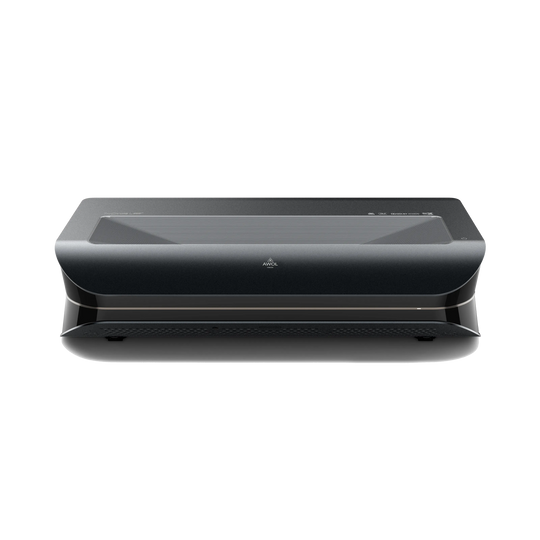
Modern RGB laser technology breaks this old rule. A current reference example is the new AWOL Vision Aetherion.
This model delivers 3,300 ISO lumens, which is extremely bright and guarantees a clear image even in lit living rooms. The special thing, however, is that this brightness does not come at the expense of black levels. With a native contrast ratio of 6,000:1 (three times higher than many standard cinema projectors), it shows what is technically possible today:
-
Enough light reserves for daytime use (3,300 ISO lumens).
-
Cinema-like black levels for evening viewing (6,000:1 contrast).
So if you’re looking for a projector for both scenarios (day and night), you shouldn’t just look at the lumens, but also check whether the contrast can keep up with the brightness.
Summary: checklist for your purchase
Use this table to avoid bad buys. Stick to the strict ISO values to be on the safe side.
|
Room situation |
Required brightness (ISO 21118) |
Critical additional factor |
|
Dark cinema room |
1,500 – 2,000 ISO lumens |
Focus on black levels & color accuracy |
|
Living room (evening) |
2,000 – 2,800 ISO lumens |
Balance between light & dark |
|
Bright living room (daytime) |
3,000+ ISO lumens |
High native contrast (e.g. 6000:1) + CLR screen |
Conclusion
Don’t be fooled by huge marketing numbers on cheap devices. Ask for the ISO value. For a true all-round experience in the living room, a value above 3,000 ISO lumens is ideal – but only if the contrast is right.