

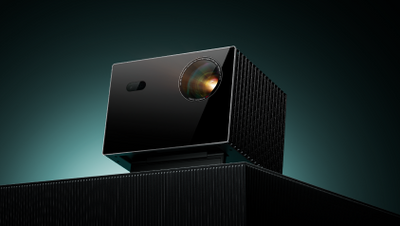


You have invested in a bright laser TV – but as soon as daylight comes through the windows or the ceiling lights are switched on, black tones turn into a tired gray. Vivid colors lose their natural depth, and fine details such as subtitles or sports stats are much harder to make out.
In moments like these, many users suspect the projector itself is at fault. The logic seems simple: the picture is too washed out, so the device must lack brightness. But that assumption is too simplistic. In most cases, the cause is not the laser TV unit itself, but the projection surface being used. An ALR screen designed specifically for daylight conditions reveals the full potential of an ultra-short-throw projector in light-filled rooms.
Why more lumens are not the answer
To understand why ordinary walls fail in room light, you need to keep a basic principle of projection technology in mind: a projector cannot project black.
Where no light is thrown, darkness appears. In other words, dark areas of the image can never be darker than the projection surface itself under the current lighting conditions.
When normal daylight or the light from a ceiling lamp hits a plain white wall or a standard home theater screen, diffuse reflection occurs. The flat white surface eagerly absorbs the incoming stray light and throws it back evenly in all directions into the room. The ambient light overlays the light emitted by the projector. Perceived contrast drops immediately.
Anyone searching for a “projector in daylight” should not look at the device’s lumen rating alone. Even extremely bright projectors cannot compensate for the physical problem of a scattering wall. Only the precisely matched interaction between projector output and an optically guided screen surface creates a vivid, high-contrast picture in a lit room.

How a Fresnel ALR screen directs light
The abbreviation ALR stands for “Ambient Light Rejecting” and refers to screens that specifically reduce distracting ambient light. Unlike conventional projection surfaces, they do not reflect incoming light evenly in all directions, but respond differently depending on the angle of incidence. ALR is an umbrella term for various light-rejecting screen technologies. For ultra-short-throw projectors (UST), specially matched designs such as CLR systems (Ceiling Light Rejecting) and Fresnel screens are used in particular.
Among these variants, the Fresnel structure is considered the gold standard for daylight applications. Its design is based on a large number of microscopic, half-circular, concentric grooves precisely aligned to the geometry of a UST projector.

The way it works can be divided into two key tasks:
1. Targeted image light: The laser TV sits close below the screen and projects its image upward from below at an extremely steep angle. The microlamellas of the Fresnel structure capture this specific light and direct it in a concentrated beam to the audience’s eyes from the front.
2. Shielding stray light: Light sources arriving from other directions – such as ceiling lights from above or daylight coming in from the side through windows – hit the structure at completely different angles. These disruptive factors are absorbed by the screen or deliberately deflected.
This optical filtering keeps black levels deep, color saturation stable, and gives the image a sense of depth that is otherwise only familiar from classic LED TVs.
The AWOL Vision Next-Gen Daylight Fresnel ALR Screen
The Next-Gen Daylight Fresnel ALR Screen from AWOL Vision is designed precisely for this interaction. Compared with the previous Daylight Fresnel ALR Screen, the new generation is therefore not just a theoretical upgrade: the higher light rejection, increased peak gain, and optimized mounting system are directly noticeable in image quality, contrast, and installation.
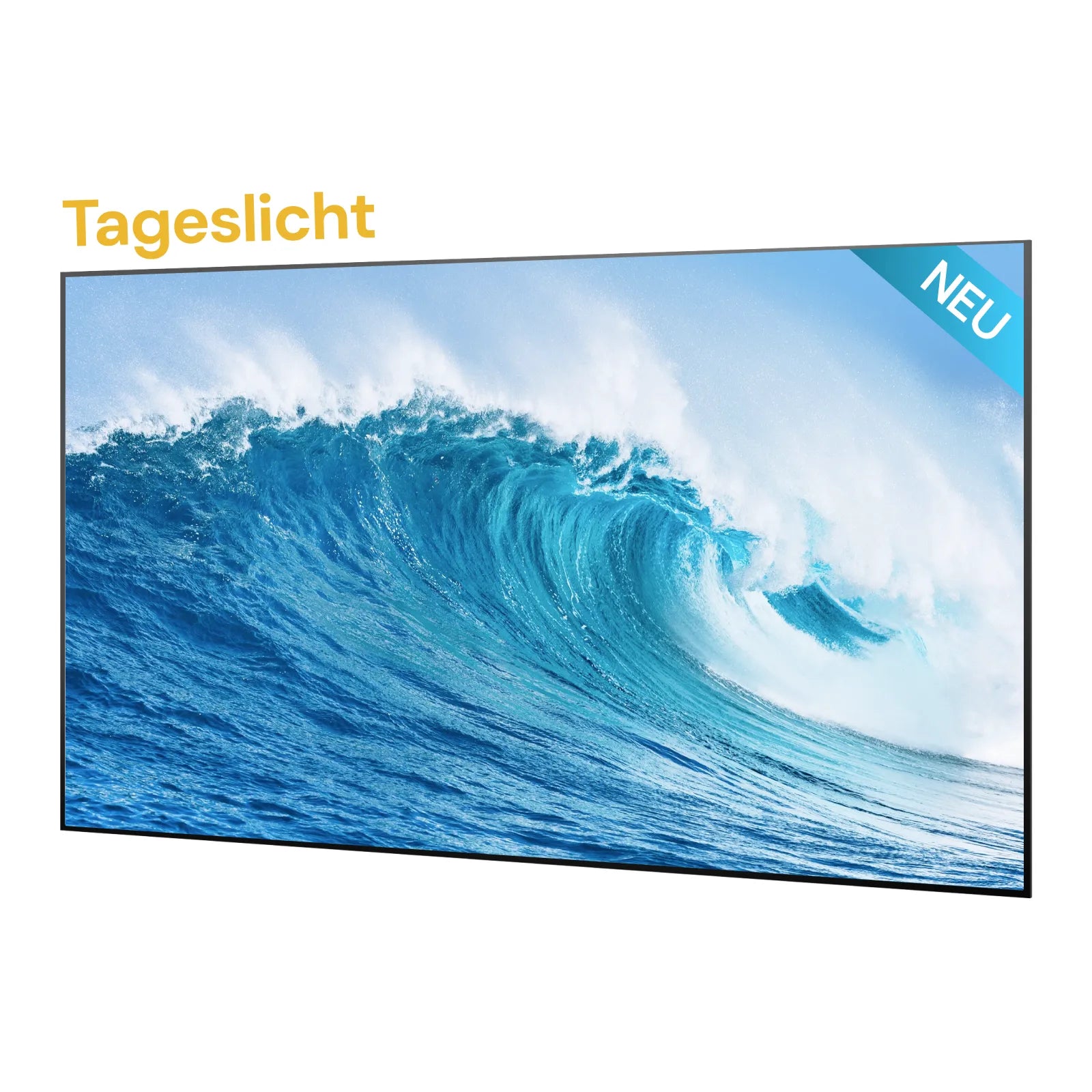
At least 90% light rejection and 1.5 peak gain
The screen rejects at least 90% of the ambient light coming from above and from the sides. At the same time, a peak gain of at least 1.5 directs more projector light toward the audience.
This results in visibly deeper black areas, more vivid colors, and subtitles that are easier to read. Fine structures in films, sports broadcasts, tables, and presentations also remain more clearly visible under normal lighting conditions.
Crystal-clear details in 4K and 8K
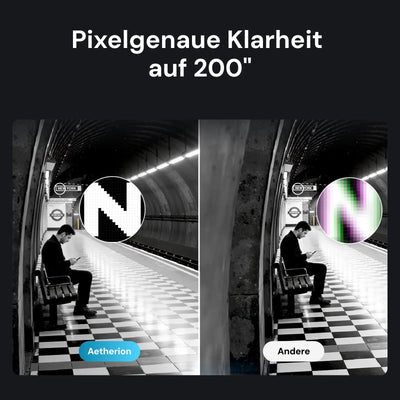
The finely engineered optical structure of the screen is designed for true-to-detail reproduction of content in 4K and 8K. It does not increase the projector’s native resolution, but it does support precise rendering of the available image information. Especially on projection surfaces from 120 inches and up, clean detail reproduction matters: outlines appear clearly defined, fine textures remain visible, and small text and subtitles are easy to read.
150 inches in one piece – without seams or optical breaks

The 150-inch version is among the world’s first Fresnel screens of this size to be made from a single piece.
The MonoForm™ Fresnel film forms a continuous projection surface. As a result, there is no material seam, no interruption of the optical microstructure, and no visible color or brightness breaks caused by this.
Especially on a 150-inch screen, this optical continuity is crucial: even surfaces, bright skies, camera pans, and large-format panoramas appear consistent across the full width of the image. Instead of individual assembled segments, you get a seamless large-scale image that does not distract the eye with transitions or color deviations.
Snap-Fold™ frame and fine adjustment without re-drilling
The foldable Snap-Fold™ inner frame can reduce installation time by up to 50% compared with the previous setup. Adjustable wall mounts and hooks for fine-tuning make it possible to adjust the height after installation. This is especially valuable for UST projections, because even small deviations become visible at the image edge and frame – and correcting them without new drill holes is much more convenient.
Plan projector and screen as a system
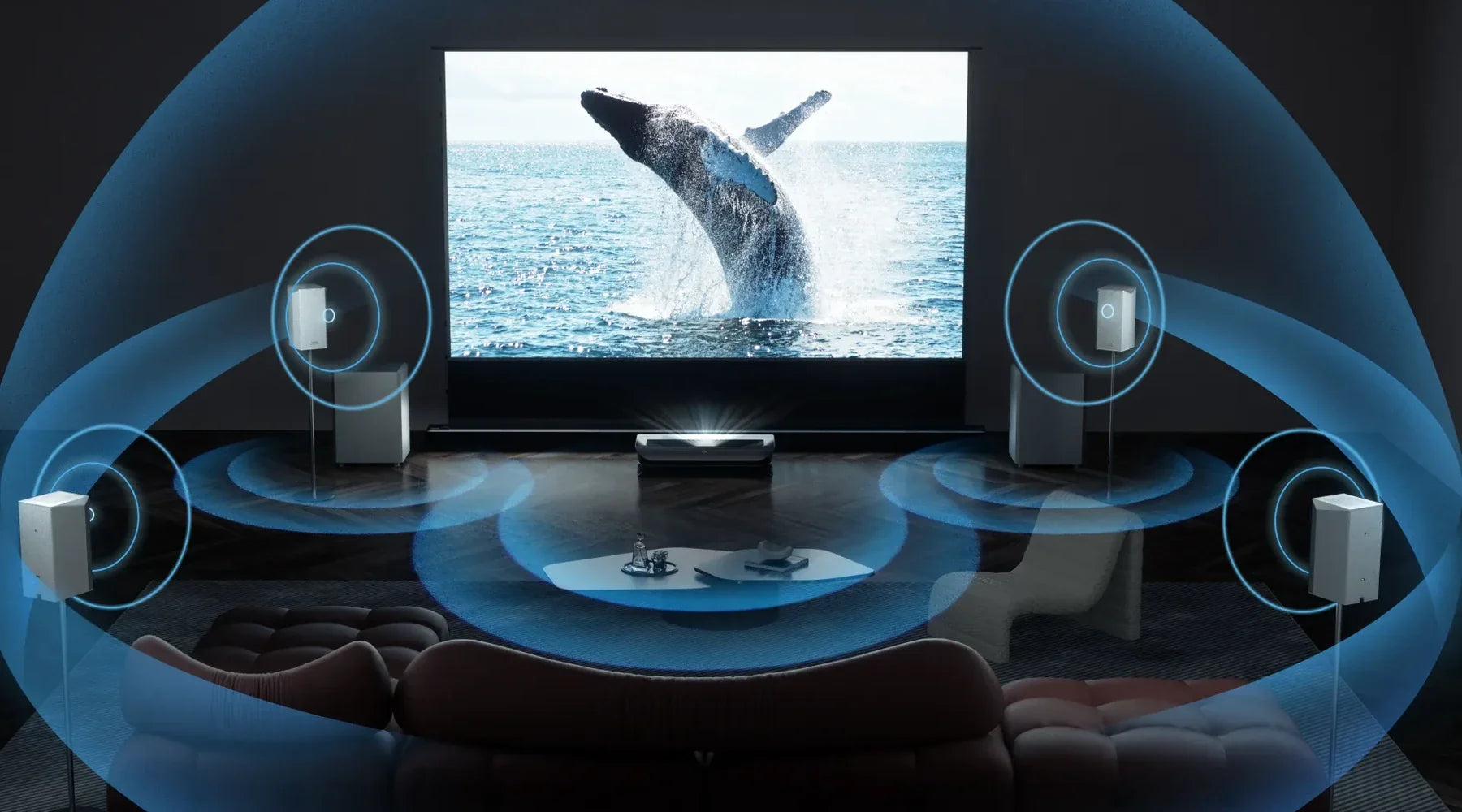
A premium laser TV experience is always the result of a coordinated overall system. The projector determines resolution, color dynamics, and brightness – the screen decides how much of that image quality is preserved in a lit room. A high-end projector loses its contrast on a plain wall; conversely, an ALR screen cannot make up for insufficient projector performance.
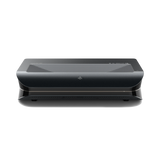
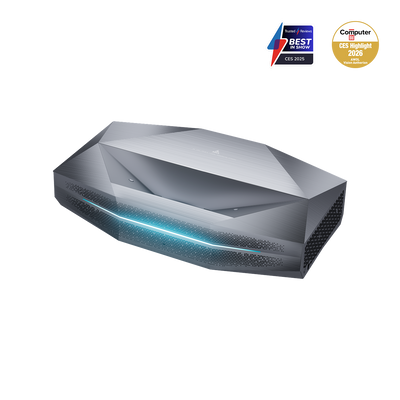
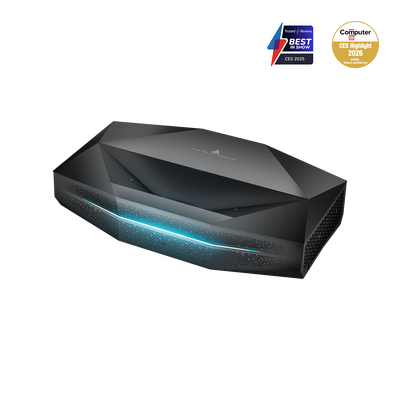
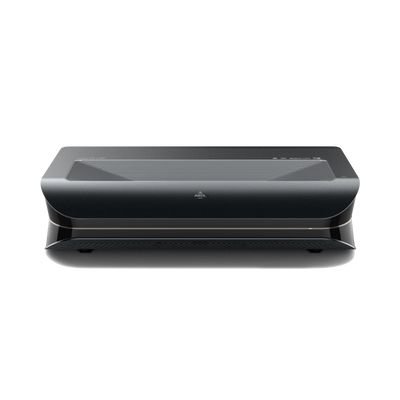
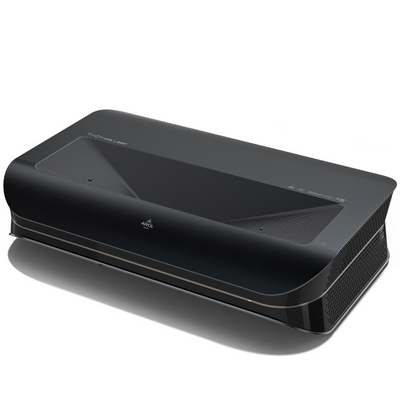
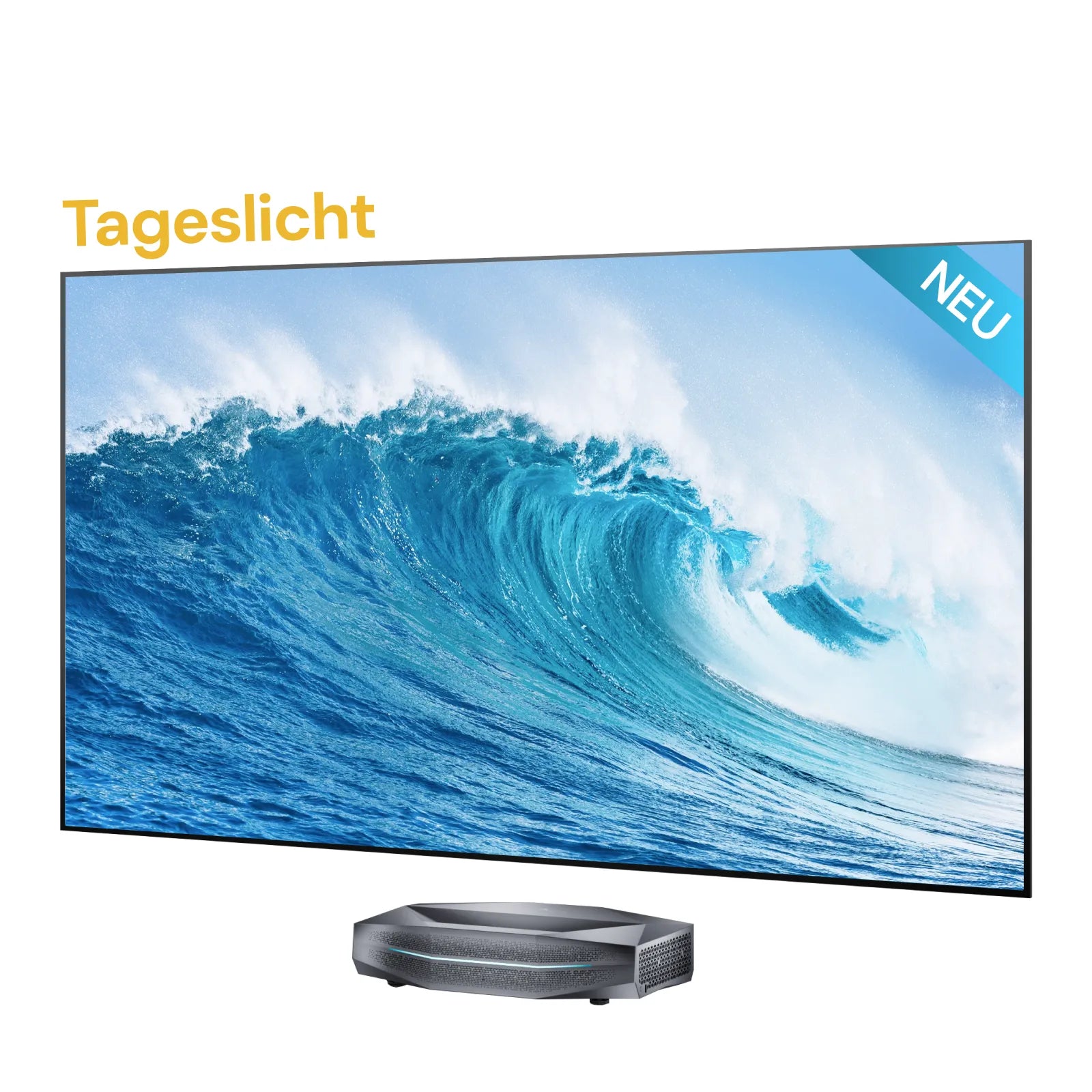
With the Aetherion Max and the Next-Gen Daylight Fresnel ALR Screen, both top-tier components work together seamlessly. The combination of the projector’s 4K RGB laser output with 3,300 ISO lumens and the matched Fresnel light control creates the basis for a precisely aligned, high-contrast large image.
FAQ about the Next-Gen Daylight Fresnel ALR Screen
1.What screen size is suitable for my room?
The Next-Gen Daylight Fresnel ALR Screen is available in 120, 130, 140, and 150 inches. However, the largest screen is not automatically the best choice. What matters is the available wall space, viewing distance, projector brightness, and the desired image effect. With the guide Finding the perfect screen size for your home theater, you can determine the right size based on your seating distance.
2.Can a laser TV be used without an ALR screen?
A laser TV can technically project onto a very smooth wall. However, in daylight or with the room lights on, a normal wall also reflects distracting stray light. As a result, black tones appear lighter, colors flatter, and fine details less distinct. A UST-suitable ALR screen is therefore worthwhile if the laser TV is to be used regularly in a bright living room.
3.Is the Next-Gen Daylight Fresnel ALR Screen compatible with every projector?
No. The Fresnel structure is specifically designed for the steep light coming from below from an ultra-short-throw projector or laser TV. Long-throw projectors and ceiling-mounted projectors project from a different direction onto the screen. Their light would not be directed toward the audience by the optical structure as intended. Another type of screen is required for such projectors.
4.Can the screen be used in direct sunlight or outdoors?
No. The Next-Gen Daylight Fresnel ALR Screen is intended exclusively for controlled indoor spaces. It reduces normal daylight as well as ceiling and side light, but it is not designed for direct sunlight. Direct sunlight can still significantly reduce perceived contrast. Moisture and strong temperature fluctuations can also damage the sensitive optical material.
For garden cinema, camping, or temporary outdoor events, the portable, foldable matte white outdoor screen from AWOL Vision is the more suitable solution.
5.What is the difference between ALR, CLR, and Fresnel?
ALR is the umbrella term for screens that reduce distracting ambient light depending on the direction it comes from. CLR stands for Ceiling Light Rejecting and usually refers to UST screens that primarily shield light from above.
A Fresnel ALR screen uses concentric optical structures to direct the light coming from below from a UST projector toward the audience while reducing light from above and from the sides. This makes it especially suitable for bright living rooms with multiple ambient light sources.
6.How large is the viewing angle of the Next-Gen Daylight Fresnel ALR Screen?
The stated viewing angle is 90 degrees in total. That corresponds to about 45 degrees on each side of the image center. Within this range, brightness, contrast, and color reproduction remain at their most stable. The image may diminish at seating positions placed very far to the side. For that reason, the most important seating positions should ideally be within the intended viewing area.
Conclusion
A convincing large image should not require everyday life to revolve around the home theater. It should fit naturally into the room and daily use. That is exactly the real value of a carefully selected projection surface: it turns individual technical components into a media solution that can be used permanently.