



The desire for a true big-screen experience in your own home is growing steadily. But anyone looking today for a projector for home quickly faces a complex choice of technical terms: laser or LED? Long Throw or Ultra Short Throw?
The decision depends not only on your budget, but above all on your room conditions. A device that works perfectly in a dark basement can disappoint in a bright living room.
This guide is here to help you decide. We analyze the latest technologies and explain, in plain terms, what you need to look for to make a future-proof investment.
Which projector is right for me? A comparison of the three types
Before comparing technical specifications, you need to choose the design. The market is broadly divided into three categories, each designed for completely different uses.
1. The classic home theater projector (Long Throw)
This is the traditional design. The projector stands or hangs several meters away from the screen.
- Use case: Mainly for dedicated, darkenable home theater rooms.
- Disadvantage: Installation is complex (ceiling mount, cable routing through the room). There is also a risk of shadows if people walk through the picture.
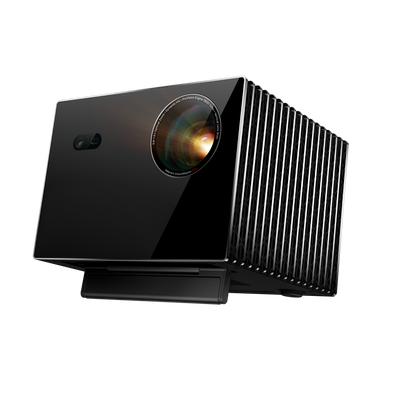
2. The portable mini projector
Compact devices, often battery-powered.
- Use case: Occasional use in the garden or on the go.
- Disadvantage: For a fixed projector for home-setup, usually unsuitable, as brightness and image sharpness cannot keep up with stationary devices.
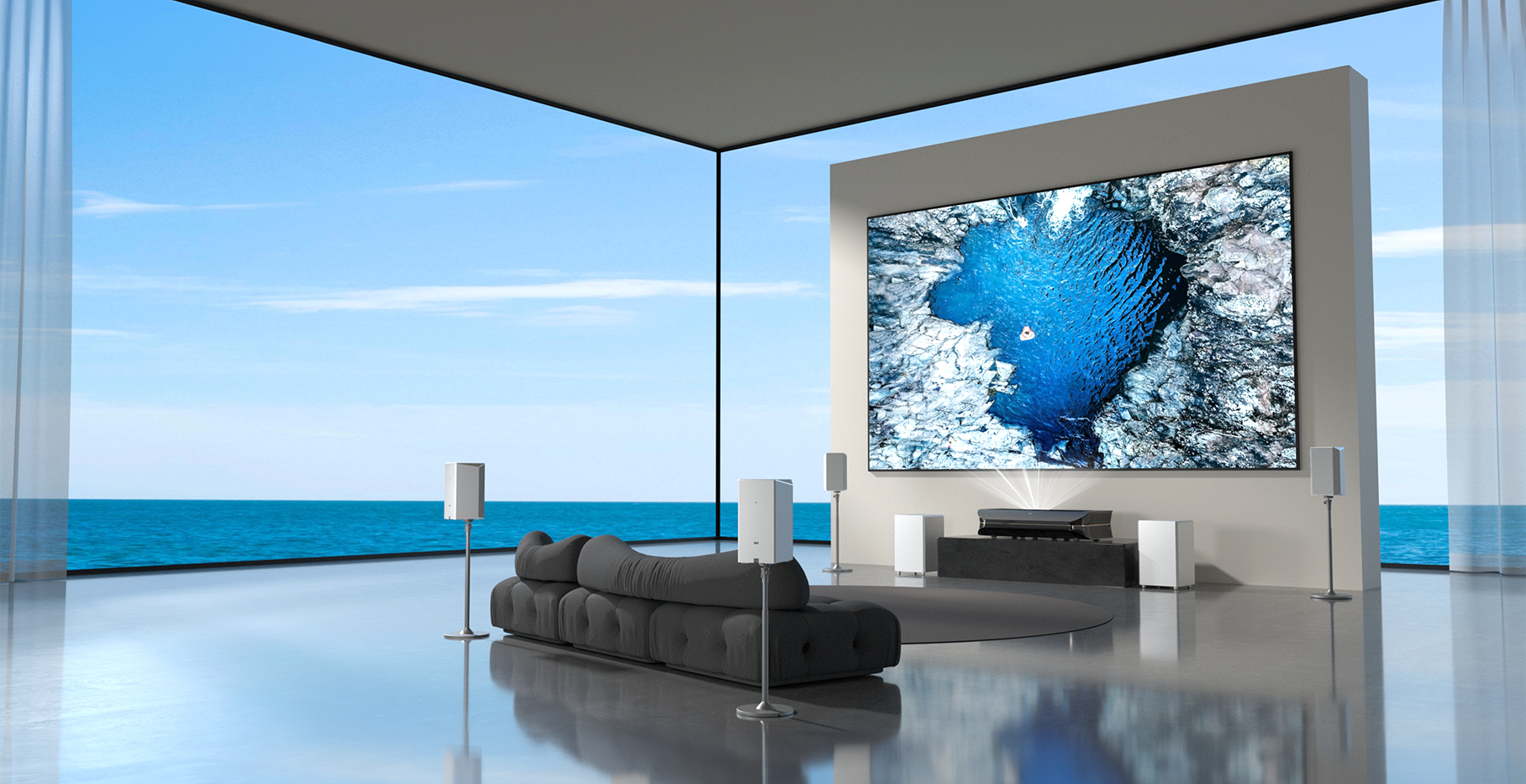
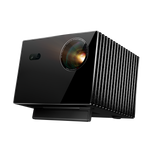
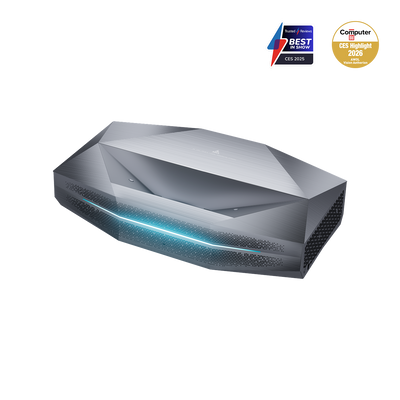
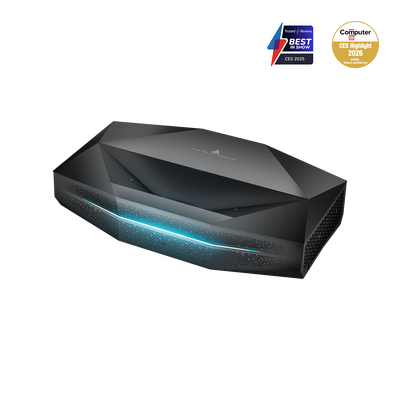
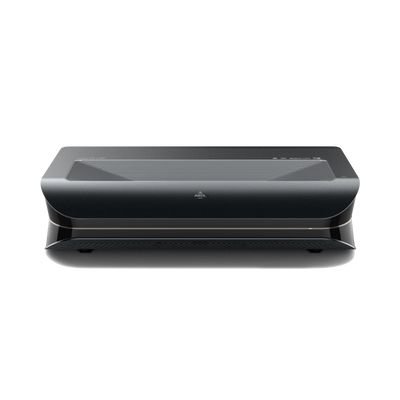
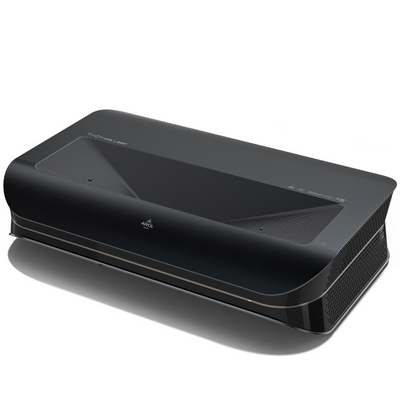
3. The Laser TV (Ultra Short Throw)

This category has established itself as the standard for the modern living room. Devices from manufacturers such as AWOL Vision are placed directly on the lowboard in front of the wall.
- Use case: Replacement for the TV in the living room.
- Advantage: No structural work required. Thanks to laser technology, these devices are extremely bright and durable.
- In-depth: Detailed information on this technology can be found in our Ultra short throw projector guide.
Buying a projector: The most important criteria for your home theater
If you want to buy a projector, four technical factors determine image quality. Don't be fooled by marketing terms; check these values:
1. The light source: laser instead of lamp
While older projectors use mercury vapor lamps that need to be replaced regularly, modern premium devices rely on laser technology.
- Economy: A laser lasts up to 25,000 hours. With normal use (4 hours per day), that equals a lifespan of over 17 years.
- Performance: Lasers offer more stable brightness and cover a wider color gamut (often BT.2020), which is essential for HDR content.
2. Brightness and daylight suitability
The question "Is the projector bright enough?" is essential for living spaces that cannot be completely darkened. Pay attention to the lumen rating. For a projector for home-setup with ambient light, high values (ideally over 3,000 lumens) are necessary to ensure a high-contrast image.
- Expert knowledge: To learn why brightness alone is not enough and what role the screen plays, read Projector in the living room.
3. Resolution: 4K as the new standard
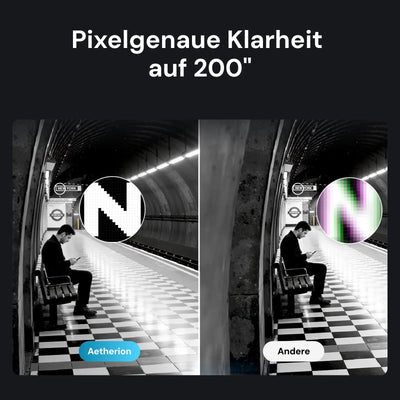
With image diagonals of 100 to 150 inches, individual pixels become visible at low resolution. For a future-proof home theater, you should therefore opt for 4K resolution. This also guarantees a razor-sharp image even at a short seating distance.
- Background: Read our analysis Is a 4K projector worth it? for technical details.
4. Contrast & dynamics (Dolby Vision)
A good image is defined by the difference between light and dark. Technologies such as Dolby Vision optimize the image dynamically scene by scene. This ensures that you can see every detail even in dark movie sequences.
- Explanation: What is Dolby Vision and why is it so important?
Setting up and configuring a projector: installation made easy

A common obstacle when buying is the concern about complicated installation. Here, Laser TVs differ significantly from classic projectors.
- Plug & Play: Since ultra short throw projectors stand on the furniture like a TV, there is no need to drill holes or lay long cable ducts.
- Smart connectivity: Modern devices often have integrated streaming sticks (e.g. Fire TV), so you don't need any external playback devices.
- Instructions: If you still want to use external devices, our guides can help: Connect projector to laptop or Connect projector to phone.
- Image size: The image size is simply controlled by the distance to the wall. Use our calculator to check whether your lowboard is deep enough: Calculate screen size.
Important note on sound: The big picture only works with the right sound. Make sure the projector has an HDMI eARC port. This allows you to send uncompressed 3D sound (such as Dolby Atmos) directly to your soundbar.
- More on this: What is HDMI eARC?
Conclusion: A rational decision for the living room
Technology has closed the gap between TV and projector. If you're looking for a projector for home today, you no longer have to compromise on picture quality or ease of use.
- For pure, darkened cinema rooms, the classic projector remains an option.
- For the multifunctional living room, a Laser TV (UST) is the technically superior solution, as it combines durability, brightness, and easy installation.
Still unsure whether you really want to replace your TV? A direct comparison of the pros and cons helps: Projector or TV – Which is better?