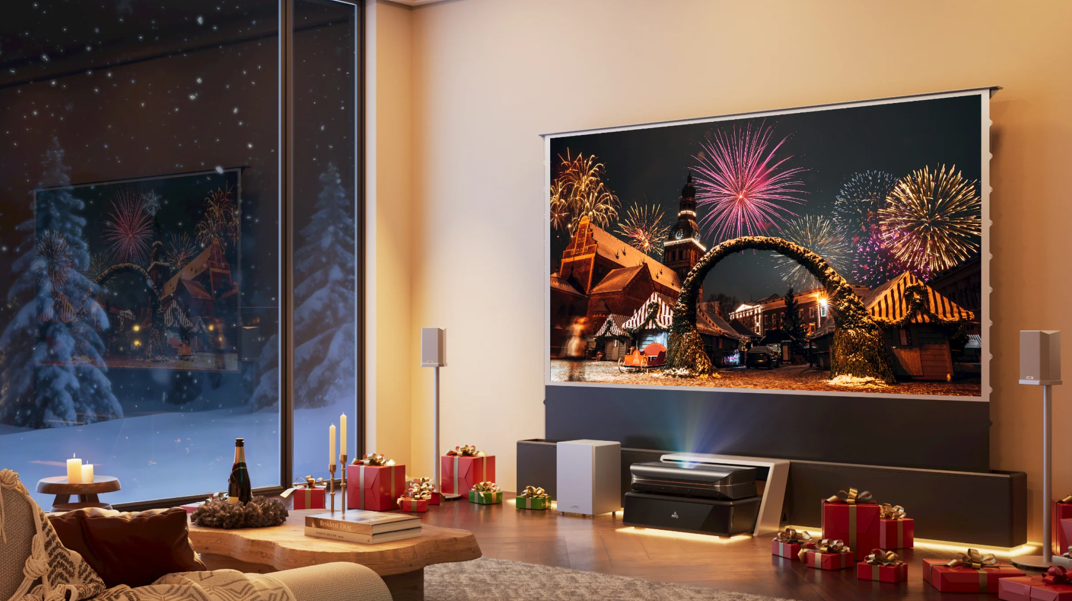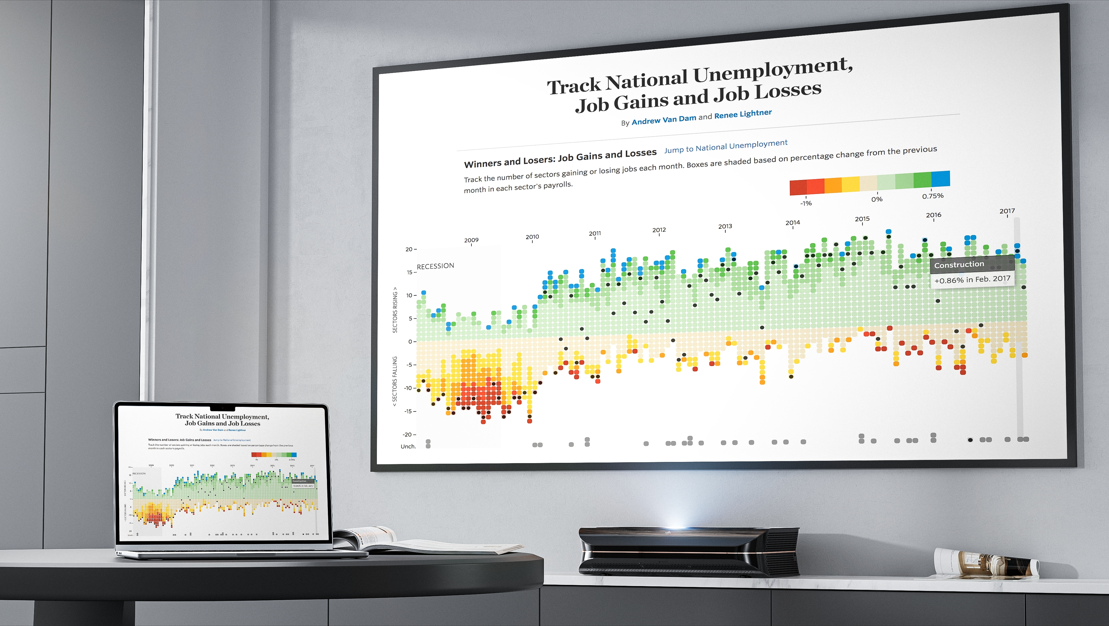




Many home cinema enthusiasts face the same dilemma: they want an image larger than 100 inches, but they do not want to turn their living room into a black cave. While classic projectors shine in dark basement rooms, they often look washed out and low in contrast in bright living spaces.
The question projector or TV is therefore no longer just a matter of taste, but a technical decision. Anyone who wants to permanently replace their television must understand the physical hurdles and focus on two components in particular: high light output according to the ISO standard and special light filtering.
This article explains which technical specifications are absolutely required for a daylight setup.
Light physics: Why standard projectors fail during the day

The fundamental problem with use in the living room is not the brightness of the image itself, but the rendering of black. Anyone who understands how a projector works, knows that a projector cannot project "black"; it only projects light onto a passive surface.
Dark image areas are created solely by the absence of light. In a sunlit room, however, the screen is already brightened by ambient light. A pixel with no light is therefore not black, but white or light gray. The result is a drastic loss of contrast – the image looks milky.
To counteract this effect, it is not enough simply to buy a "brighter" projector. The system must actively manage ambient light.
Screen technology: ALR and CLR explained

The most important component for the living room cinema is the projection surface. A standard screen (matte white, gain 1.0) reflects light diffusely in all directions. It therefore also reflects distracting sunlight or lamp light directly back to the viewer.
For bright rooms, high-contrast screens (ALR – Ambient Light Rejecting) are essential. Anyone who wants to go deeper into the subject will find detailed information in our screen & projector buying guide. For ultra-short-throw projectors (Laser TVs), the specific CLR technology (Ceiling Light Rejecting) is used.
The function is based on a microscopic slat structure:
- Light collection: The projector light, which comes steeply from below, is directed specifically to the viewer's eye.
- Light blocking: Distracting light entering from above (ceiling lights) or from the side (windows) is absorbed by the structure.
Before deciding on a model, you should definitely calculate the right screen size to make sure it fits your room perfectly.
Understanding brightness: ISO lumens as the benchmark
Anyone who wants to use a projector as the main device in the living room must be able to read technical data sheets. Marketing terms such as "LED lumens" are often misleading. For an objective assessment, the industry standard ISO lumens (according to ISO 21118) is crucial.
- Darkened rooms: Here, 1,500 to 2,000 lumens are often enough.
- Living room (daylight): Here, values from 3,000 ISO lumens are necessary to compete with the residual light.
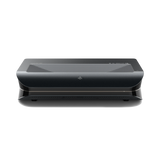
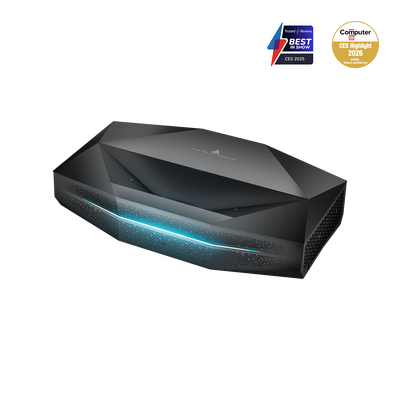
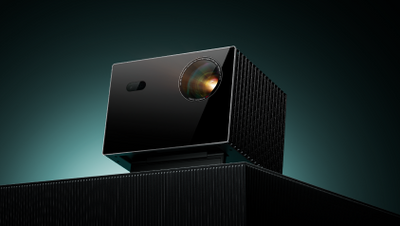
A reference device in this class is the AWOL Vision LTV-3500 Pro. It delivers 3,000 ISO lumens and uses a Tri-Chroma laser light source. This high light output ensures that the projected image remains dynamic even in ambient light.
In addition, the LTV-3500 Pro supports modern standards such as Dolby Vision. To understand why this dynamic range is especially important in a bright living room, read our article: What is Dolby Vision and why is it so important?. The difference between SDR vs. HDR in home cinema also plays a major role here for color perception.
Ultra-short throw (UST): The space-saving TV alternative
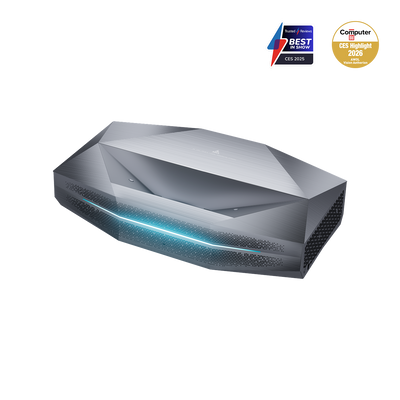
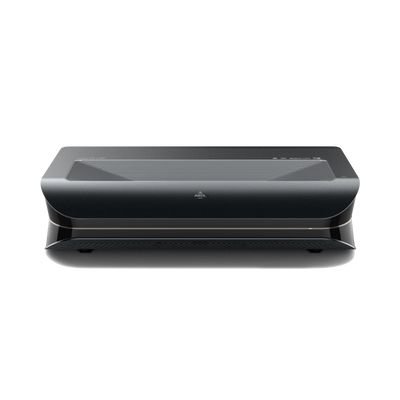
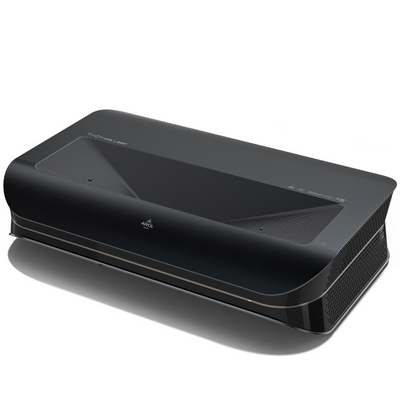
Classic long-throw projectors require ceiling mounting. For the living room, however, the ultra-short-throw projector (UST) has become the standard. You can learn more in our ultra-short-throw projector guide.
These devices sit directly on the sideboard, just a few centimeters from the wall.
- No shadow casting: Since the light beam comes from below, no one walks through the image.
- Flexibility: With accessories such as the slider tray (Slider Tray), the projector distance can also be adjusted perfectly on narrow sideboards.
- Aesthetics: In combination with integrated solutions such as the AWOL Vision Vanish Laser TV or the AWOL Vision Station, the technology disappears completely into the furniture when not in use.
FAQ: Common questions about projectors for home use
What is the difference between lumens, ANSI lumens and ISO lumens?
- Lumens: A general term, often used as an imprecise marketing value.
- ANSI lumens: An older US standard for measuring brightness.
- ISO lumens: The internationally recognized standard according to ISO 21118. It is defined more strictly than ANSI and is considered a reliable reference worldwide. A value in ISO lumens guarantees verified light output.
Is 4K really worth it?
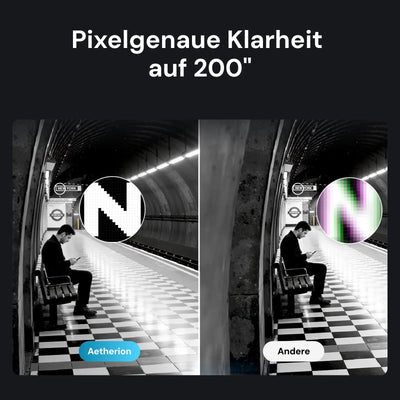
Absolutely. Especially at image diagonals over 100 inches, the difference between Full HD and 4K becomes clearly visible. Read also What is 4K resolution? and our analysis Is a 4K projector worth it?.
How do I connect my devices?
Modern Laser TVs behave like televisions. You can easily connect laptops or smartphones. Here you will find instructions for connecting a projector to a laptop or connecting a projector to a phone. For the best sound, connect via HDMI eARC.
Is a white wall enough for a Laser TV?
No. A white wall reflects the light uncontrollably. In daylight, you lose about 80% of the possible contrast. A CLR screen is absolutely necessary for daylight use.